Does First Amendment apply to Texas students who had their visas revoked?
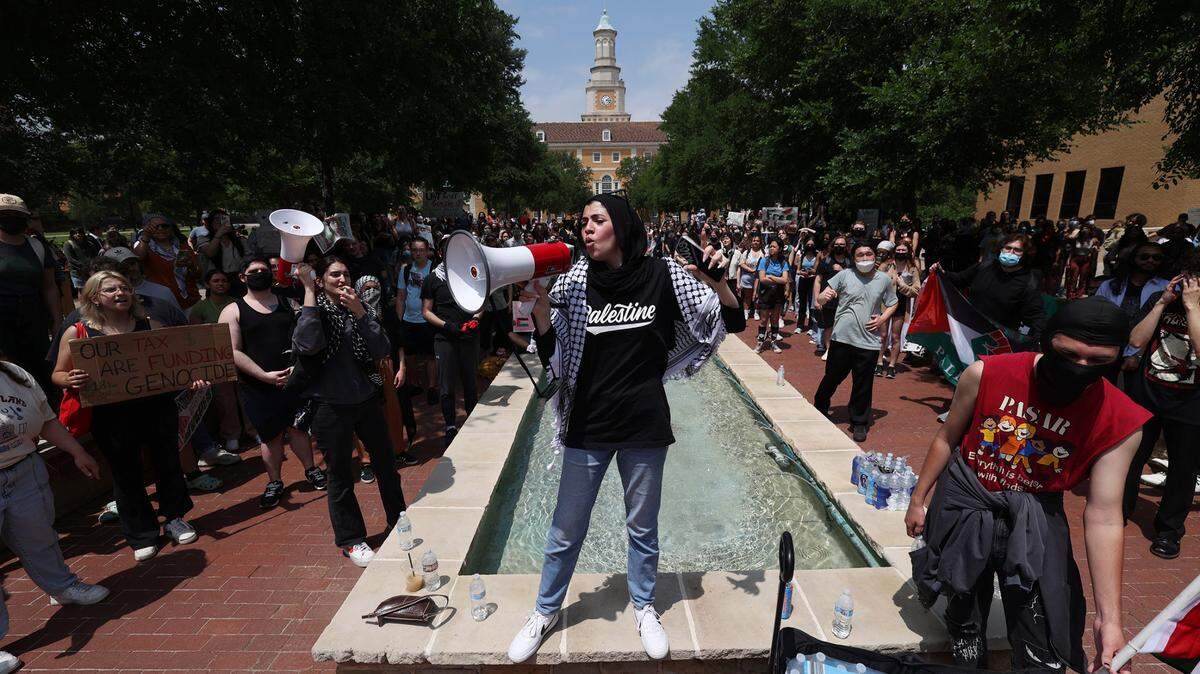
Dozens of international students in Texas have had their visas revoked in recent days, and universities in North Texas lead the state in cancellations.
U.S. Secretary of State Marco Rubio said in late March that over 300 student visas had been revoked because of their holders’ involvement in campus protests against Israel’s war with Gaza.
Referring to them as “lunatics,” Rubio accused student visa holders who participated in protests of lying to get their visas, then coming to the United States “to participate in movements that are involved in doing things like vandalizing universities, harassing students, taking over buildings, creating a ruckus.”
That sentiment appears to be reflected in supporters of the Trump administration’s immigration policy, some of whom took to social media Thursday to say that people in the country on student visas do not have the Constitutional rights to free speech or assembly.
“You can’t be here on the privilege of a visa and act like an idiot when you are a guest in our country,” wrote one commenter on the Star-Telegram’s Facebook post that shared the article on the visas being revoked. “Go to college and learn. It’s not an activist visa it’s a student visa. If you act like a fool you get sent home.”
What does the Constitution say about who has the right to free speech?
The First Amendment to the U.S. Constitution states: “Congress shall make no law respecting an establishment of religion, or prohibiting the free exercise thereof; or abridging the freedom of speech, or of the press; or the right of the people peaceably to assemble, and to petition the Government for a redress of grievances.”
Nowhere in the amendment does it say that the rights to freedom of speech and assembly are exclusive to U.S. citizens.
Aaron Reichlin-Melnick, a senior fellow at the American Immigration Council who holds a law degree from Georgetown University, said the Supreme Court recognized in 2001 that the right to due process, and thus the liberties enshrined in the Bill of Rights, applies to anyone within the United States’ borders.
“Once an alien enters the country, the legal circumstance changes, for the Due Process Clause applies to all persons within the United States, including aliens, whether their presence is lawful, unlawful, temporary, or permanent,” the court ruled.
Found in the Fifth and Fourteenth amendments, the Due Process Clause states that no person shall be “deprived of life, liberty, or property, without due process of law.”
“It’s important to recognize that the First Amendment is not a grant of rights to U.S. citizens, it’s a restriction on the government from violating the inherent right to free speech that all people have,” Reichlin-Melnick said.
“The right to free speech, as the founders believed it, was inalienable,” he said in an interview. “It cannot be taken away. It is a universal human right that applies to all people, and the government may not restrict it, and that is why an immigrant who is here also has freedom of speech.”
The Constitution does limit some rights to citizens only, such as the right to vote and hold office, as well as the right to bear arms.
“But just because immigrants have fewer rights doesn’t mean they have no rights, and they too enjoy the basic constitutional protections of free speech and due process,” Reichlin-Melnick said.
What options do the international students whose visas were revoked have now?
International students whose visas have been revoked no longer have legal status to be in the country, so they will need to seek legal representation, Reichlin-Melnick said.
He pointed to a ruling out of a federal court in New Hampshire on Thursday that granted a temporary restraining order for an international student whose visa had been revoked.
The ruling blocked the Trump administration from terminating the legal status of Xiaotian Liu, who claimed the Department of Homeland Security violated his Fifth Amendment right to due process when it terminated his F-1 student visa.
The ruling will likely lead to more litigation, Reichlin-Melnick said. Still, other students will likely opt to leave the country rather than fight it out in the courts.
“Of course, the long-term impact of this is that foreign students will not see the United States as a desirable place to study anymore,” he said, adding that this “could have very significant implications for universities, which tend to subsidize U.S. citizens’ tuition fees by charging foreign students full ride.
This story was originally published April 10, 2025 at 5:45 PM.