What Is the Golden Helmet of Coțofenești? Inside Romania’s Ancient Treasure Stolen in Heist
Experts feared it would be melted down for its gold. Instead, after more than 14 months in the hands of thieves, the golden helmet of Coțofenești — one of Romania’s most treasured artifacts — has been recovered.
Dutch authorities announced the recovery on April 2, saying the roughly 2,500-year-old helmet and two of three stolen golden armbands were returned as part of a plea deal with three suspects arrested shortly after a January 2025 heist at the Drents Museum in Assen, Netherlands. A third armband remains missing.
What Is the Golden Helmet of Coțofenești?
Crafted around 450 B.C.E., the Helmet of Coțofenești once belonged to a Getic warrior leader. It is made entirely from gold sheets and ornately decorated with protective symbols.
Cheek plates depict a warrior about to kill a sacrificial ram. Mythical creatures — griffins and sphinxes — cover the back. Two large detailed eyes sit above the face cut-out, meant to ward off the “evil eye.”
The helmet, which is part of UNESCO’s first-of-its-kind Virtual Museum of Stolen Cultural Objects, was discovered in 1927 in the Romanian village that gave it its name.
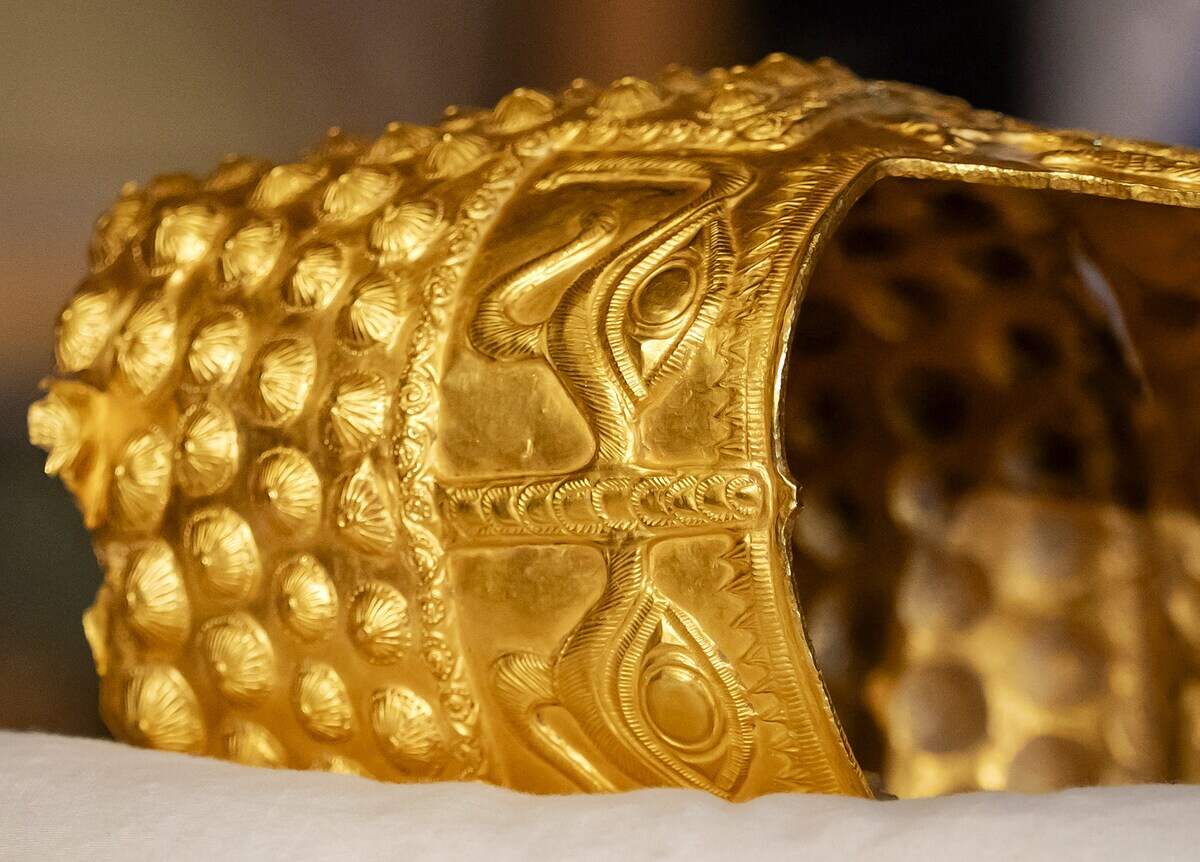
It has become a central piece of Romanian history and is displayed in the Historical Treasure exhibition of the National History Museum of Romania.
Experts feared after the theft that the helmet would be melted down because its high recognizability made it nearly unsellable on the black market.
Who Were the Dacians and Why Do Their Artifacts Matter?
The Dacians were an ancient Indo-European people closely related to the Getae. They occupied the region that is now Romania from the early Iron Age until the second century C.E., when Rome conquered the area.
A farming and cattle-breeding society, the Dacians mixed culturally with Celts and Scythians. They existed at a crossroads between Greek, Scythian and Roman civilizations — but left behind no written records, making their artifacts among the primary sources of knowledge about their culture.
“Objects like this are exceptionally rare witnesses of a culture that sits at a crossroads of the ancient world,” art and antiquities expert Bianca Frölich told The Guardian.
“Much of their material culture has been lost or remains only partially understood,” Frölich added.
The Golden Helmet Was Part of a Museum Heist
On Jan. 25, 2025, three hooded individuals broke into the Drents Museum during the final weekend of a temporary exhibition called Dacia: Empire of Gold and Silver. The show displayed more than 500 objects on loan from Romanian museums.
Security footage captured the thieves using a large crowbar to pry open a museum door, followed by an explosion from a homemade firework bomb. They also used a sledgehammer to gain entry. The stolen items included the helmet of Coțofenești and three golden armbands.
Three suspects were arrested days after the heist. But recovering the artifacts took roughly 14 months of negotiations.
How Dutch Authorities Recovered the Golden Helmet
Defense lawyers for the three arrested men brokered a plea deal that included the return of the stolen items.
The helmet sustained a small dent but no permanent damage. Restorers will need to reglue a previous repair. The two recovered armbands were returned in perfect condition.
“We are incredibly pleased,” Corien Fahner of the prosecution service told reporters, per CNN. “It has been a roller-coaster. Especially for Romania, but also for employees of the Drents Museum.”
Three of the four stolen items have been recovered. The third golden armband remains unaccounted for.
The theft strained relations between the Netherlands and Romania. With one artifact still missing, the investigation continues.
This article was created by content specialists using various tools, including AI.