How a Trumpeter Swan With 'Red Lipstick' Became NYC’s Most Talked-About New Resident
If you haven’t already heard the buzz on birding social media, here’s the alert: New York City has logged its first-ever recorded trumpeter swan sighting, and it happened right along the East River waterfront in Williamsburg, Brooklyn.
For the city’s growing community of urban birders — the kind who keep eBird checklists updated and binoculars within arm’s reach — this is the sort of milestone that doesn’t come around twice.
A bird once driven to the brink of extinction, now floating casually among a flock of mute swans in one of the most densely populated cities on the planet.
The Trumpeter Swan Sighting No One Expected
On March 10, a group of bird watchers spotted a flock of swans gliding into the East River near the North 5th Street Pier and Park in Williamsburg, Brooklyn.
Most of the swans in the group appeared to be mute swans — recognizable by their signature bright orange beaks. But one bird stood out immediately to experienced eyes.
This outlier had a black beak, a straight neck, and what birders have described as “red lipstick” — that distinctive reddish line along the lower mandible that’s a telltale field mark.
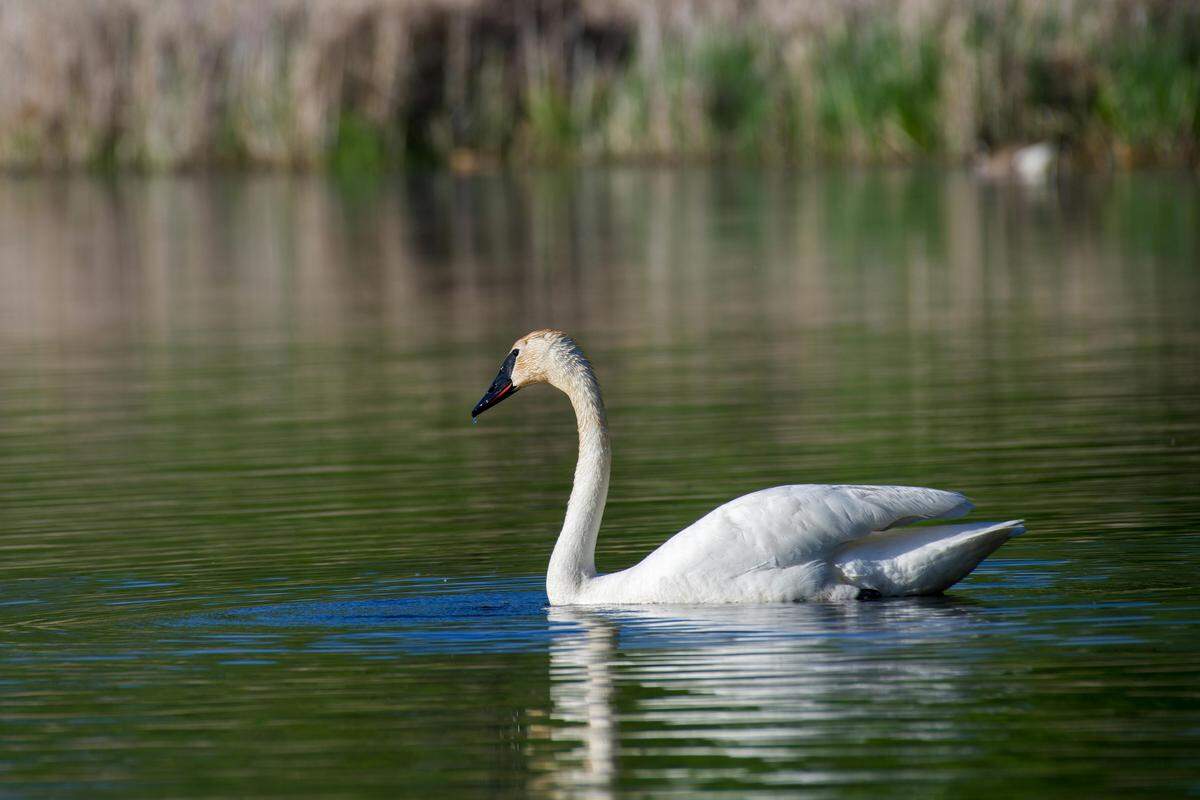
According to Margaret Smith, the executive director of the Trumpeter Swan Society, the black-billed swan was, in fact, a trumpeter swan.
The March 10 observation marked the first recorded sighting of a trumpeter swan in New York City.
But according to ABC7NY, the first reported sighting actually came earlier, on Feb. 28 — meaning this bird may have been hanging around the area for at least a couple of weeks before it was formally documented.
How to Tell a Trumpeter From a Mute or Tundra Swan
For birders looking to confirm an ID — or hoping to distinguish this bird from its companions — the source material offers some clear field marks worth reviewing.
The trumpeter swan is one of three swans found in North America and one of two that are native. Here’s how the three species break down:
- Trumpeter swan: Black beak, straight neck posture, reddish marking along the bill (“red lipstick”). The largest of the three species and one of the heaviest native waterfowl on the continent — they can span up to six feet and weigh over 25 pounds.
- Mute swan: Bright orange beak. These are the swans most New Yorkers are familiar with, and they made up the rest of the flock spotted in the East River.
- Tundra swan: Black beak with a yellow marking near the eye — a key distinction from the trumpeter for birders who may confuse the two at a distance.
Those ID details matter, especially in a waterway where mute swans are common and the difference between a life-list addition and a misidentification can hinge on beak color and neck posture.
Why This Sighting Matters: A Conservation Milestone
The historical weight of this sighting is hard to overstate.
Trumpeter swans were nearly extinct due to commercial and subsistence hunting in the early 1900s. Their recovery has been a long-running conservation effort spanning decades and multiple states and provinces.
By 2015, there were nearly 70,000 trumpeter swans living in places like Canada, Alaska, Montana and even Upstate New York, according to WABC.
Smith underscored both the rarity and the emotional significance of the bird’s appearance in the city.
“It is a very rare sighting. I’ve never received any reports of trumpeter swans in New York City, and so it was pretty exciting, actually, to get those reports,” Smith said in an interview with Hell Gate.
She also framed the sighting as a direct result of conservation work carried out across the region.
“What you are seeing there is really a blessing, the gift of the people around you, states around you who cared enough to bring back this bird that was on the brink of extinction,” Smith said to WABC.
The Social Scene: William and His New Companion
The trumpeter swan didn’t arrive alone in a behavioral sense. It appears to have made a few mute swan friends, including one local swan that bird watchers have affectionately dubbed William, after the Williamsburg neighborhood.
Smith offered insight into why a trumpeter might seek out the company of mute swans.
“My guess is that the young swan was exploring the area and probably saw the mute swan — saw a big white bird — and probably thought, ‘It’s a fellow swan,’” Smith told Hell Gate. “Trumpeter swans are social creatures.”
Some users on social media joked that William has finally found his Kate, referring to Prince William and Kate Middleton. The bird’s presence quickly went viral, drawing bird watchers from across the city to the East River waterfront to snap photos and log the sighting.
This article was created by content specialists using various tools, including AI.
This story was originally published March 18, 2026 at 4:30 PM.