Crape myrtles are starting to bloom. Here’s how to get the best out of them
You’ve probably noticed that crape myrtles are coming into bloom in our part of Texas. They put on a long annual show for us culminating in a dazzling display toward the middle of summer. And we can make it all the better if we give them a little care sometime in the next week or 10 days.
It begins with pruning — or maybe not. I’ve said it for my entire career: two-thirds of the pruning I’ve seen done to crape myrtles wasn’t needed at all. That’s where “topping” comes into the picture. But we’ve covered that enough other times here. Hopefully you’ve abandoned that practice already.
However, several varieties are sensitive to cold and show it by dying back when winter either starts early or plunges deeply. You can see the effects if you drive around town. There are ample examples of crape myrtles with dead trunks and branches that need to be removed. Cut them flush with live tissues — don’t leave any stubs. If that means cutting dead trunks completely to the ground, so be it. Do it now if the dead wood is out there. Crape myrtles are always willing to resprout to please you. All you have to do is retrain them by removing any excess of trunks they produce.
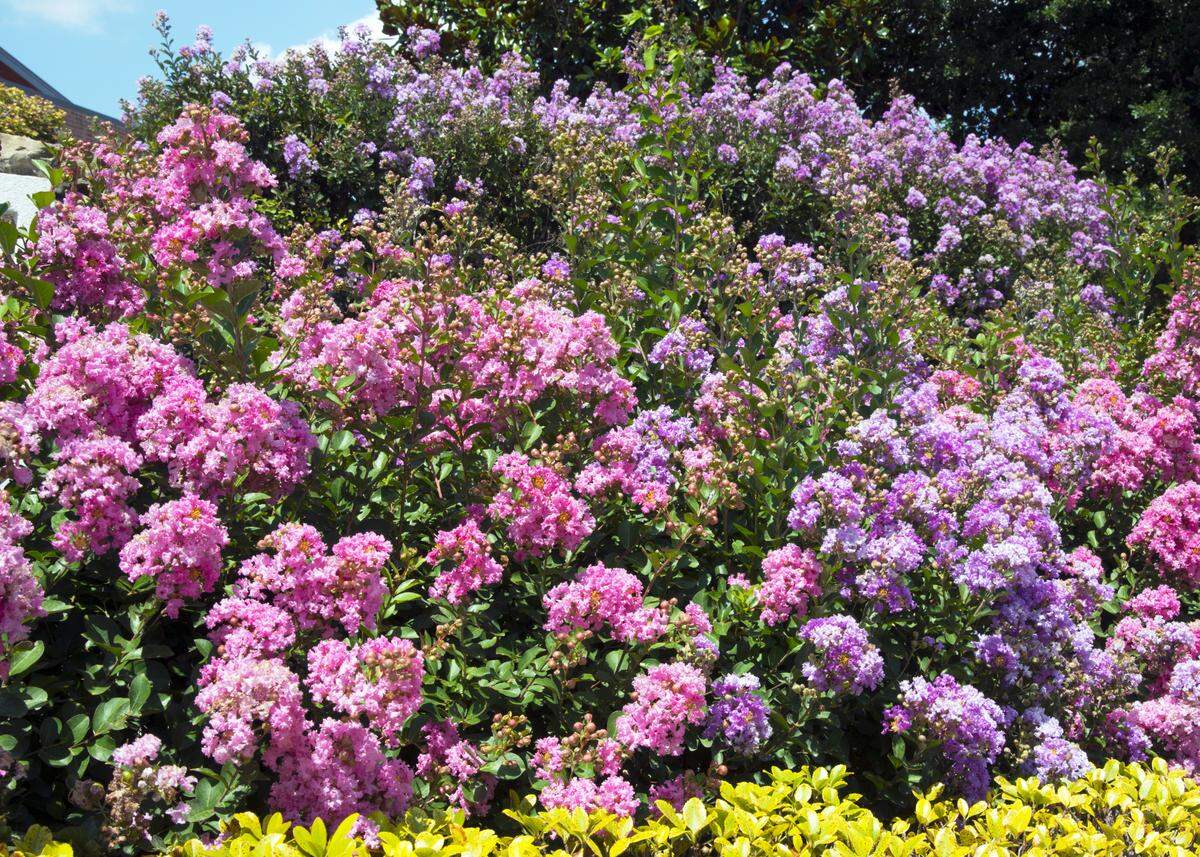
Here’s a big one. The second task on your checklist for mid-May is to apply a systemic insecticide to the drip lines of your plants to prevent crape myrtle bark scale on the plants’ trunks, stems, and leaves. This pest was first observed in the United States in Richardson in 2004. Somehow it got in from China, probably hiding on stowaway plants. It has spread across the South, although it can be noted that predators have lessened its impact in North Central Texas.
The scales are white, almost immobile, insects that resemble cigarette ashes stuck to the plant tissues. They secrete sticky honeydew residue (processed sap) that coats all the plant parts and other surfaces beneath. Before long, unsightly black sooty mold grows in the honeydew.
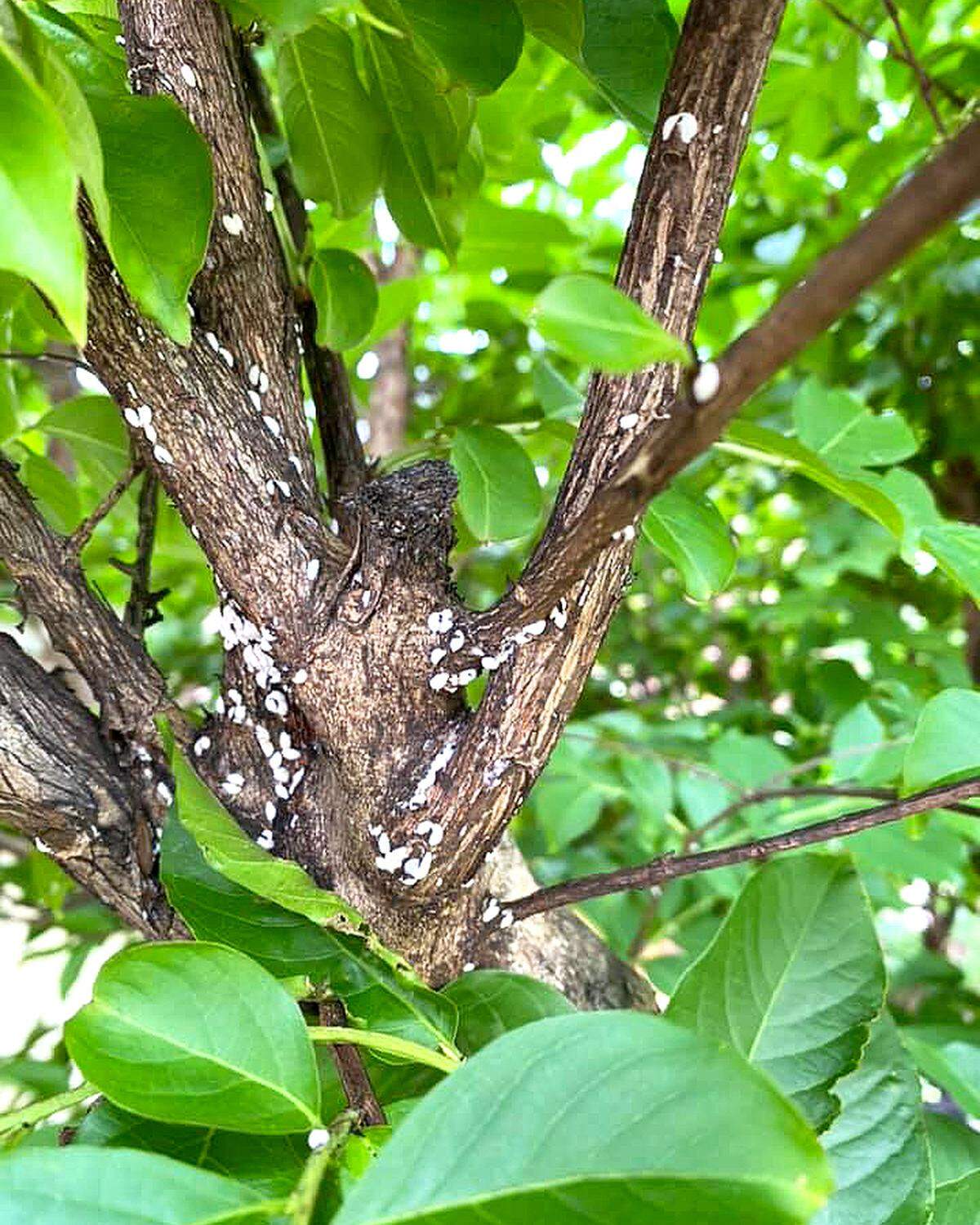
By applying a systemic product like Imidacloprid as a drench, the plant will take up the insecticide into its tissues. The pests will be killed as they try to feed, and the mold will never form. This is the best means of dealing with this pest, as based on Texas A&M and other university research. Recommended date of application is around May 15.
Crape myrtles bloom on new growth. Promote that by feeding them now with a high-nitrogen or all-nitrogen lawn fertilizer with 30% to 40% of that nitrogen in slow-release form. Scatter it around the drip line and water it into the soil with a deep soaking. Assuming you intend to make the preventive treatment for bark scale, apply the fertilizer first, water deeply, then make the soil drench a day or two later.
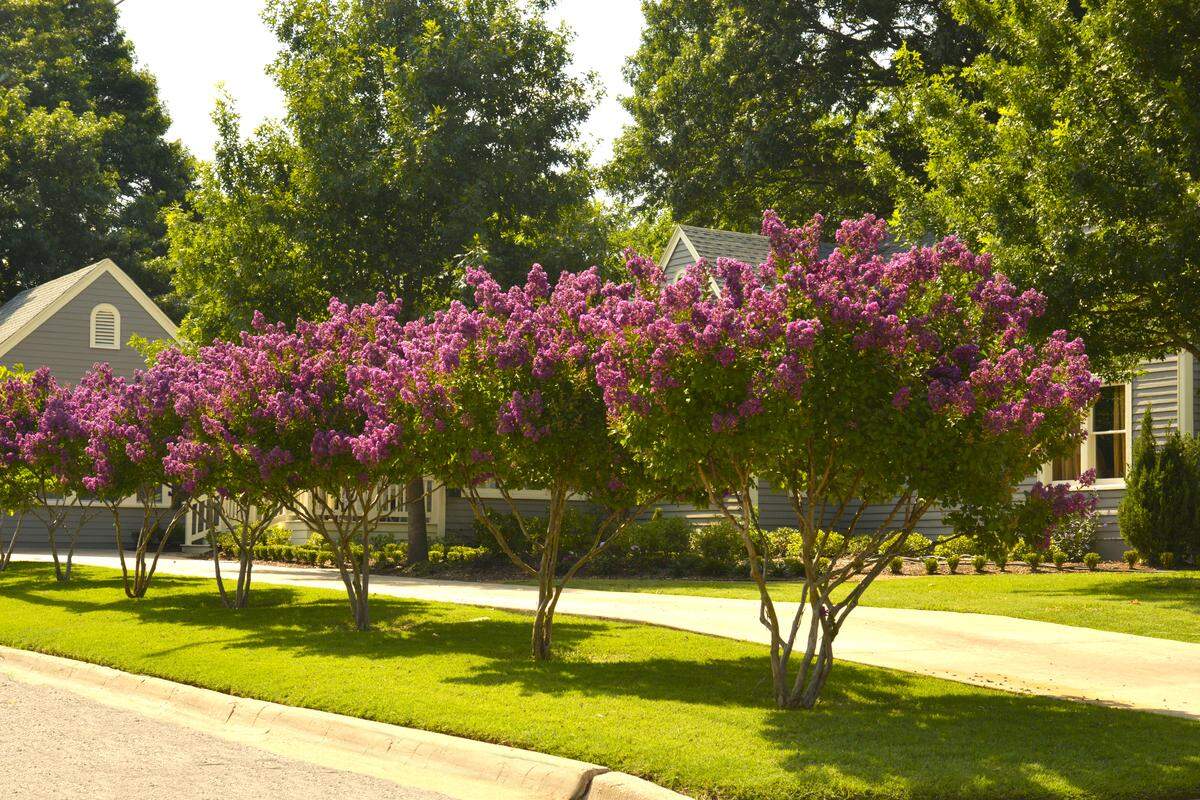
If you’re in the market for a crape myrtle …
If this is the year that you’d like to add a crape myrtle to your landscape, here are some guidelines to help make it a successful experience.
• Know where you need it. Will it be used to frame your house? Will it be an accent point at the rear of your backyard? Are you buying several to line your driveway? Questions like that will determine what mature size your plant(s) should attain.
• Figure what color would look best. Resist the urge to buy what looks pretty at the garden center. Not all crape myrtle colors are complementary, either with other crape myrtles or with paint and masonry colors. Reds can clash in a hurry. Strange as it may sound, purples seem to blend with almost all colors.
• Do your homework of the best varieties that fit those parameters. There are somewhere nearing 150 varieties in the marketplace. Some of the older ones are still the best, but they’re much harder to find. Some of the newer ones grow faster, so the wholesalers love them, but some of them (Natchez, Tuscarora, and a few others) are the ones that freeze back to the ground every few years. The website of The Crape Myrtle Trails of McKinney has a list of the best.
Nurseries will be stocking up on crape myrtles in bud and bloom very soon. Maybe you want a small type like the Petite series introduced in the 1960s and still the best in the 3- to 4-foot range. They’re perfect for replacing rose rosette-diseased roses. Or perhaps a tall type that can be trained as a 15- to 25-foot accent tree. Some of the best are varieties such as Sarah’s Favorite White, Catawba (purple — my personal favorite variety), Lipan (gorgeous rich lavender), Dynamite, Red Rocket, and the hard-to-find Arapaho (all vivid red).
As you’re planting your crape myrtle, be mindful of its surroundings. It needs full sun and deep, rich soil that will retain moisture during the dry times. Yes, crape myrtles are drought tolerant but remember that they bloom best on new growth. That growth won’t happen if you don’t keep them moist.
Look overhead, both to see if any large trees are likely to overtake them and shade them, also to be sure they won’t encroach into eaves or overhead power lines. Tree-form crape myrtles that are going to be planted as landscaping frames at the corners of your house need to be a minimum of 8 or 10 feet out from the house, farther for two-story homes.
As one who has enjoyed watching crape myrtles come of age since I was a teen, I can tell you this is my favorite season of the year. Great things are about to happen, and here’s hoping you’re about to hop on that crape myrtle bandwagon.