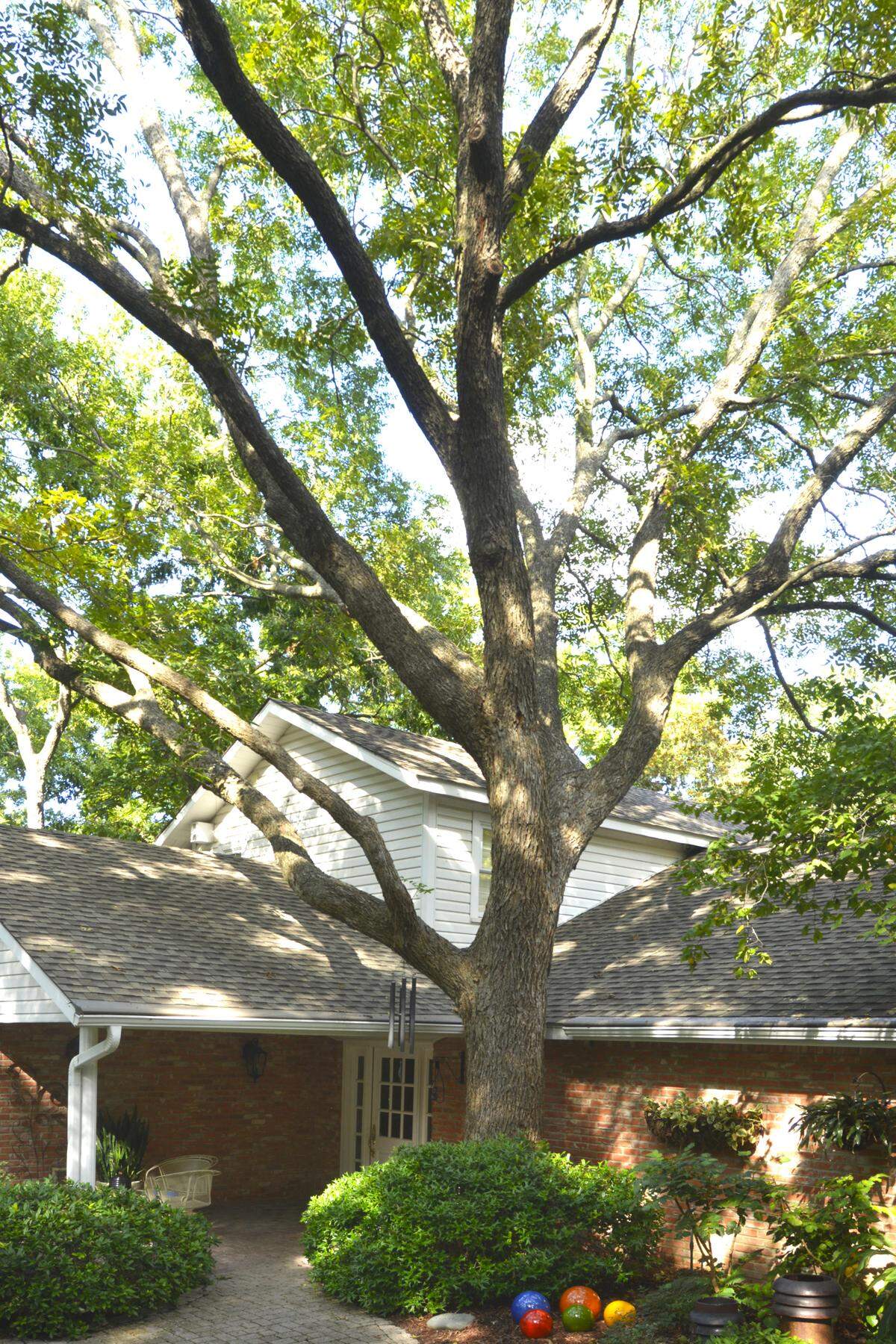
Follow these tips to keep your shade trees strong and healthy through the summer
A cool front or two may have moderated things, but early week heat served to remind us that summer is knock-knocking on the door. Those old school big, beautiful shade trees are going to be as meaningful as ever. Let’s make a list of important care tips to ensure their vigor over the next several months.
Water will be critical. If you’re caring for turf and landscape beds properly, the trees will get what they need. Their roots, after all, share the same soil. However, if you aren’t the best at maintaining a lawn or if your trees are somehow segregated off to the sides, make plans to soak their soil deeply every few weeks.
The best way to give them the thorough dousing they need is to lay a soaker hose in a coil out around their drip line (outer edges of the leaf canopy). Let it run at slow volume for four to six hours so that it soaks the soil to a depth of 12 to 15 inches. If you have a very large tree, you may want to lift it and re-arrange it to a new coil and repeat the process so you cover more ground.
Keep in mind that the roots that do most of the critical water work are in the top foot of soil. Nature built things that way, because that’s where rainfall hits. Sure, trees have tap roots that plunge deep into the ground, but those roots function for anchoring the tree. They’re not so much for sucking up water. That’s left to those roots that are up near the surface.
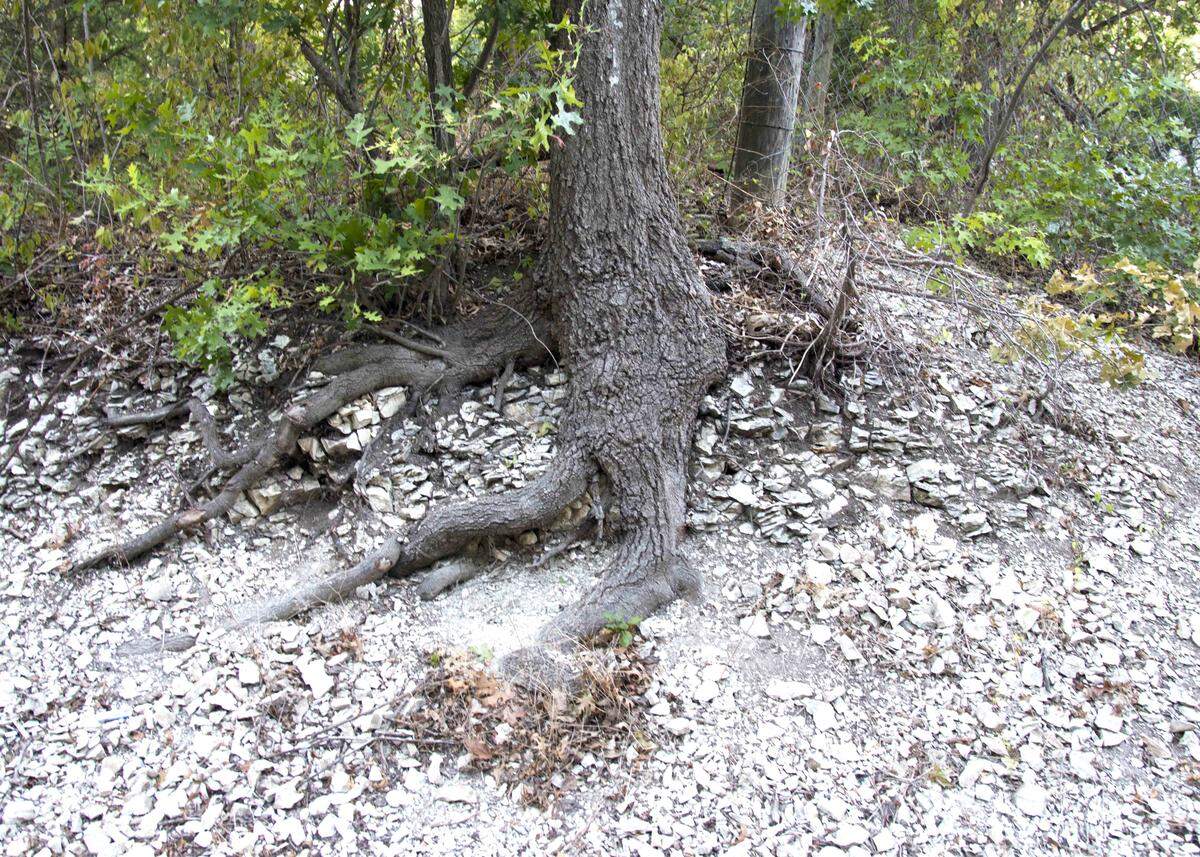
That’s why it’s so important that you not cover a tree’s roots with fill soil. It’s why you need to care about where the tree’s “root flare” ends up after planting. You don’t want a new tree to sink in its hole. You want those top roots to be right near the soil’s surface.
If you have a tree that is developing large surface roots that are extending above the ground line, and if they’re becoming a hazard to pedestrians or pavement, yes, those roots can be removed. But do one or two roots per year, and do that removal in the fall, once the need for copious amounts of water have passed and temperatures have started to drop. Do not remove roots going into the summer unless it is absolutely unavoidable. If it’s a large root that must come off, it’s best to have a certified arborist handling the work for you.
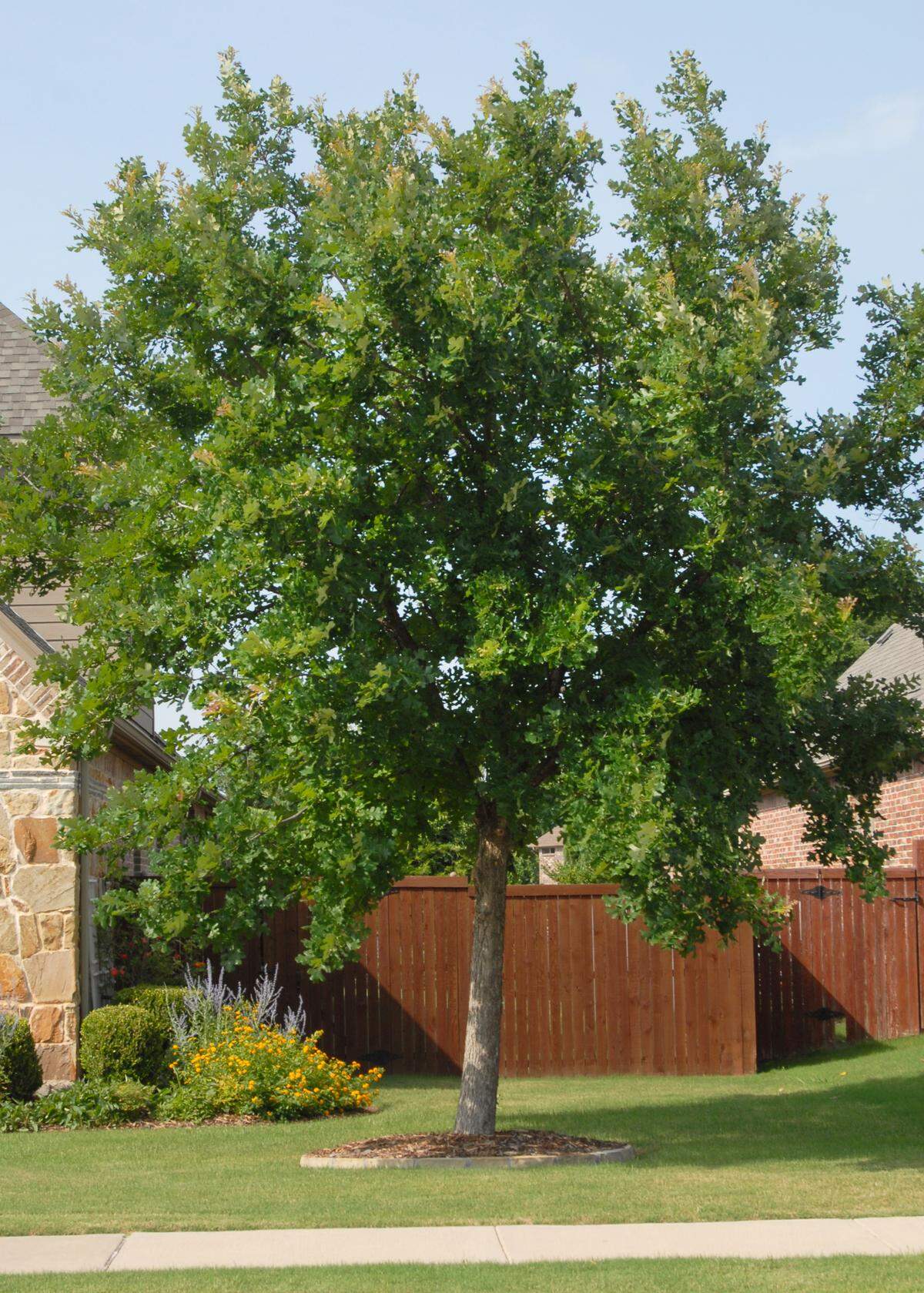
Fertilize your trees now to take advantage of the ideal growing conditions. Most soil tests call for applications of the same fertilizer you would use on your turfgrass. Just be certain it does not contain any type of weedkiller product. If you’re feeding your lawn, make an extra pass out around the drip line of the tree where the most active roots are.
Old recommendations of poking holes to insert root feeding rods or to fill holes with granules pretty much went out with petticoats and flattops. We realized we were bypassing most of those important “feeder” roots and that surface applications would be far better.
Watch trees’ trunks for signs of abnormalities. Here are some of the ones about which I’m asked the most often.
• Rows of holes arranged around the trunks of trees almost as if they’d been hit by machine gun fire. That’s the work of woodpeckers or sapsuckers (birds). They suggest no particular problem, and they rarely cause any trouble on their own. They usually come back to feed on the sap flow. If you’re concerned you can apply a vintage product call Tree Tanglefoot. It’s quite sticky, and the birds hate getting it on their feet. They move on to other trees elsewhere.
• Bark splitting vertically and separating from the trunk, notably on the south or southwest sides of the trunks. This is especially concerning with relatively new trees. Species with thin bark such as Shumard red oaks, Chinese pistachios, red maples (Acer rubrum) and others can be damaged by sunscald when taken from tight nursery growing conditions and set into solitary landscape settings where summer sun hits their trunks and causes them to overheat. The damage usually shows up after two to three years. By then it may be too late to turn things around. The solution is to prevent it by using tree wrap from the day the tree is planted.
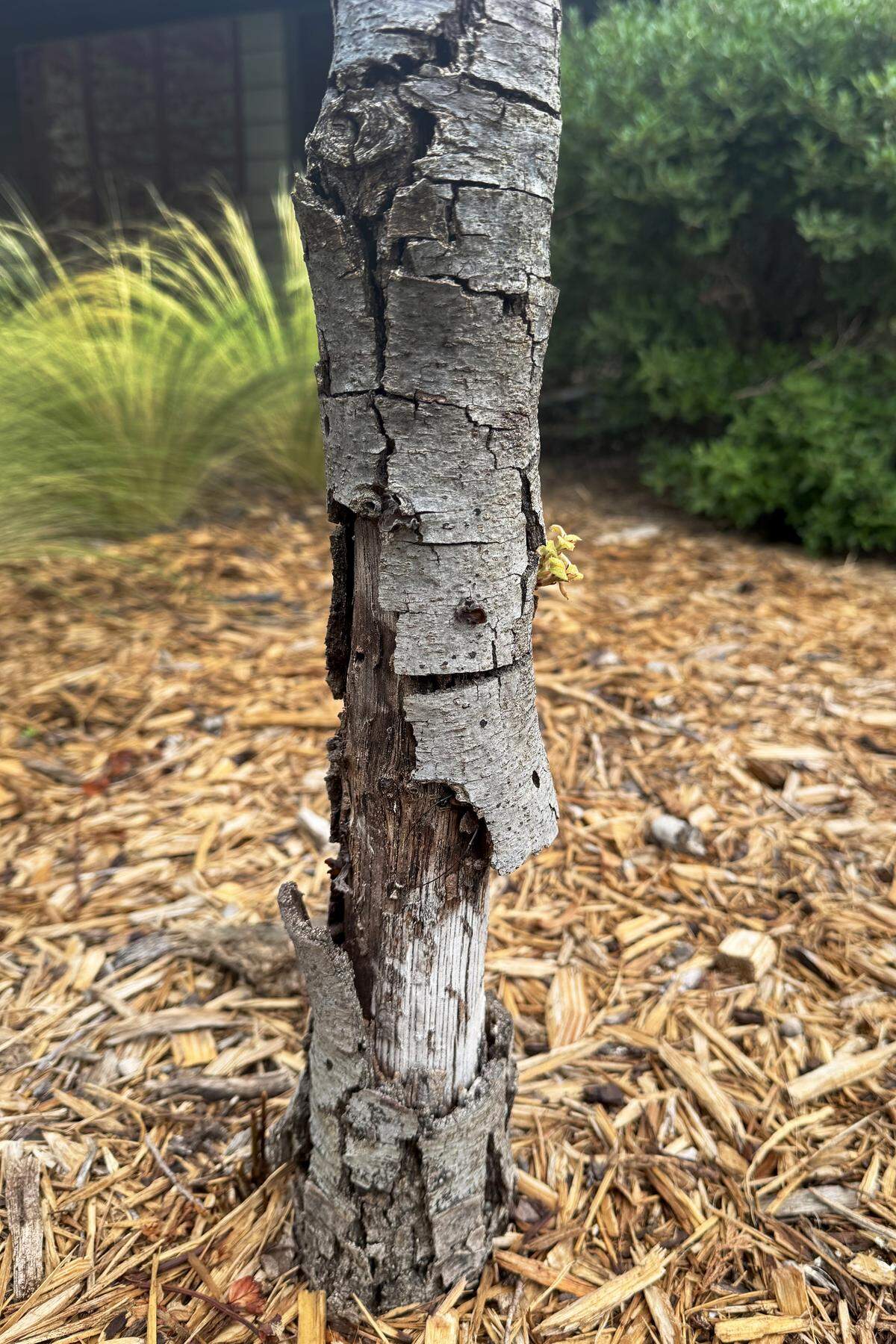
• Blackened, wet bark beneath a branch crotch or old stub where a branch has been removed suggests the chance of decay within the internal wood of the trunk. Those deteriorated tissues become watery and start flowing to the outside. This is definitely the time to call in a certified arborist as the strength of the trunk may be compromised.
• Bracket mushrooms growing from the trunks of your trees or up from the root systems. These may be serious and fatal funguses that live within the internal conducting tissues of the tree. They can produce striking and highly unusual shelf-like fungal growths on the trunks of affected species, often oaks. Sadly, they often suggest that the core of the tree may be entirely rotted and ready to collapse. A certified arborist should be called out immediately.
• Lichens growing on the bark of oaks, pecans, and many other species. Compared to the fungal galls just mentioned, these are just the opposite — not harmful at all. Lichens are symbiotic growths of algae and fungi that merely use the trees’ trunks for support. They gain no nourishment from the trees.
One final early note regarding a very specialized group of trees: crape myrtles. Texas A&M entomologists tell us we need to apply the systemic insecticide Imidacloprid as a soil drench around the drip line of our crape myrtles mid-May to prevent crape myrtle bark scale and black sooty mold. I’ll have more on that topic in a couple of weeks.