Our North Texas lawns aren’t doing well. Here’s how to fix them
You’ve had a rough week at work. The big family event is coming up soon. You glance in the mirror, and you realize you’re not looking quite up to your standards. (I’m trying to be gentle.)
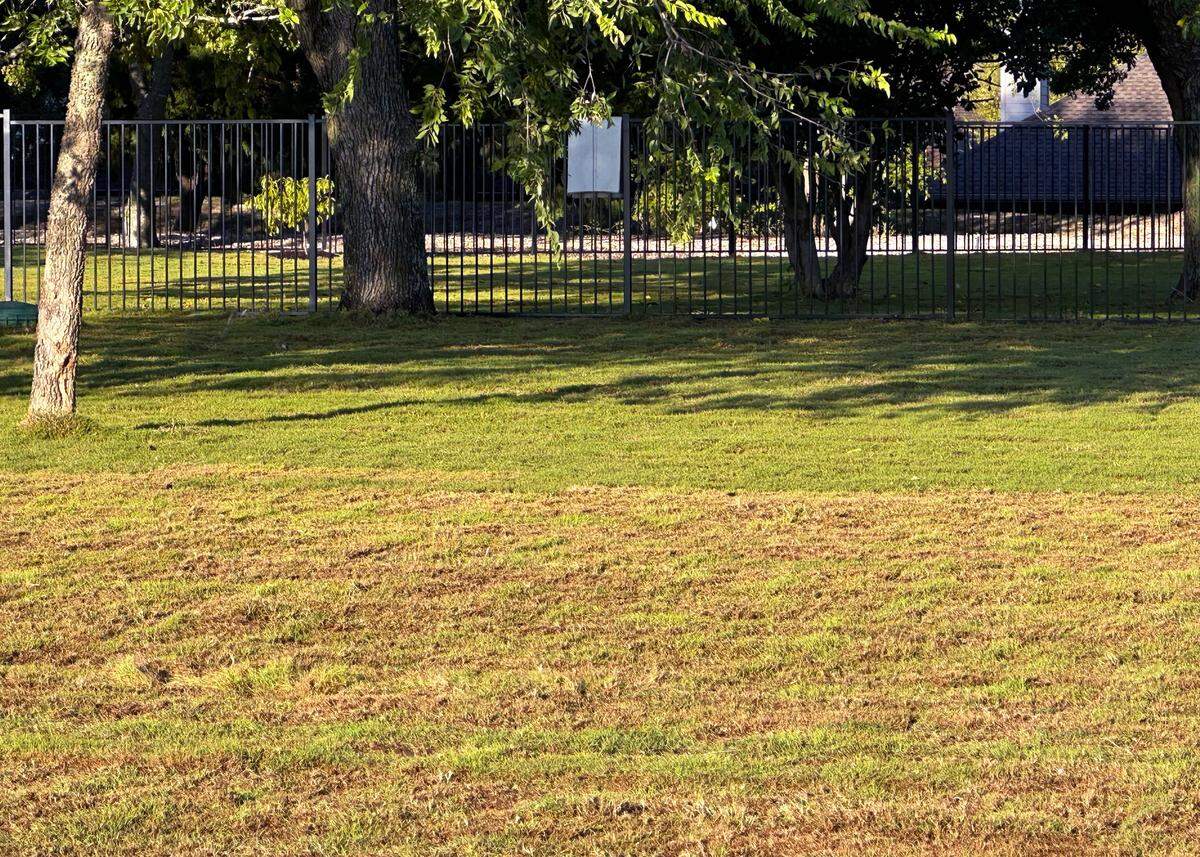
For many of us, that’s the way it is here in mid-April when we look at our lawns. If I were to give an honest appraisal of the condition of Metroplex turfgrasses currently, and if I were to compare them to lawns of just eight or 10 years ago, we’re not doing so well (my lawn included).
So, what differences am I seeing? What caused them? What can we do to correct them? Let’s lay out a game plan.
Lawns look sparse. St. Augustine has been killed out by chinch bugs in the sunny areas. As I recall, the bugs were worse two years ago in late summer, but they’re always around during the hot weather. The severe cold of February 2021 hurt St. Augustine lawns, and some were very slow to rebound. Drought and take all patch have taken their tolls in some lawns in recent years.
St. Augustine needs special attention when conditions get challenging in the worst part of the summer, especially when we go weeks without rainfall. I’m a fan of St. Augustine. In fact, if you have a fair amount of shade in your landscape, it’s probably your only good choice, but St. Augustine seems to have accumulated a lot of problems.
The takeaway message here is that those unbelievable spring ads for the “miracle” grasses will start to pop up very soon. Those ads have been around in one form or another for decades, and those grasses are not going to be as good as St. Augustine for shade, no matter what their claims say. Save your time and effort. Save your hopes. Save your money.
Even bermudagrass turf is thin in many lawns. You can see bare soil. That often is caused by excessive shade. Bermuda must have seven or eight hours of direct, hot summertime sun daily or it will gradually thin and fade away.
Bermuda that is repeatedly mowed too high will gradually weaken over time, again thinning out and showing bare areas. Common bermudagrass, the one most of us grow from seed, should be maintained at 1-1/2 in. height. That will keep it low-growing and spreading.
If heavy rains caused browned clippings to wash up in your bermudagrass lawn, you may not be mowing frequently enough, especially if you’re trying to mulch the clippings back into the soil to recycle their nutrients and organic matter. The clippings are too long and they can’t decay normally.
Don’t allow those collections of debris to remain. Use a rake to break them apart, then mow again with a bagger on your mower. Put the clippings into your compost pile. Once your lawn gears up to grow at full speed in May and June, aim to mow on five- or six-day turnarounds. “Weekly” may be too seldom if you’re mulching.
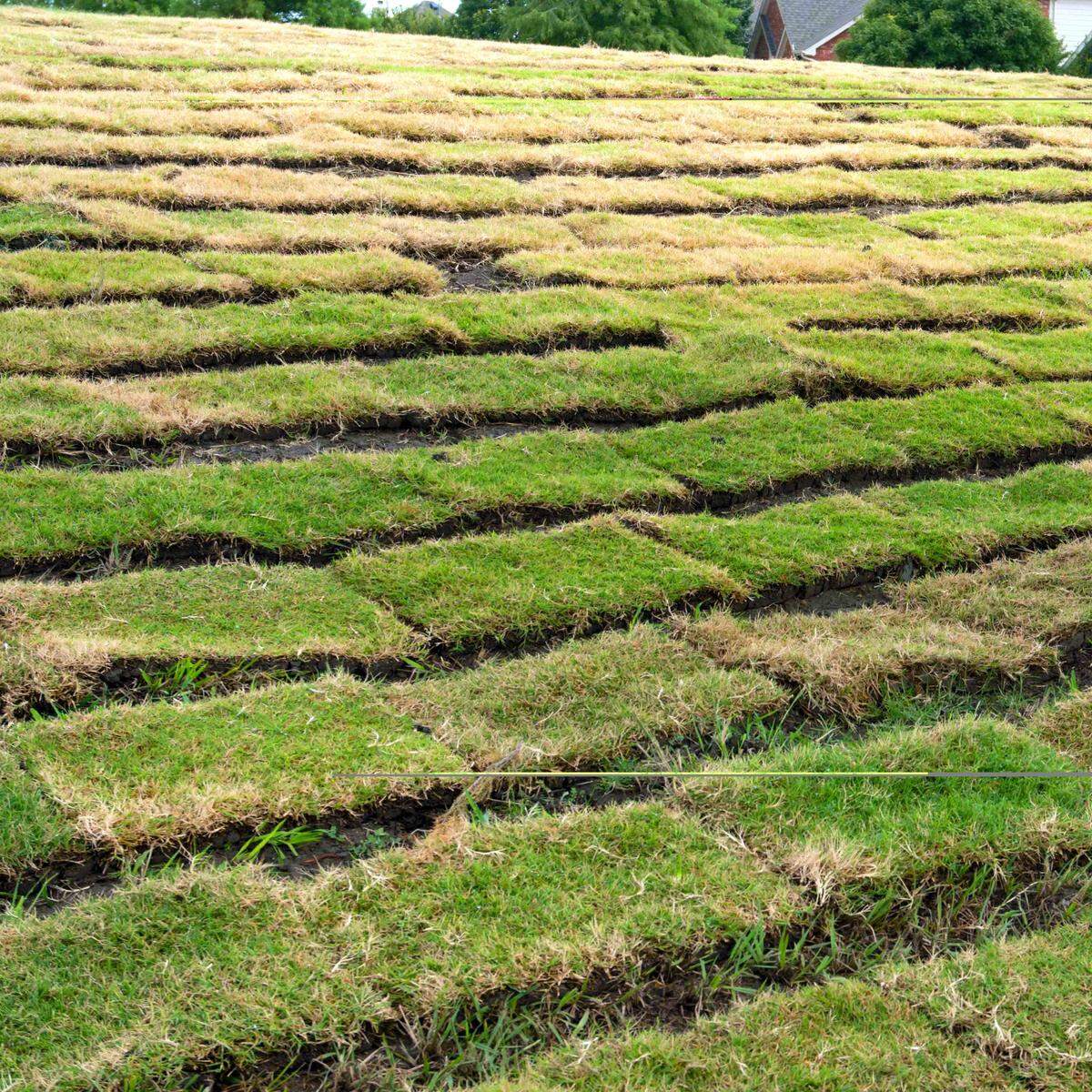
If you have larger bare spots, all types of grasses can be planted from sod during late April and through May and into early June. The sooner you get it planted, however, the easier it will be on both you and the sod since temperatures will still be cooler. Prepare the soil by rototilling with a rear-tine tiller, then raking the area smooth with the back of a garden rake. Establish drainage away from your house.
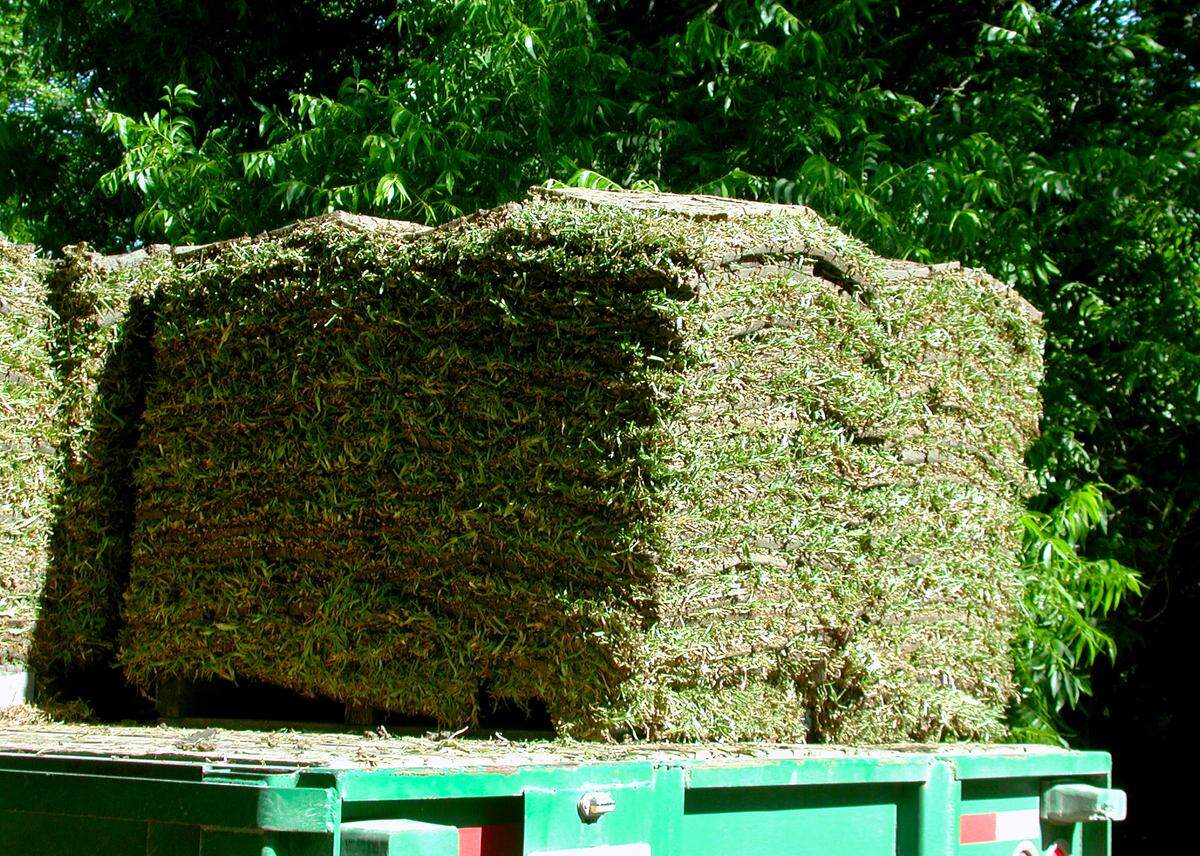
Buy high quality sod from a reputable dealer and plant it the same day it’s delivered. Lay it carefully and water it immediately. Sprinkle loose topsoil as needed to fill in any gaps.
If you intend to plant bermuda from seed, that time will come in May or early June once the soil has warmed. Again, rototill and rake to a very smooth seedbed. Buy “hulled” bermuda seed (hulls removed) and mix them with equal parts of corn meal to extend the seed. Otherwise, you’ll have a difficult time walking quickly enough to distribute the tiny seed in the small amounts. Sow 2 to 4 pounds per 1,000 square feet, half going north-south and the other half going east-west. That will minimize the chance of gaps and overlaps. Water lightly daily until the seeds start to germinate, usually 10 or 12 days. Your first watering should be all that is needed to wash the tiny seeds into the soil. Do not rake to cover them.
If you have uneven areas in your lawn where your mower repeatedly scalps the grass or bottoms out due to holes, this is the time to make the necessary adjustments. Sometimes you can go across the lawn with a rented lawn roller at a time following a rainstorm. That may smooth things out once and for all, but don’t do it repeatedly or you’ll risk compaction.
It may be easier to fill minor voids. Use a flat-bladed nursery spade to do the work. If gaps are small and shallow (less than 1 in.) you can sprinkle dry brick sand onto the surface of the soil in the low areas. Let it filter through the runners. The grass will grow up and through it. If the gaps are deeper, dig and remove the soil, then fill the hole with topsoil and replant the sod at the correct grade.
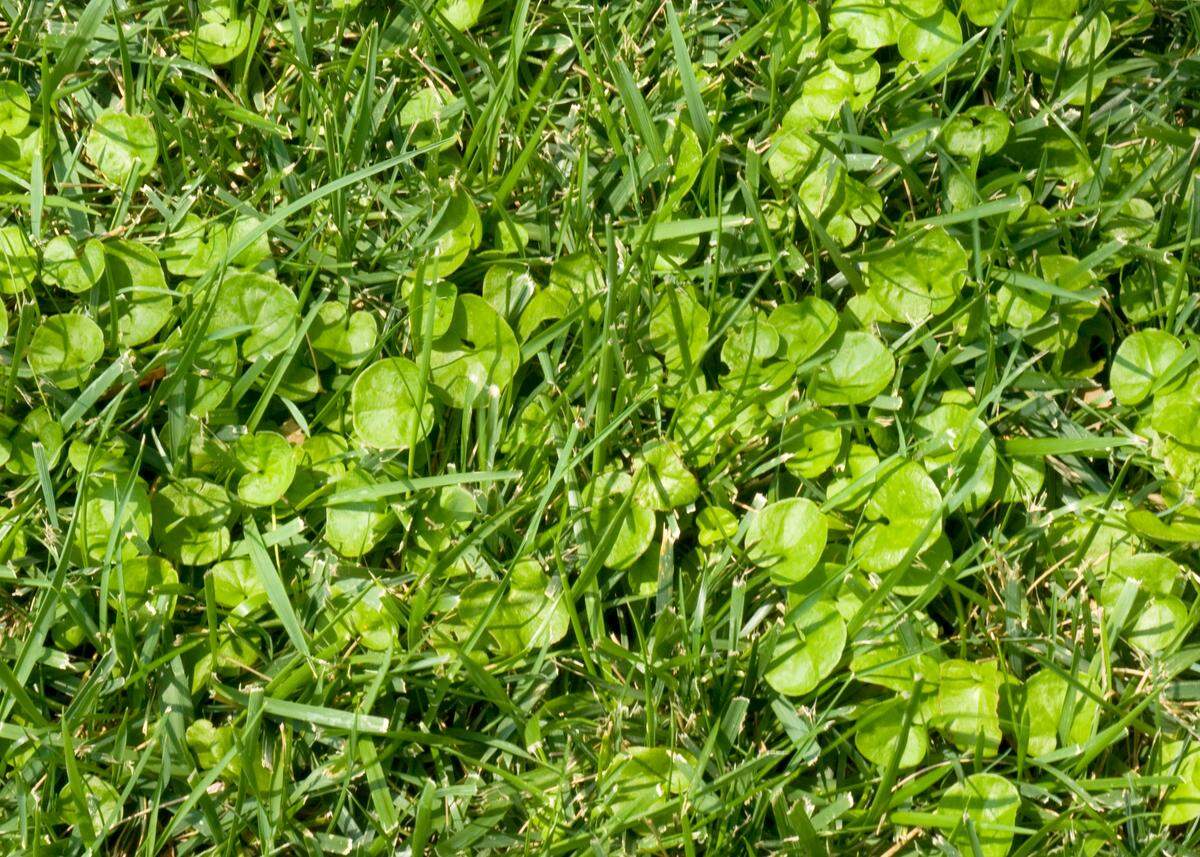
If you have unsightly weeds such as clover, thistles, dichondra, dollarweed, or other non-grassy invaders competing with your lawn, apply a broadleafed weedkiller directly to the weeds’ leaves to control them. Treating now, before temperatures climb, will eliminate the weeds before most go to seed. It will also lessen the chance of the herbicide doing damage to St. Augustine turf. I prefer to use a tank sprayer so I can be very specific in where the spray is applied.
Finally, it’s time for the first feeding. Almost all lawns in North Central Texas are growing in heavy clay soils. Clays have almost infinite surface areas on which to hold nutrients from fertilizers, chief among them the phosphorus (middle number of the 3-number analysis on every product sold as a fertilizer in Texas). Phosphorus dissolves slowly, so Texas A&M soil scientists caution most of us, following soil tests in their lab, to apply no additional phosphorus (P) with our lawn foods.
You want to find a high quality, all-nitrogen lawn fertilizer where 30% to 40% of that nitrogen is in slow release coated or encapsulated form. Your local independent retail garden center or nursery will understand that request, and they will be able to show you several brands that meet those standards.