
White-flowering plants are front and center right now. Here are the best
I’ve walked through several collections of plants these past couple of weeks. Retailers have obviously been stocking up for the Easter and Passover holiday periods. Perhaps I’ve just not been present at the right times in recent years, but it seems that whites have predominated more this year than ever before. And I’m not talking about simply the traditional lilies of Easter, but several other white-flowering indoor and outdoor plants that are being brought front and center in retail displays. Let me share the best of the bunch.
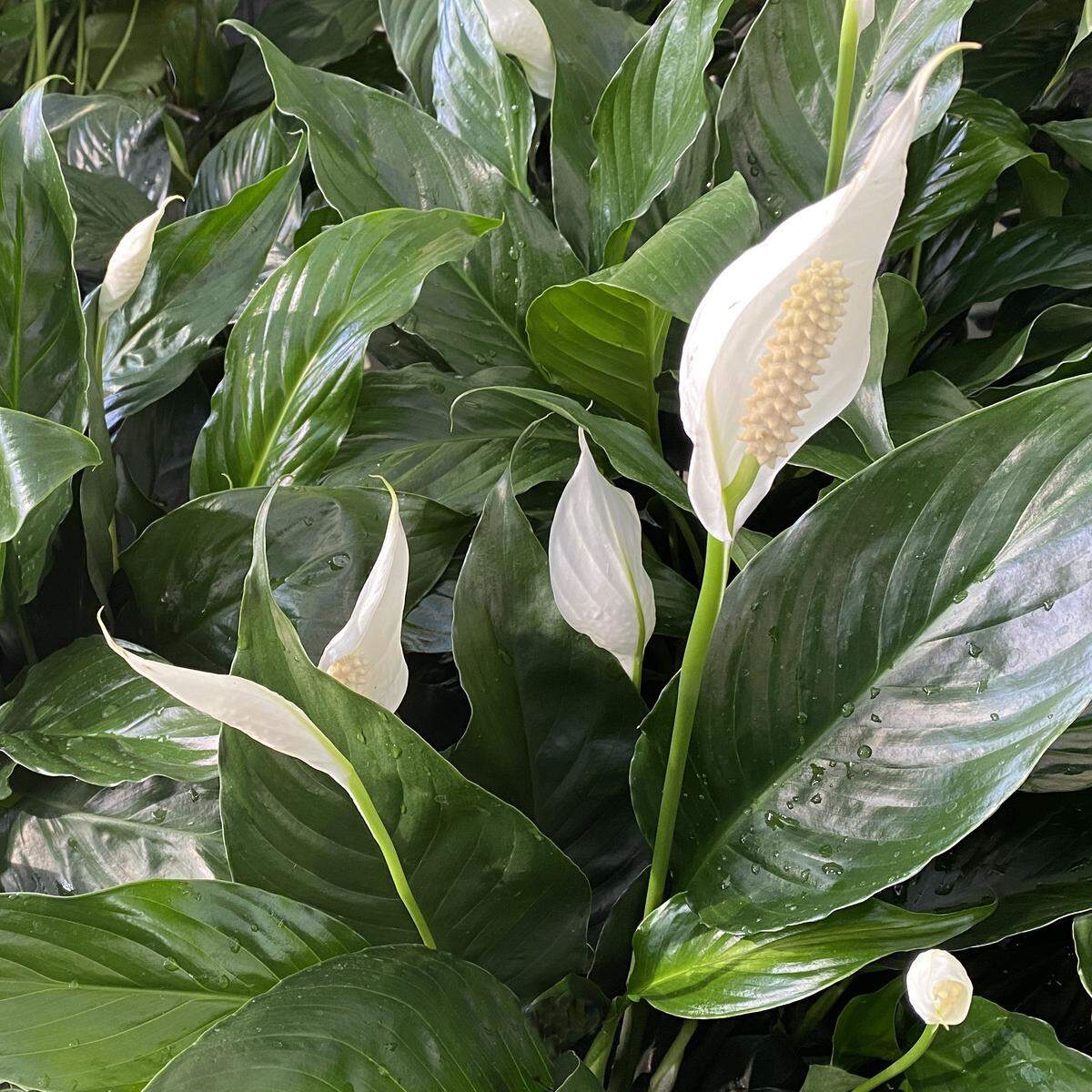
Peace lilies. These are spathiphyllums, and they’re among our finest flowering houseplants. Hand me a keyboard and I could always write about them. These are some of my favorites because I know my readers have the very best chance of success with them in their homes and offices. I even have peace lilies that I save from one year to the next to showcase out in shady spots in our landscape. I’ve had some of them for more than 20 years.
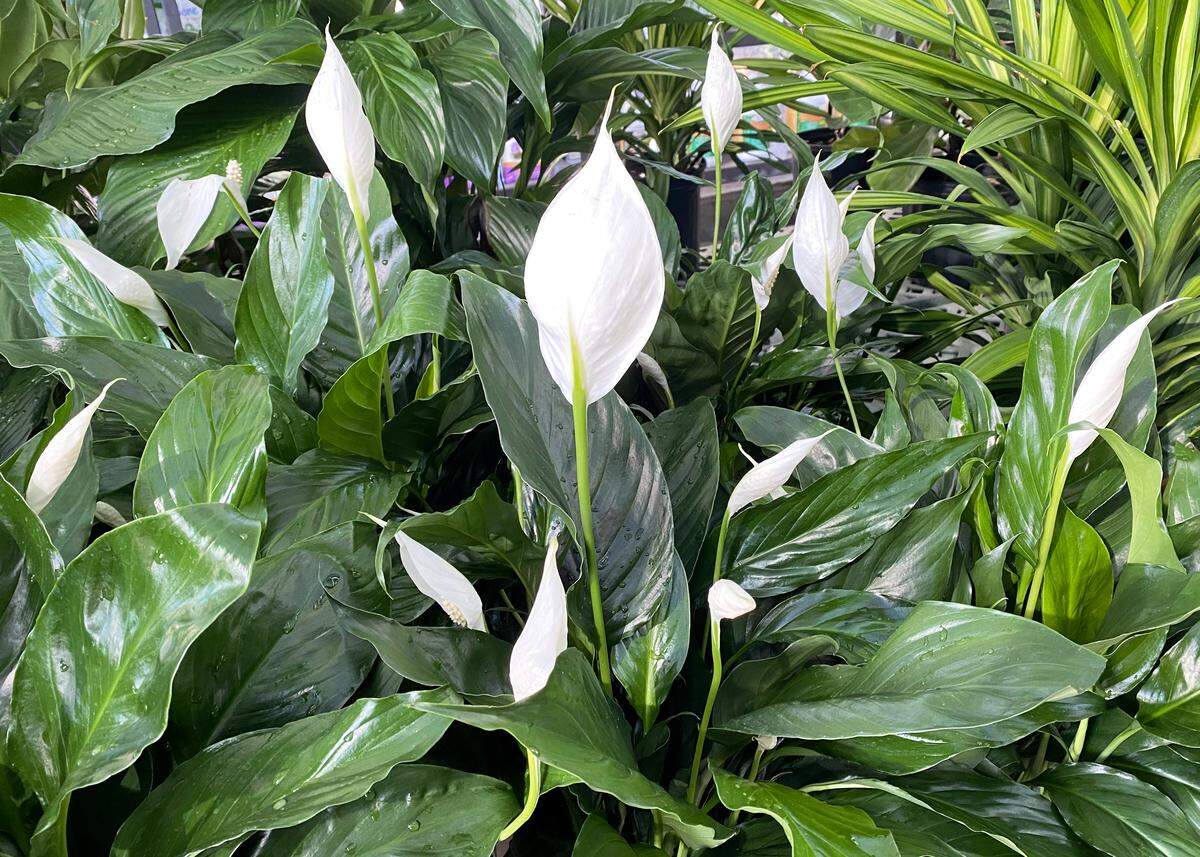
Growers have worked to bring us types that flower more heavily, bloom longer, and hold up to indoor conditions better than just about any other tropical plant you could grow. If I need to send a gift plant to a friend, this will always be near the top of my list.
Peace lilies have large, dark green leaves that make dramatic clumps. In late winter and spring they send their Jack-in-the-pulpit type flowers up through the leaves to stand like flags atop the leaves. These are floral bracts (modified leaves, not true flowers) and as they age, they turn green. At that point I trim mine off and fertilize the plants to encourage more growth and more flowers. I divide and repot my plants every few years, which explains why I now have a large number going into my greenhouse each winter.
Moth orchid. Many refer to this by the name of its genus Phalaenopsis. Yes, they come in many shades of lavender, purple, two-toned, and white, but white types are certainly the predominant shade this time of year.
Don’t let the name “orchid” scare you. As orchids go, these are among the easiest to grow and maintain. In nature they’re epiphytes, meaning they grow suspended from tree trunks. Gardeners do best growing them in terra cotta pots filled with very porous, almost gravely growing mix. They produce large roots that catch hold into the mix as the plants slowly produce a few new leaves each year.
Patience is your virtue in growing moth orchids. Keep the soil mix moist but never wet. Apply a water-soluble orchid mix plant food monthly during their growing season and watch for new floral spikes to develop late in the winter. Stake the stalks to hold the flower stems essentially upright and let them bloom out clear to the ends before you consider trimming them off.
Chinese snowball viburnum. Timing is just right this year. Easter and Passover are falling at the same time as prime bloom time for this heirloom flowering shrub from Texas landscaping. Botanically it’s Viburnum macrocephalum, and it grows to 10 to 14 feet tall and 10 to 12 feet wide, and mid-spring each year it covers itself with large, rounded clusters of snowy white flowers. It’s hard to imagine a more perfectly named plant.
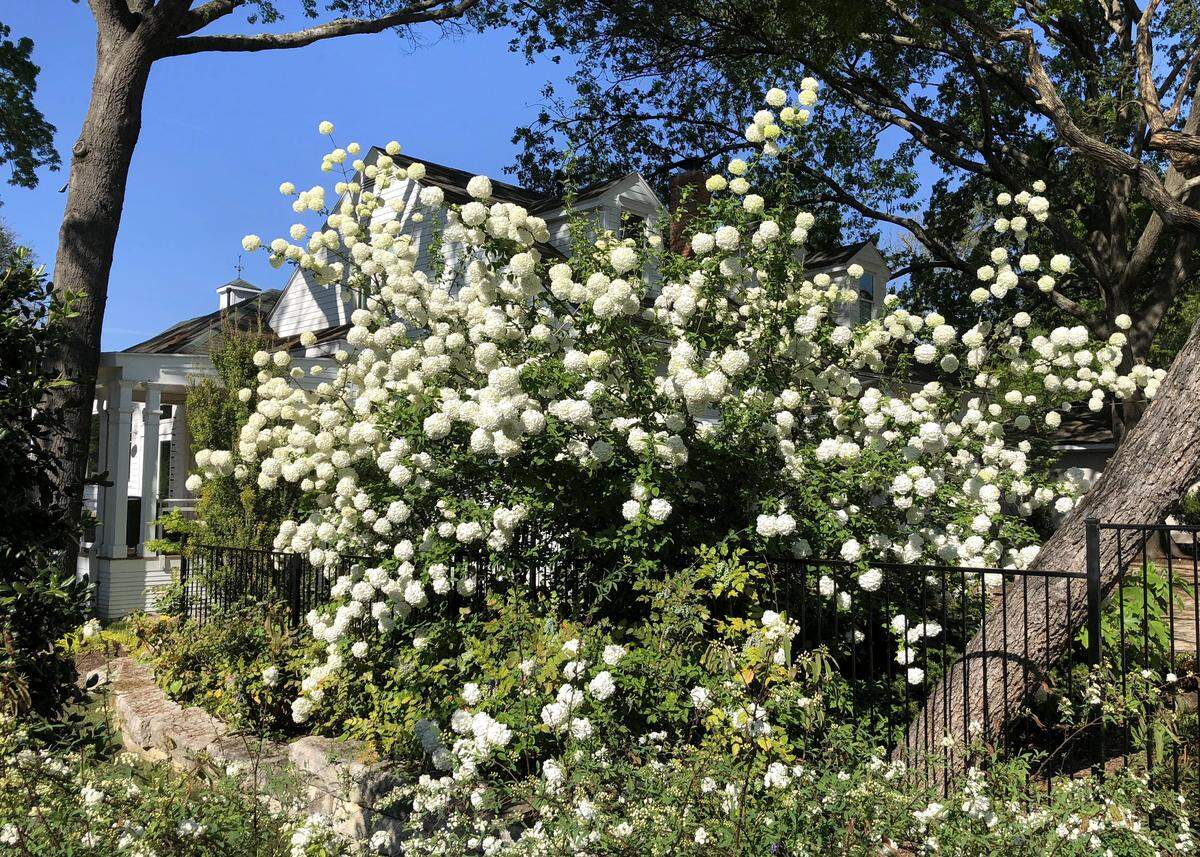
You’ll see this plant primarily in (a) older neighborhoods where it’s been growing for 40 or 50 years or longer or (b) in newer landscapes designed by sharp planners who know a great plant that time has forgotten. Fortunately for us, nurseries now stock it more plentifully than they once did, but you need to buy it when you see it. Word gets around quickly and inventories shut down before all the demands are met.
Most viburnums do best where they get morning sun and protection from the afternoon’s intense rays in the summer. This one is no different. As such, an east or northeast corner would be the place to feature this beauty. Plant it 10 or 12 feet out from the house to give it plenty of room to grow and spread. You will love it.
Rusty blackhaw viburnum. And here’s another great viburnum, and this one is native to these parts. You may have seen it flowering in local woodlands over the past few days. Mature specimens grow to be 15 to 20 feet tall and 14 to 16 feet wide. The flowers are borne in 2-inch clusters and they’re pure white.
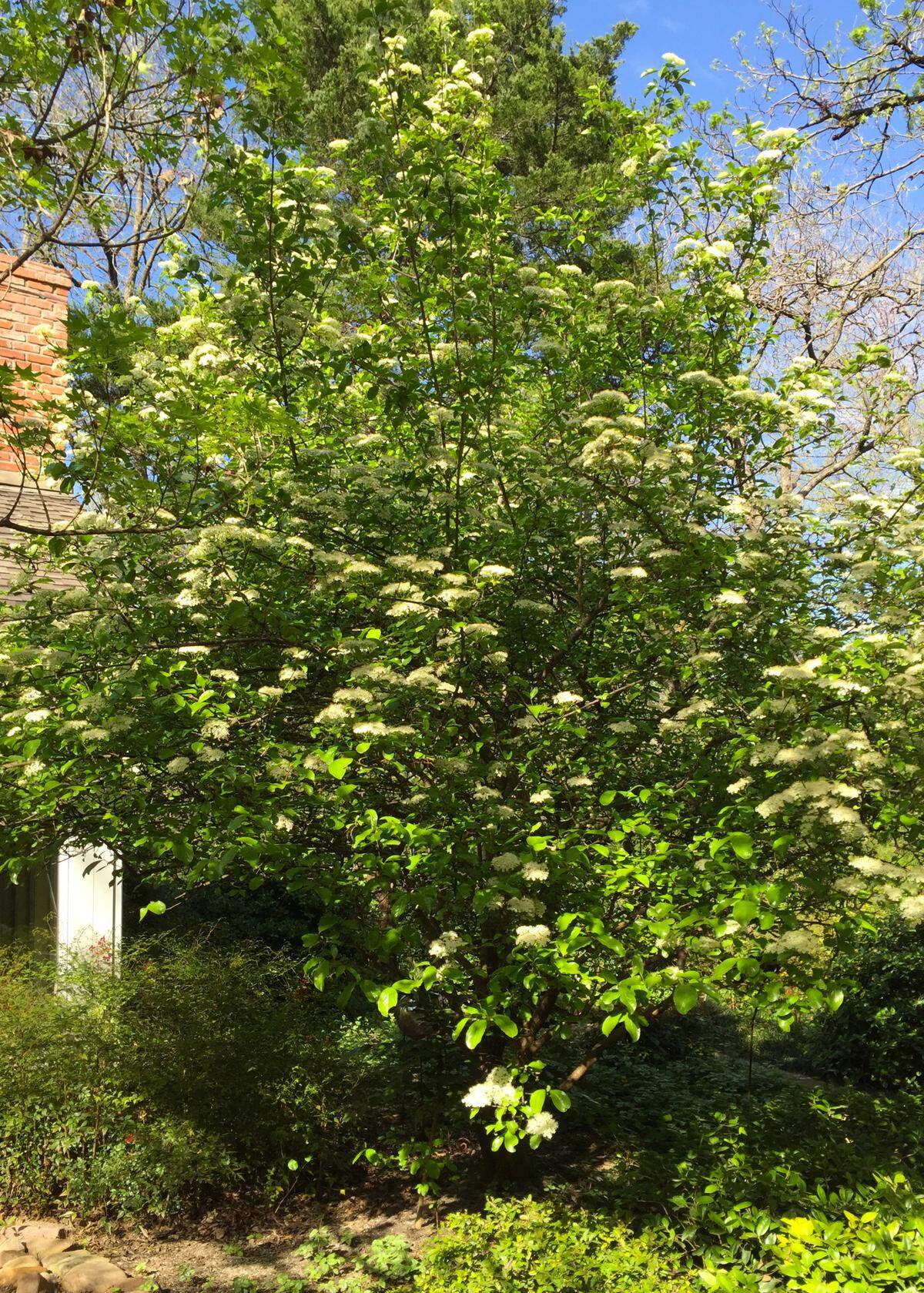
The flowers stand in beautiful contrast to the new bright green and highly glossy foliage. Fall color comes in various shades of red, orange, and yellow, and it’s often accompanied by the plants’ small purple-blue fruit. Birds love the fruit, which explains how the plant spreads through the woodlands.
On a personal note, I love this shrub. I have one that I planted 15 feet out from the east corner of our living room. It’s partially shaded by large pecan trees, and it loves its surroundings. It’s been there for 35 years and it’s a joy several times through the year.
Rusty blackhaws aren’t in every nursery in town every day of the year, but they are certainly available. They’re worth the search. You should be able to find one. They grow fairly rapidly, so don’t be afraid to start with one that’s only a 5- or 10-gallon size.
While we typically we think of bright colors around Easter, there’s something pristine and soothing about a white garden. These are just a few of the best choices.