Beware of towering trees. These are the best small ones for North Texas
We spend a lot of time puzzling over our shade tree selections. Too often we settle on a green giant that ends up towering over our entire landscape, casting shade wherever it grows. In many cases we’d have been far better served if we’d stuck with an intermediate to small tree that would still provide the impact of a tree without all the interference and competition. Trust me on this one, my friend. I’ve heard the angst in the voices of gardeners whose trees have outgrown the spaces we have available for them.
Best of the smaller trees
When you have a smaller space and still want a shade tree, here’s a list of those that are best suited to our North Texas conditions.
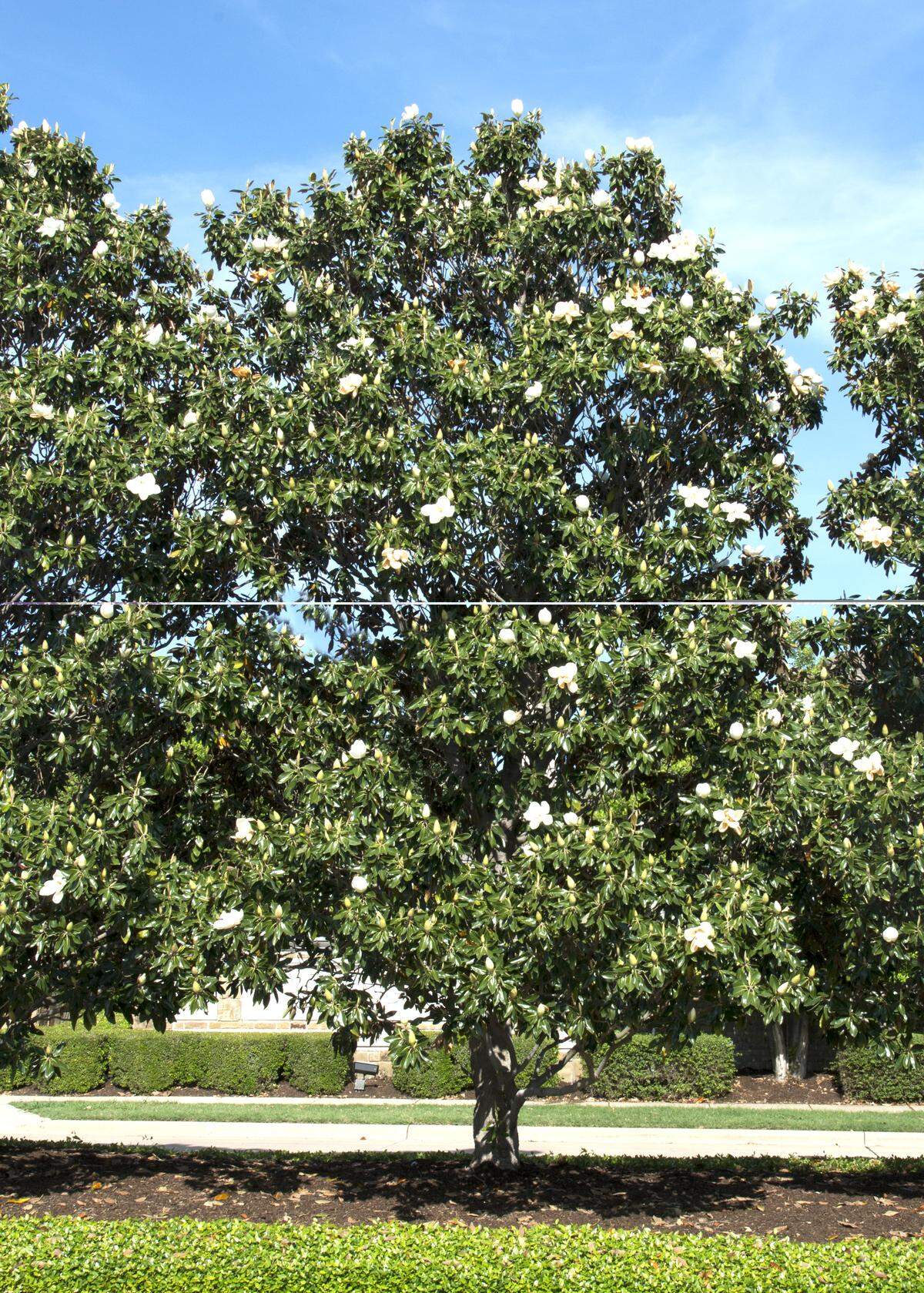
Little Gem southern magnolia If you have an estate-sized lot and you want a luxuriant evergreen shade tree, standard southern magnolia (Magnolia grandiflora) will be high on your list. But most of us don’t have that kind of room, so a compact form will prove more to our liking. In all respects it’s about half-sized, from leaves and flowers to mature height and width. It’s the best of the bunch. Although I’ll mention others, this is the one you want if you’re limited on space. It’s the perfect entryway accent or patio or courtyard shade tree. It grows to 30 to 35 feet tall and 25 feet wide.
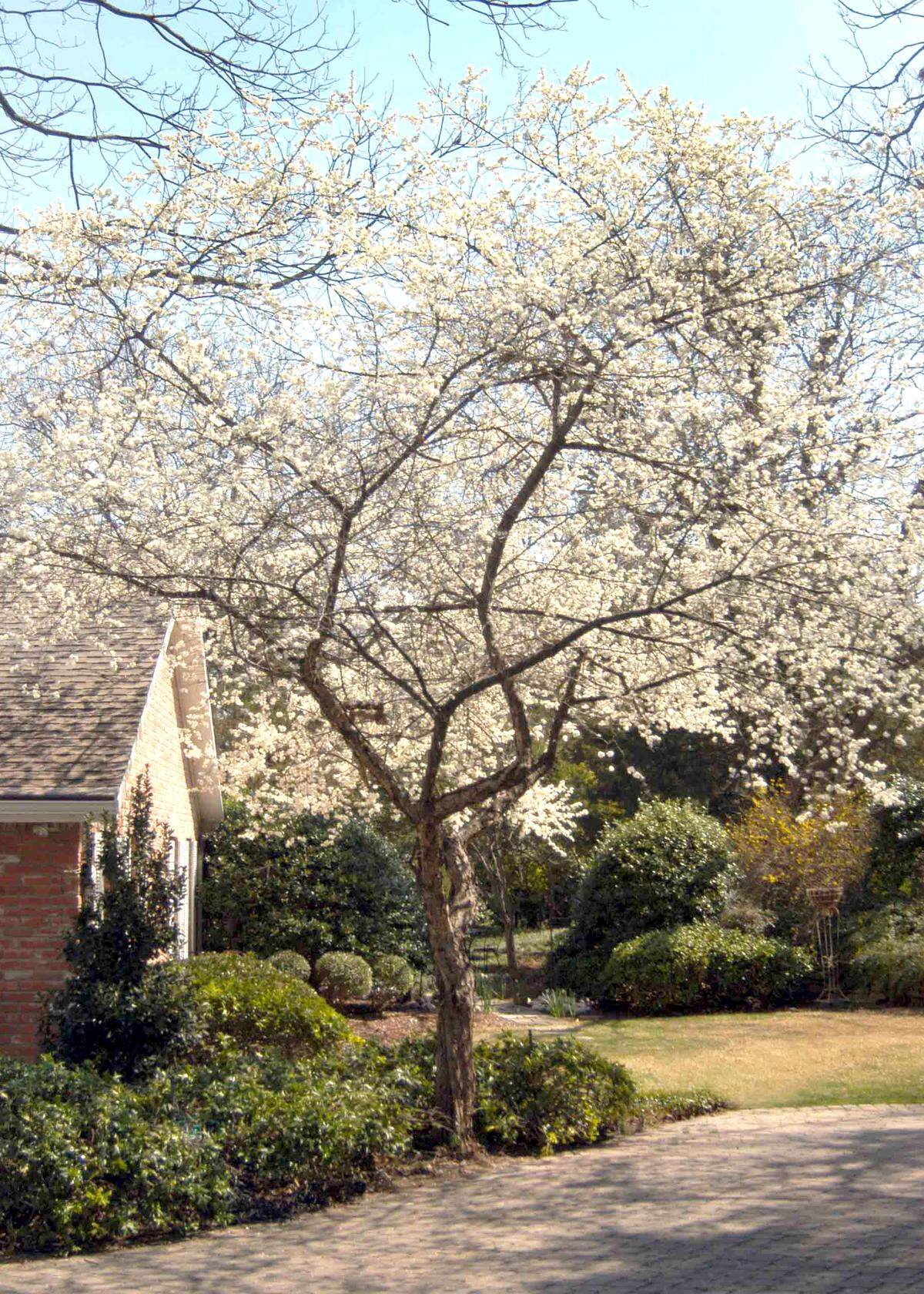
Mexican plum This is the native tree that blooms before all others in late February and early March. Its flowers are delightfully fragrant, and its growth habit is rounded and craggy. It does bear fruit, but the fruit is more used for preserves than for fresh eating. Birds and wildlife love it, however, and it provides color in fall as well. Mexican plums grow to 25 feet tall and wide.
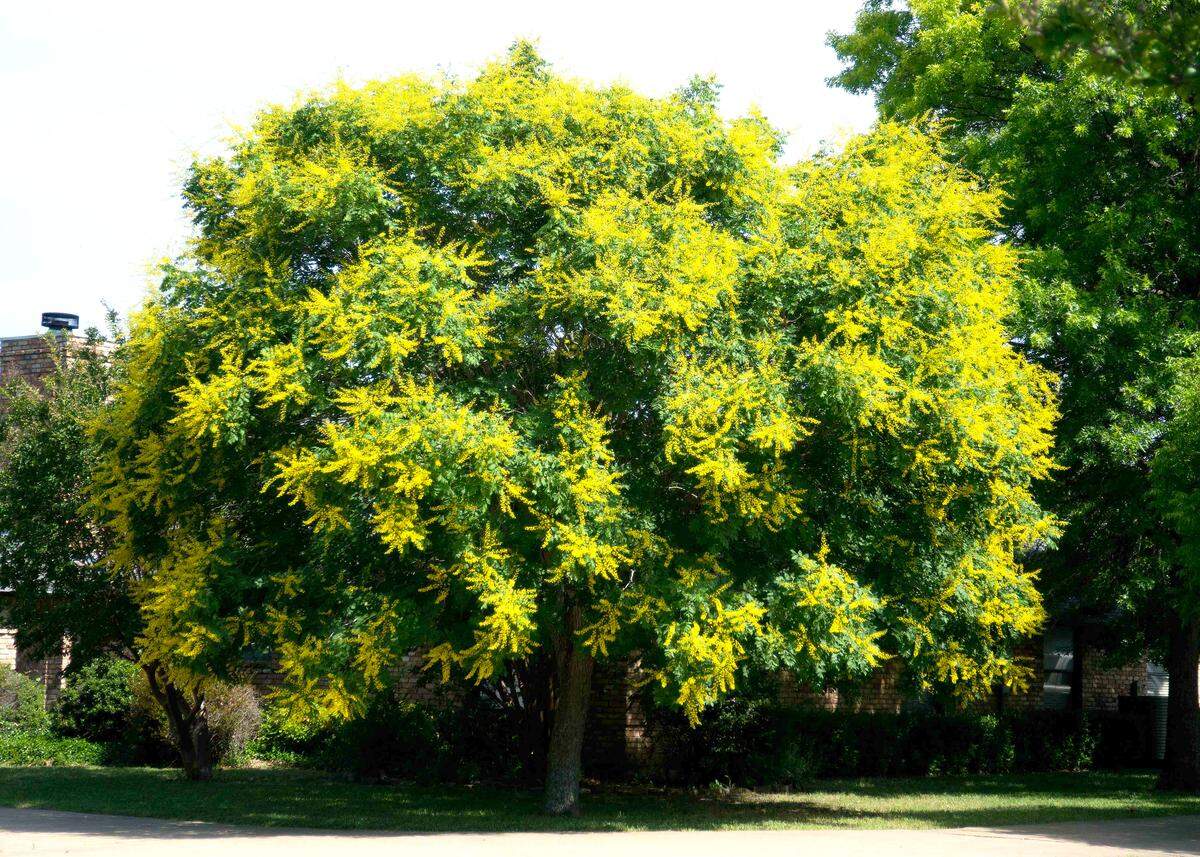
Golden raintree You don’t see these often enough. They’re handsome deciduous shade trees to 25 feet tall and wide. They have dark green foliage that gives good fall color many years. The bright butter-yellow blooms appear for a couple of weeks in late spring and are followed by papery Chinese lantern-style fruit. This tree is susceptible to cotton root rot, so don’t plant it where that soil-borne fungus is known to be a problem.
Oklahoma and other redbuds We have seen a proliferation in redbud options, from white through many shades of pink to deep burgundy. Some types are weeping, and others even have variegated yellow or purple foliage as a highlight. Most grow to 25 feet tall and wide, although the weeping types stay more compact. They are well suited to part shade, a nice bonus.
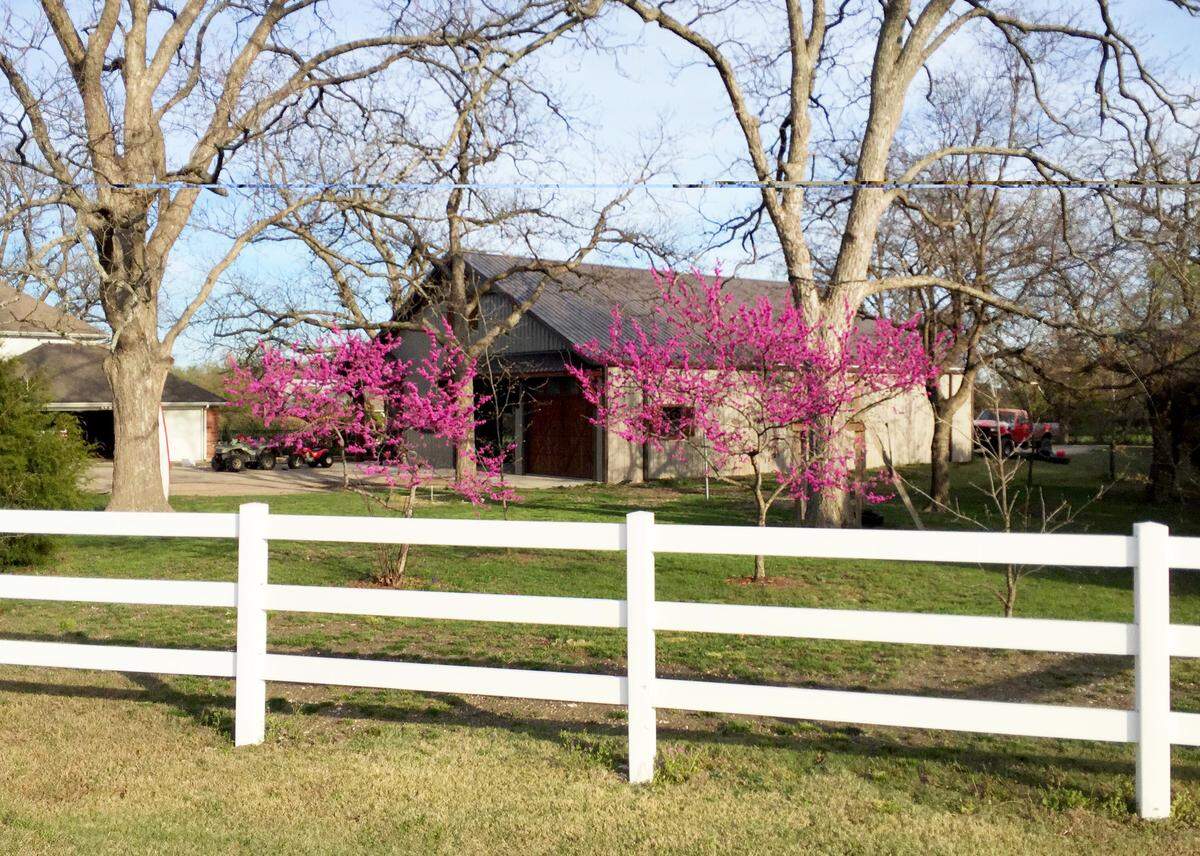
Lacey oak Named for a Southwest Texas rancher who also enjoyed botany. This is a comparatively small oak at maturity. It grows to be 30 to 35 feet tall when fully grown. Its small blue-green leaves persist well into December before turning shades of orange and yellow. It has a craggy bark and a wonderful texture. I’ve had one at the entry end of our driveway and I’ve loved it for 40 years. It was difficult to find, but worth the search.
Warren’s Red possumhaw holly Most folks wouldn’t consider this to be a shade tree, but it’s certainly a large accenting shrub. It grows to 15 to 18 feet tall and 12 to 14 feet wide, generally with multiple trunks. While it is a holly, unlike most other species, it’s deciduous. It’s a female selection, which means that every plant will bear multitudes of large, intensely red berries along the bare stems all winter. It puts on one of the greatest shows of the cold months, and it’s well suited to almost all Texas conditions since the species itself is native here. The cultivar ‘Warren’s Red’ is an older one that’s been popular in the Texas landscaping trade for well over 50 years. It’s especially beautiful when planted in front of dark green backdrops.
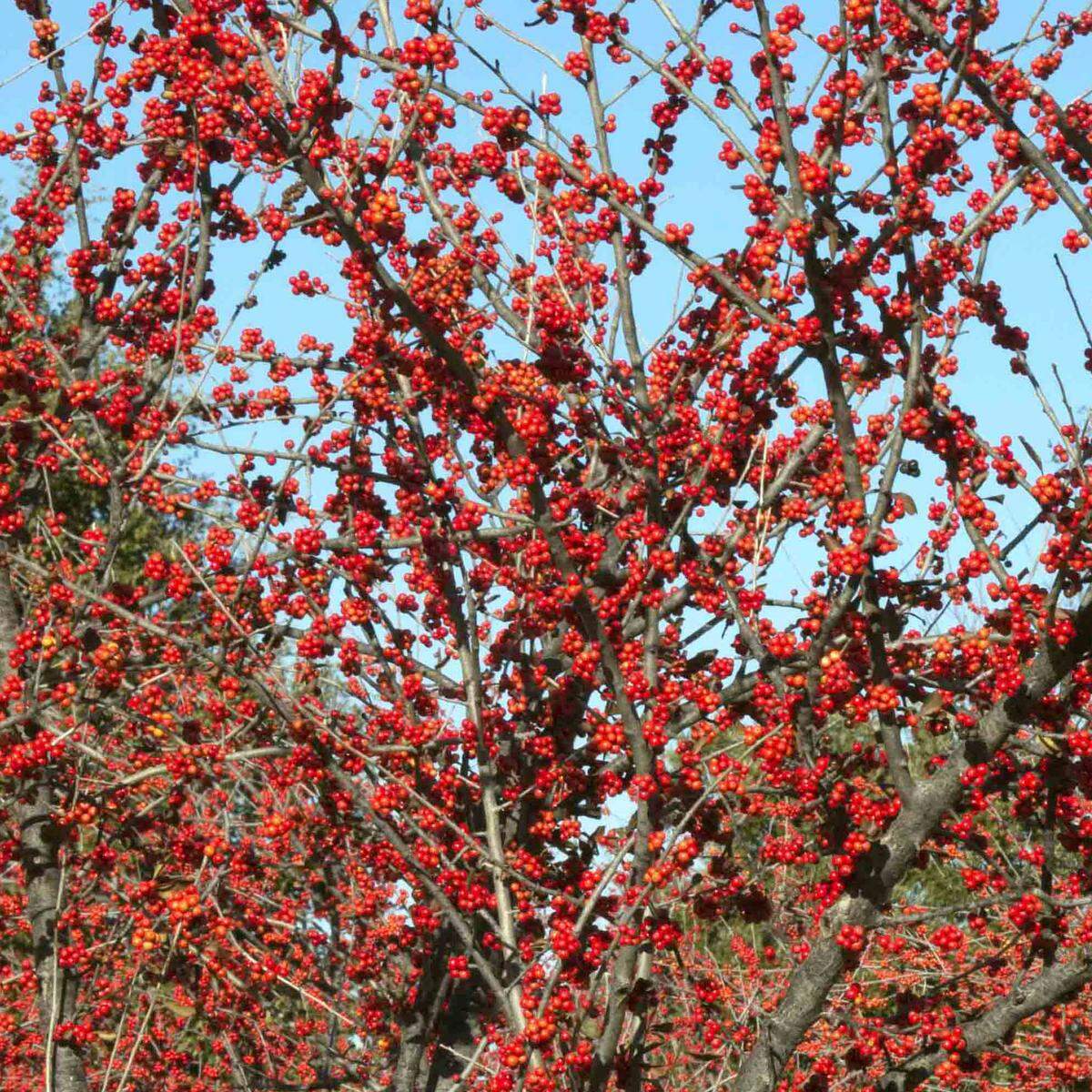
Yaupon holly is one of the most popular of all small landscaping trees. It’s native through a broad band of Central Texas where landscapers discovered in the 1950s and 60s that they could dig the old plants, oft grazed by herds of cattle, trim them up, and use them as small accent trees near entries and around patios. The plants’ popularity hasn’t waned since, but be sure you’re getting a female plant when you buy. They’re the only ones that will bear winter berries.
Nellie R. Stevens holly is one of the most stunning of the large screens and small trees. It grows to 15 to 20 feet tall and 12 to 15 feet wide. Its leaves are 2 to 3 inches long and 2 inches wide, and they’re the darkest green of any plant in your landscape. Its berries are almost as large as small marbles. They’re crimson red, and they hold all through the winter into the following summer. It can be trained as a large shrub or pruned with one or several trunks into a symmetrical tree.
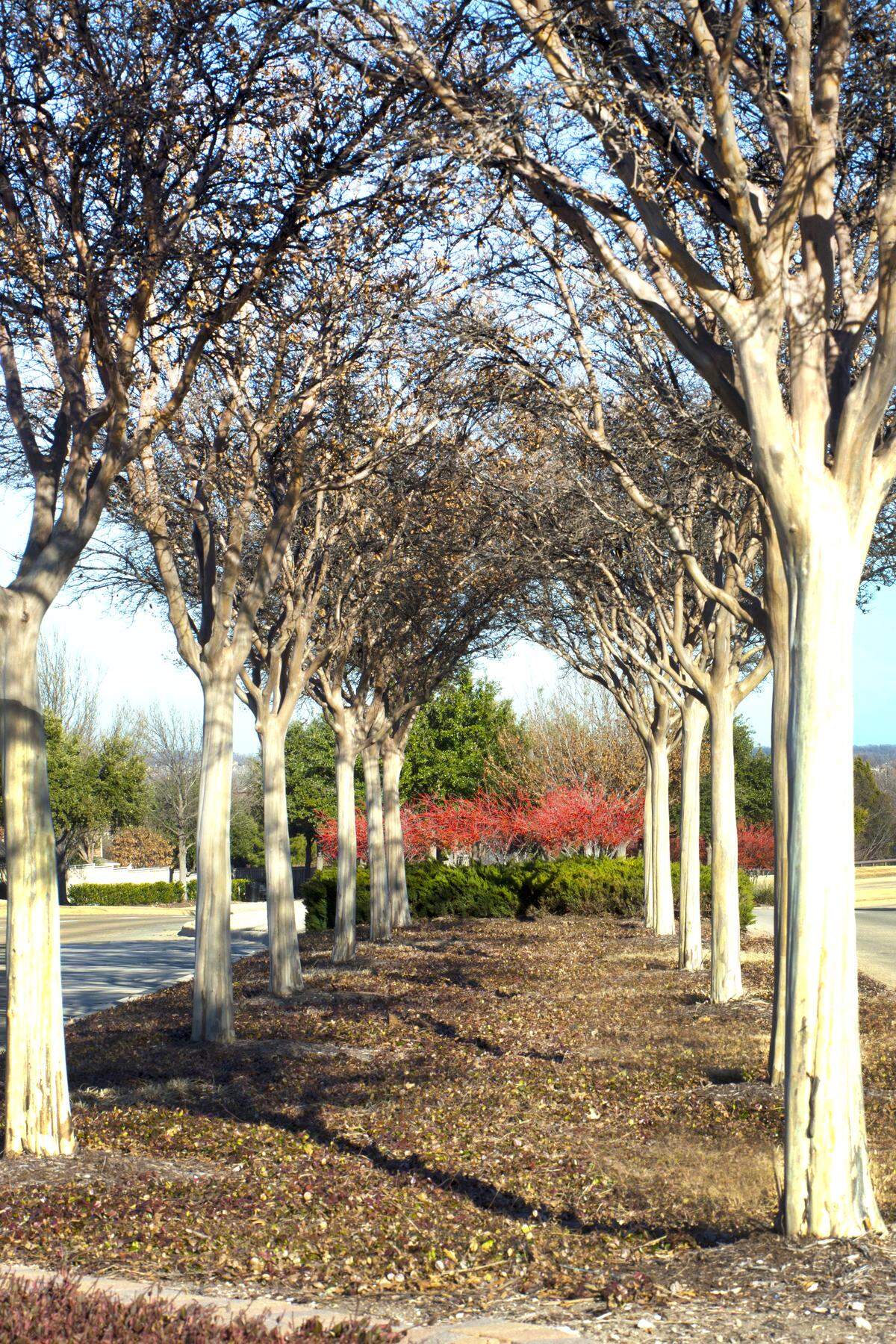
Crape myrtles You may be aware that crape myrtles come in all shapes and sizes. Some are dwarf, topping out at 2 to 3 feet. However, here we’re talking about the tall varieties that grow to 20 to 30 feet at maturity. There are 30 or 40 varieties in that size range, with colors including red, pink, white, lavender, and purple. Most have green leaves, but some have been developed with burgundy foliage. Personal observation: types with burgundy leaves seem to grow more slowly and produce fewer flowers. Crape myrtles also have the decided bonus of beautiful trunks and lovely fall colors. But don’t ever “top” them or you’ll give up much of the beauty of their natural growth forms, probably forever.