
Try this mid-winter plant for stunning color in your North Texas garden
Are you tired of these “When I was a kid” talks, gardener? Well, bear me out one more time. This one may be the best. I can’t think of a flowering potted plant that’s made any more strides in my lifetime than our lovely mid-winter cyclamen.
When I was a kid you almost never saw cyclamen in greenhouses in Texas. They couldn’t handle our heat, and even if you did get one to bloom, it didn’t hold up very well once we got it indoors. That’s because their preferred temperature back then was 55, and most of us carried our homes just a tad warmer.
Those were mostly selections of Cyclamen persicum, native to the eastern Mediterranean. While cultivation in Western Europe was recorded in the early 1600s, it was 200 years before Dutch and English breeders started selecting types to bring indoors.
We pick the plant up about 100 years ago. It was an established florist potted crop in Europe, typically sold in 4- or 5-inch pots. The plants had small blooms, but they would bear 10 or 20 flowers per plant.
Work ramped up after WWI in France as Pierre Morel began his award-winning breeding program that even included tetraploid selections (double the normal number of chromosomes).
From World War II until the 1980s the push was toward bigger flowers on stronger plants that could be sold widely as florist crops during the winter months, especially post-Christmas toward Valentine’s Day. But it was still a European plant for the most part.
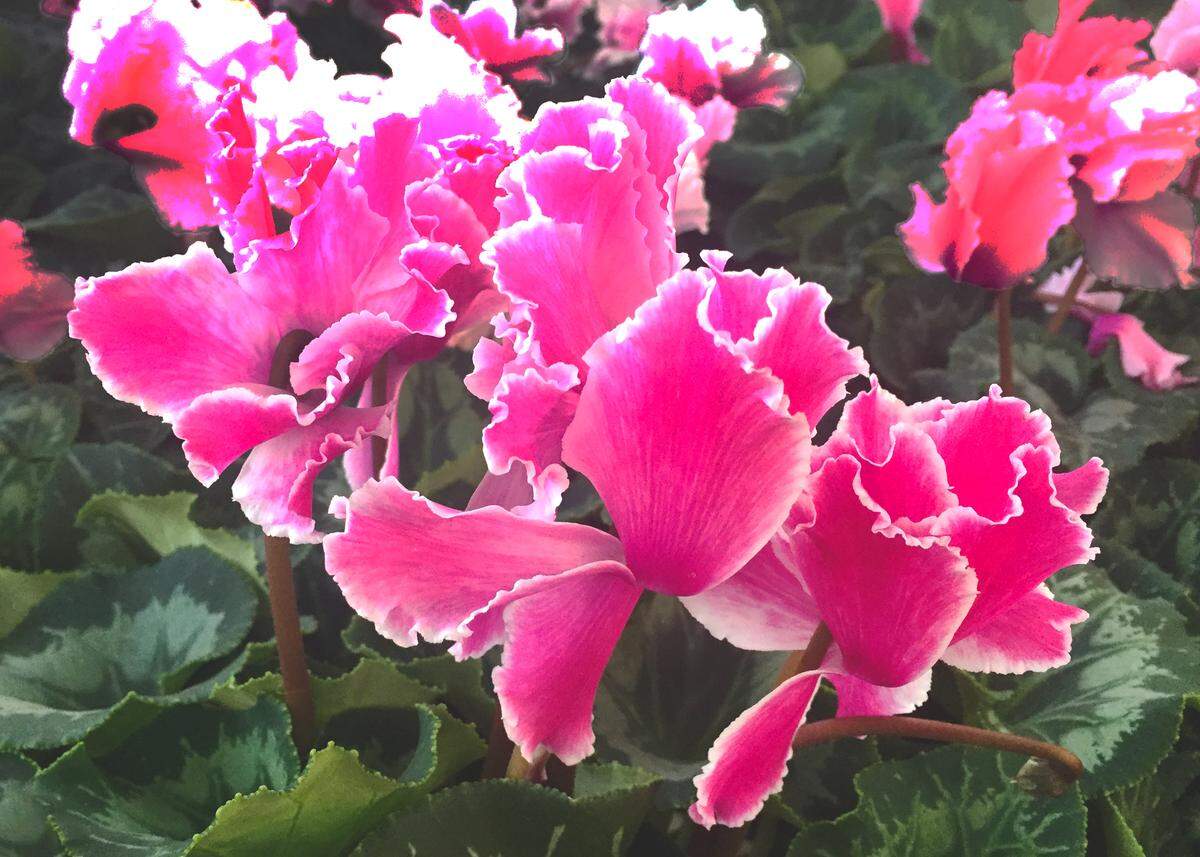
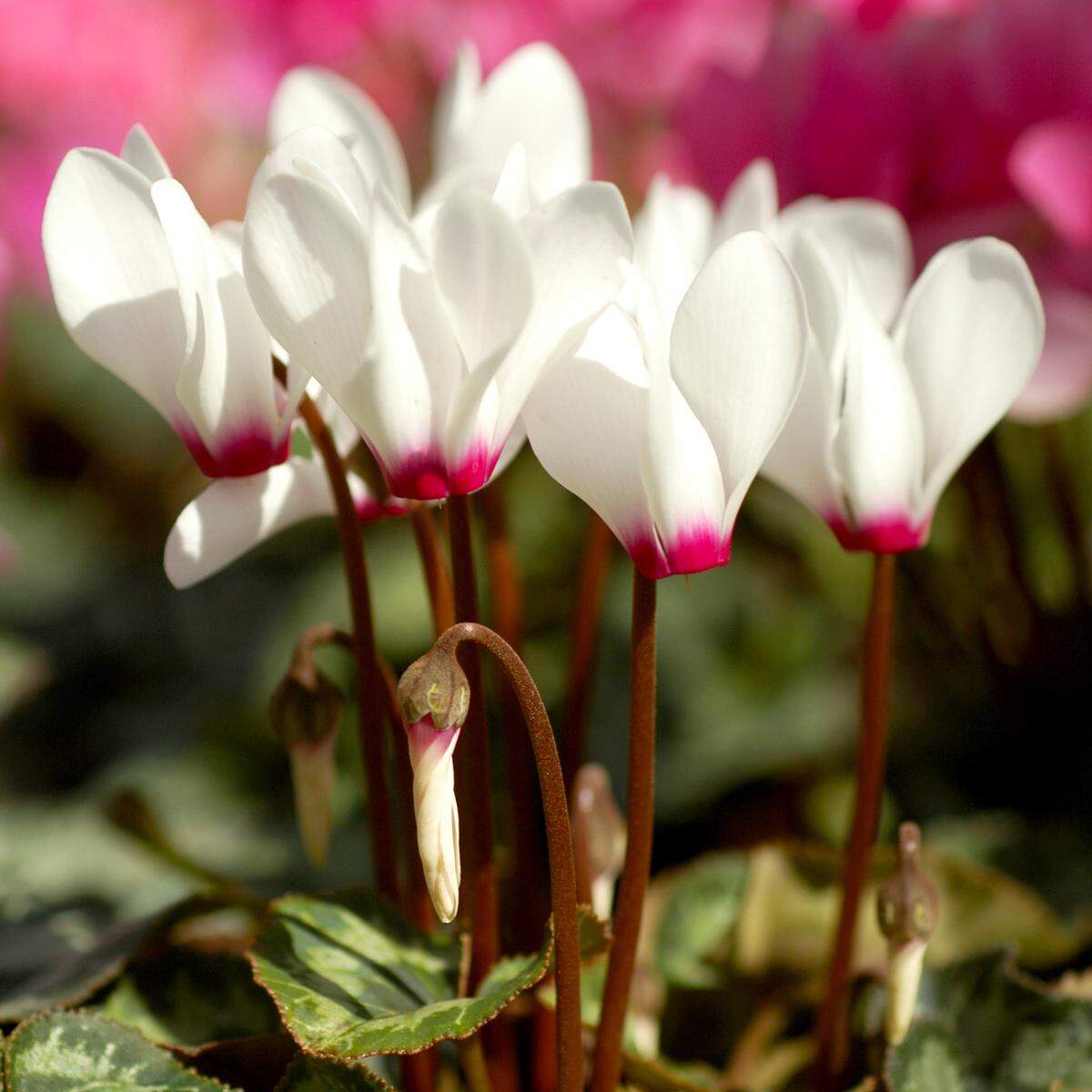
From 1990 until the present, cyclamen have been in the modern breeding era. You might even call it a frenzy. Hybridizers have been developing F1 hybrids for the vigor they bring to the greenhouse benches, tolerance to warmer conditions of late fall and early spring to extend the plants’ usable season, and series branding. We’ve seen that commercial branding in other types of plants, from pansies and roses to crape myrtles and vincas — where breeders introduce an entire line of genetically similar plants in different colors. That’s even happened with cyclamen. We’re now seeing stunning blends of colors blending reds, pinks, lavenders into whites. You just won’t believe your eyes.
We’ve seen mini-cyclamen suitable to smaller containers. That’s been great for growers as they gained high density production, but it’s also allowed us to plant multiple colors into one single large patio pot or color bowl. The smaller pots also are more suitable to indoor windowsills.
Hybridizers have paid attention to cold hardiness of their crops. That’s to the point that “hardy” cyclamen have been developed that can withstand light freezes along the Texas Gulf Coast or perhaps even in your own protected backyard setting. They’re good into the high 20s, and with protection from frost cloth, a few degrees colder.
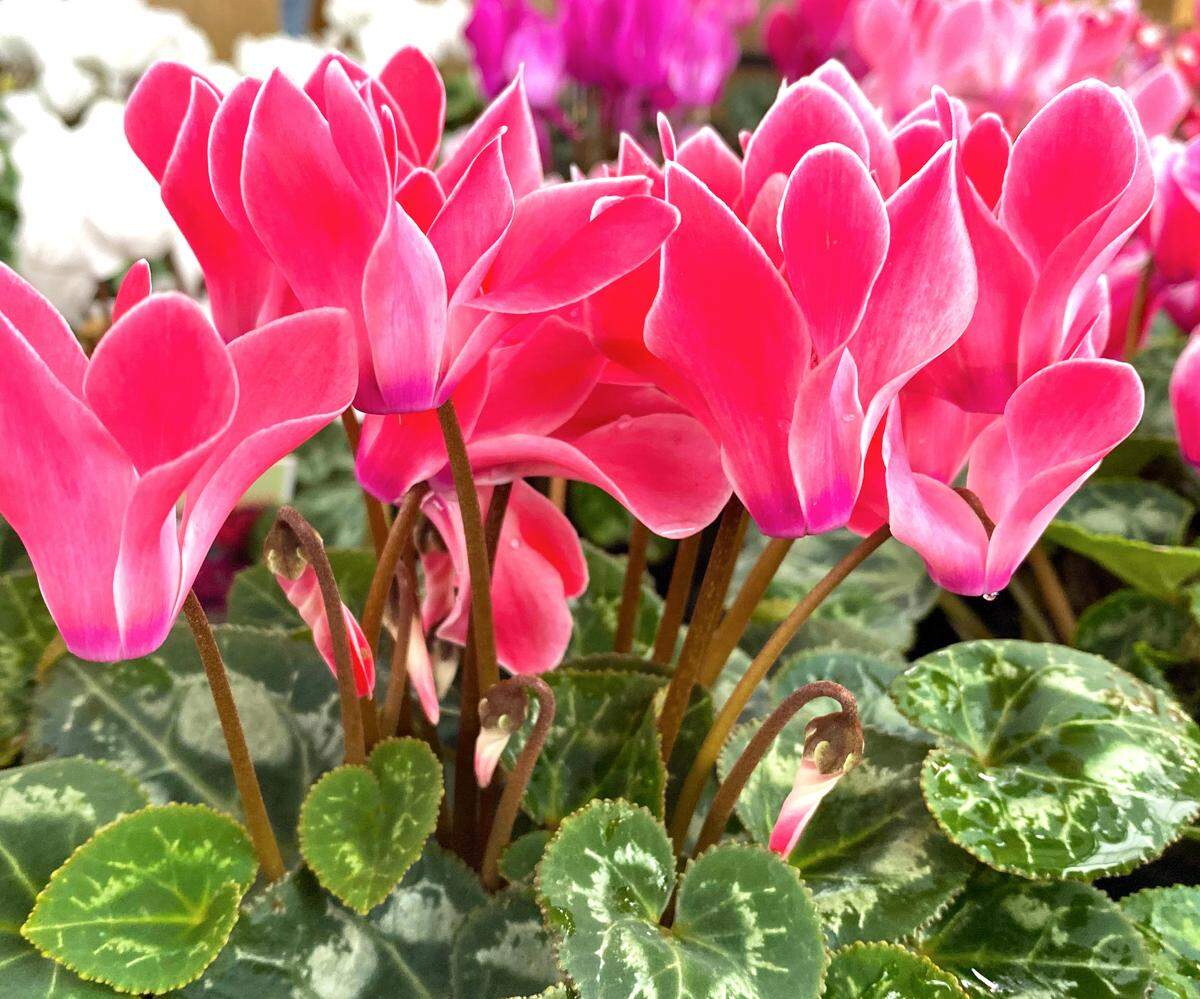
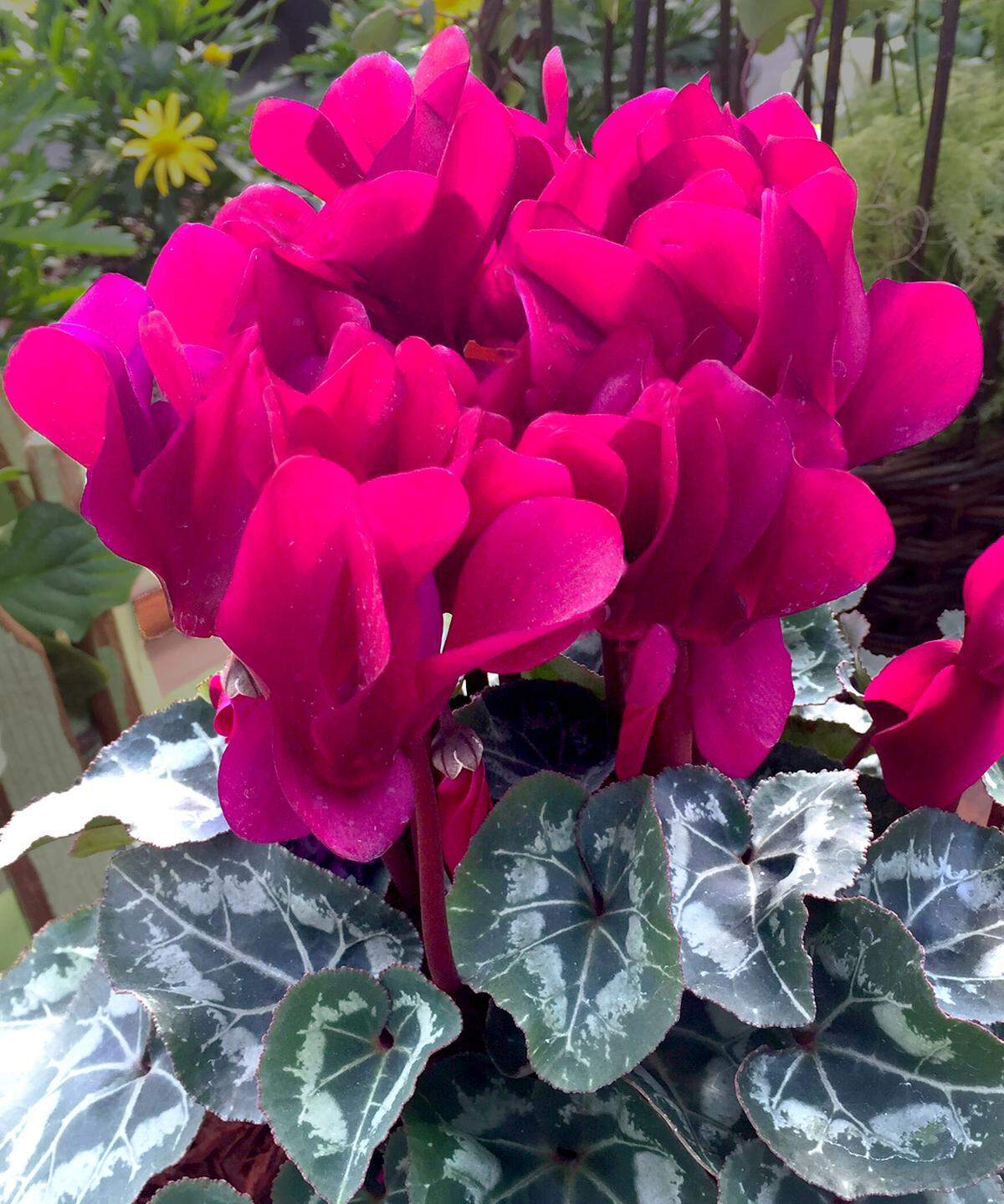
Some breeders have even been paying attention to the plants’ leaves. Advertising campaigns refer to their “jewel-like” leaves, and that’s actually a pretty good description. In various shades of green and silver, the leaves are sometimes even more showy than the flowers.
We Americans tend to be almost arrogant in thinking that we’re where all the action originates when it comes to breeding of floral crops. That’s just not the case. However, with cyclamen it’s slightly different. Where major seed breeders for outdoor flower crops are in Central and South America and Japan, as well as on the U.S. West Coast, with cyclamen most of the work is being done in Europe (England, France, and the Netherlands), with some being done here in the U.S.
When I was a kid, you might go an entire winter and never see a cyclamen in my hometown of College Station/Bryan. Now, as a result of all these changes, they’re mainstream plants we all can enjoy. They’re still sold in flower shops, but now also in groceries, nurseries, home centers, and scores of other sources. If you’ve not yet tried them, it’s high time that you did.

How to care for your cyclamen
Let’s assume that you have, or soon will have, a lovely cyclamen in your house with you this winter. The words of the day are “bright” and “cool.” Say them loud and say them often. Keep it near an east, south, or west window, and keep it out of hot drafts from the furnace or fireplace.
Cyclamen should never be allowed to dry to the point of wilting. Should that happen you’re bound to lose leaves. Steady, even moisture is best — never soggy wet and never dry enough that the leaves sag over the sides of the pot.
You won’t need to feed your plant while you have it indoors. It was given proper feedings as it was brought into bloom, and much of that nutrition is still available to it.
Similarly, you shouldn’t need to repot your plant. It will look good all spring. By summer it will start to look tired, and that’s the time that some folks move their plants into the shade and try to nurse them back into renewed growth in the fall. Honestly, that’s way too much work for this gardener. I learned a long time ago that it’s easier just to buy a new cyclamen each fall. With all these colors coming along, there will something exciting I’ll be wanting to try.