
The next two weeks are key for helping your North Texas lawn survive winter
We’re going to zoom in tightly on fall lawn care and focus on the things you’ll want to do in the next two weeks. They’re pivotal in how well your lawn survives the winter and comes out next spring. They’re even important in how great it will look over the next couple of months. Pay close attention.
Prepare to be frustrated
If you breeze through early September without applying pre-emergent weedkiller granules, you may pay a big price come March and April. That’s when ugly winter grasses could become unsightly across your lawn. And you won’t be able to do a thing about them then, because anything that kills those weedy grasses at that point will also kill your desirable permanent lawngrass.
You are here now in the middle of your one chance to avoid those cool-season grassy weeds. If you apply pre-emergent weedkiller granules Dimension, Balan, or Halts in the first 10 days of September and water them onto the soil surface, they will prevent germination of rescuegrass, ryegrass, and annual bluegrass (Poa annua). Those are the grassy weeds that sprout once temperatures drop and rains (or irrigation) return.
Two things need to be noted. If you plan to overseed your lawn so it will remain green over the winter, obviously you will not want to apply pre-emergent granules. You probably had already figured that out.
Also, it’s been documented by university research that annual bluegrass has been building up a resistance to these herbicides. That means you may not get 100% prevention. But, looking at the bright side, you’ll still get good reductions in infestations, and that’s worth pursuing. But don’t delay — remember: once they start growing, you’ve blown it.
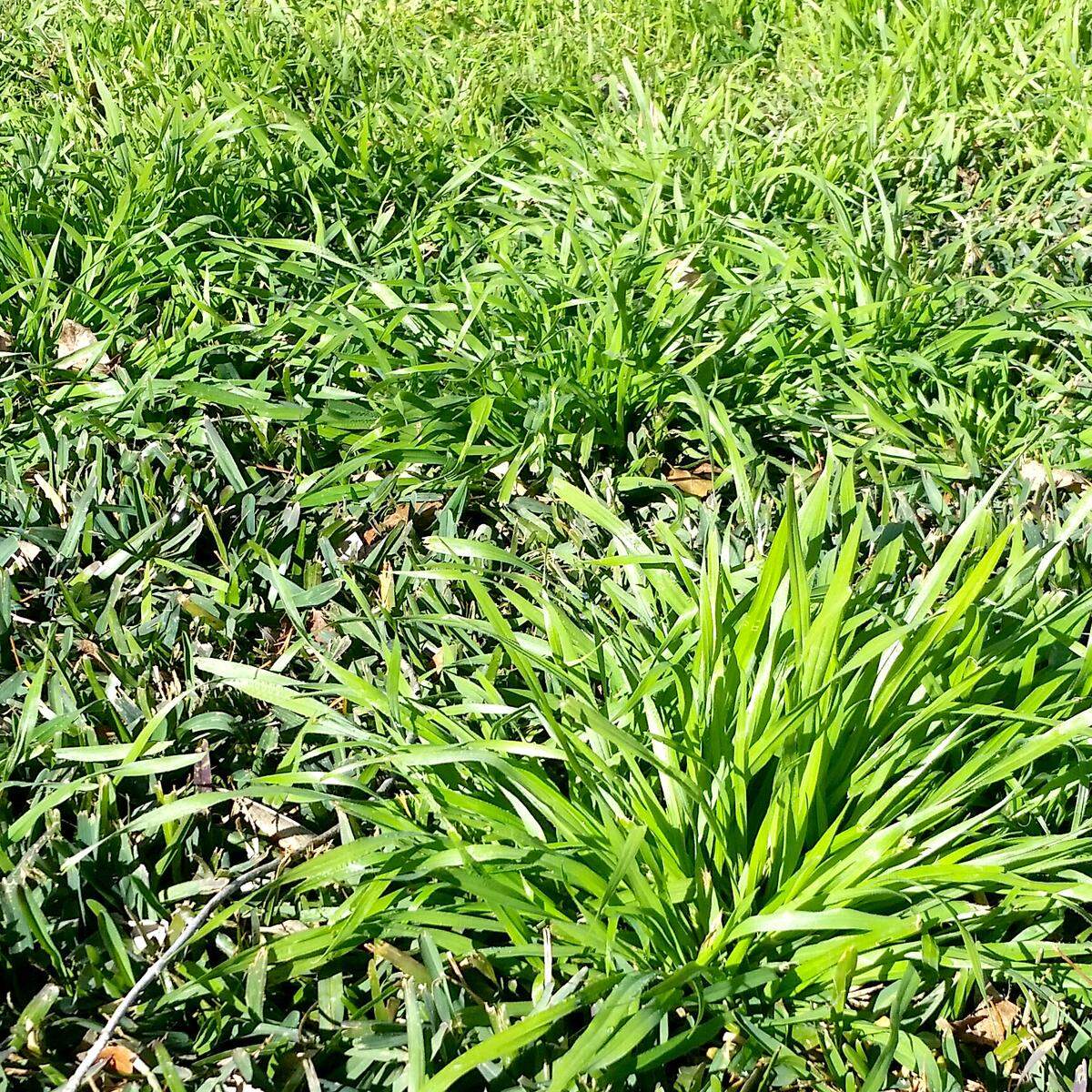
Time to feed your lawn
All summer I’ve been cautioning you not to feed your St. Augustine or zoysia because of gray leaf spot fungus and the fact that nitrogen promotes its development. Bermuda is not susceptible, so it could be fed anytime it was needed.
With cooler weather on the horizon, this is the time to apply a high-quality, all-nitrogen lawn food to your turf. This fertilizer is likely to be the same product you’ve been applying all season long, but it could also be labeled as a “winterizer” food. Either way, it should have 30 to 40% of its nitrogen in slow-release form. Apply half going east/west and the other half going north/south to ensure even distribution, then water it into the soil with a deep soaking. It’s also fine to feed your bermudagrass lawn with the same product if it’s been eight or more weeks since last you did. This would constitute the “fall feeding,” and it should get your turf all set for the winter.
Transition of lawn problems
It’s a tough time to diagnose lawn troubles. Late summer still has hot-weather insect and disease problems hanging around, but we’re already seeing some of the cool-weather types showing up.
- Chinch bugs in St. Augustine. I was looking in on a friend’s lawn last week while he was away and it appears he’s having a late-summer outbreak of these small, black insects that suck the life right out of the grass. They show up in hot, sunny spots like along curbs and front walks. You can water, but it doesn’t green the grass up. You can see the BB-sized black insects if you part the grass with your hands. They’ll have irregular white diamonds on their wings. Garden centers have products that will control them quickly.
- Gray leaf spot fungus in St. Augustine and zoysia. Grass yellows in irregular areas, sun or shade. Blades have diamond-shaped gray lesions. As mentioned, nitrogen promotes the disease, so avoid applications while it’s hot. The fungicide Azoxystrobin will stop it.
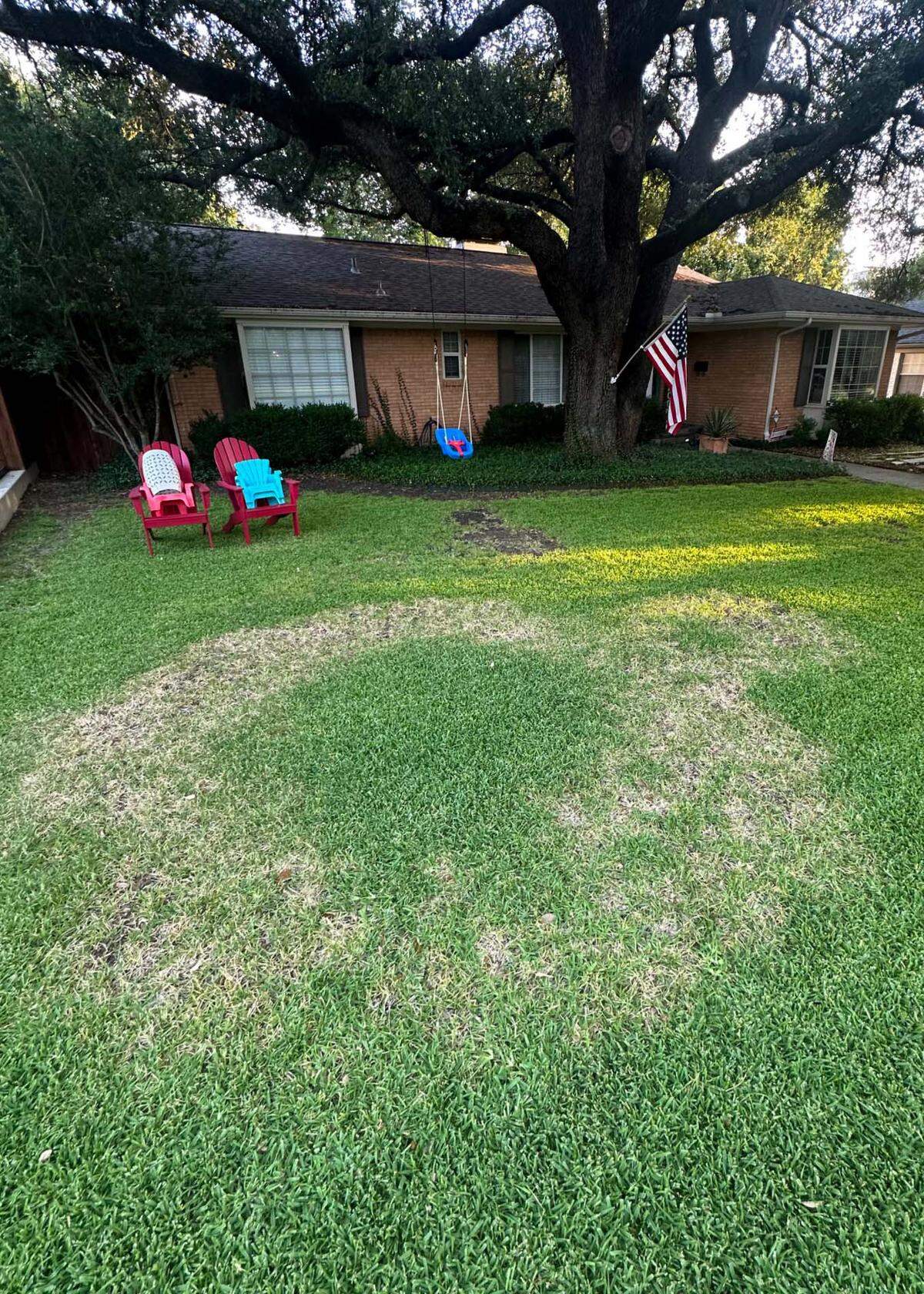
- Brown patch (large patch) in St. Augustine and zoysia causes circular yellowed, then browned areas 18 to 24 inches across. The leaf blades pull loose easily from the runners. You can see where the fungus has caused them to be deteriorated at their bases. Avoid nighttime watering and apply Azoxystrobin fungicide. This disease normally doesn’t show up until October, but I have already had photos shared with me for diagnosis.
Planting new grass
You can plant bermudagrass sod well into the fall. It’s cold hardy here in North Texas. As a result, landscape contractors plant it pretty much all year ‘round. Homeowners would be better off finishing up their plantings by mid- to late September, however, just to be on the safe side. You never know when the first freeze will stop most growth, nor do you know how cold this winter may get.
To address the other question, it’s very late to be planting St. Augustine sod or bermudagrass from seed. There isn’t much time for either to establish good roots before temperatures start to fall. You need to wait until mid-spring for those planting choices.
Finally, if you have an area of bare ground that won’t be available for planting for several weeks, ryegrass may be your best choice. Or perhaps you’re one of us who likes to have green grass 12 months a year. We overseed our permanent lawns with ryegrass in September or early October. Of course, overseeding only works if we have not applied pre-emergent granules to the lawn.
Overseeding works better with bermuda lawns than it will with St. Augustine since the seeds filter through the bermudagrass and make good contact with the soil. The broader St. Augustine blades deflect the seeds and prevent uniform stands. Plus, rye has a habit of sticking around a bit longer in the spring than we might want with St. Augustine, especially if any shade is involved. That’s the time called “transition,” and the rye can compete more than we would want. St. Augustine may thin in the process.
Early September is a watershed time in the care of North Texas turfgrass. Make note of the things you need to accomplish and start things in process this weekend.