
This easy growing flower adds a patriotic flair to your landscape
Flag Day, Independence Day, and Labor Day all give you reasons to celebrate being an American, and an Australian flower gives you one of the best ways to show it via your landscaping.
We just don’t have enough blue flowers in Texas to cool down our summers, but fanflower covers that base handsomely. Introduced with great (forgive me) fanfare back in the early 1990s, fanflower has become a landscaper’s standard — an annual that thrives in a variety of settings with few demands and many rewards. But many Texans still don’t know it or use it. Let me tell you about it.
Perhaps you know it by its more melodic scientific name — Scaevola aemula. (Never been one of my favorite names.) I just did a little research for you on the origins of that name from the Missouri Botanical Garden website. They say “Scaevola” is from Greek scaeva meaning “left-handed” for the hand-like aspect of the flower. And they refer to it as a perennial in Australia, but that’s in its tropical native homes. It blooms non-stop from summer through cold weather, even in the hot, humid Aussie climate.
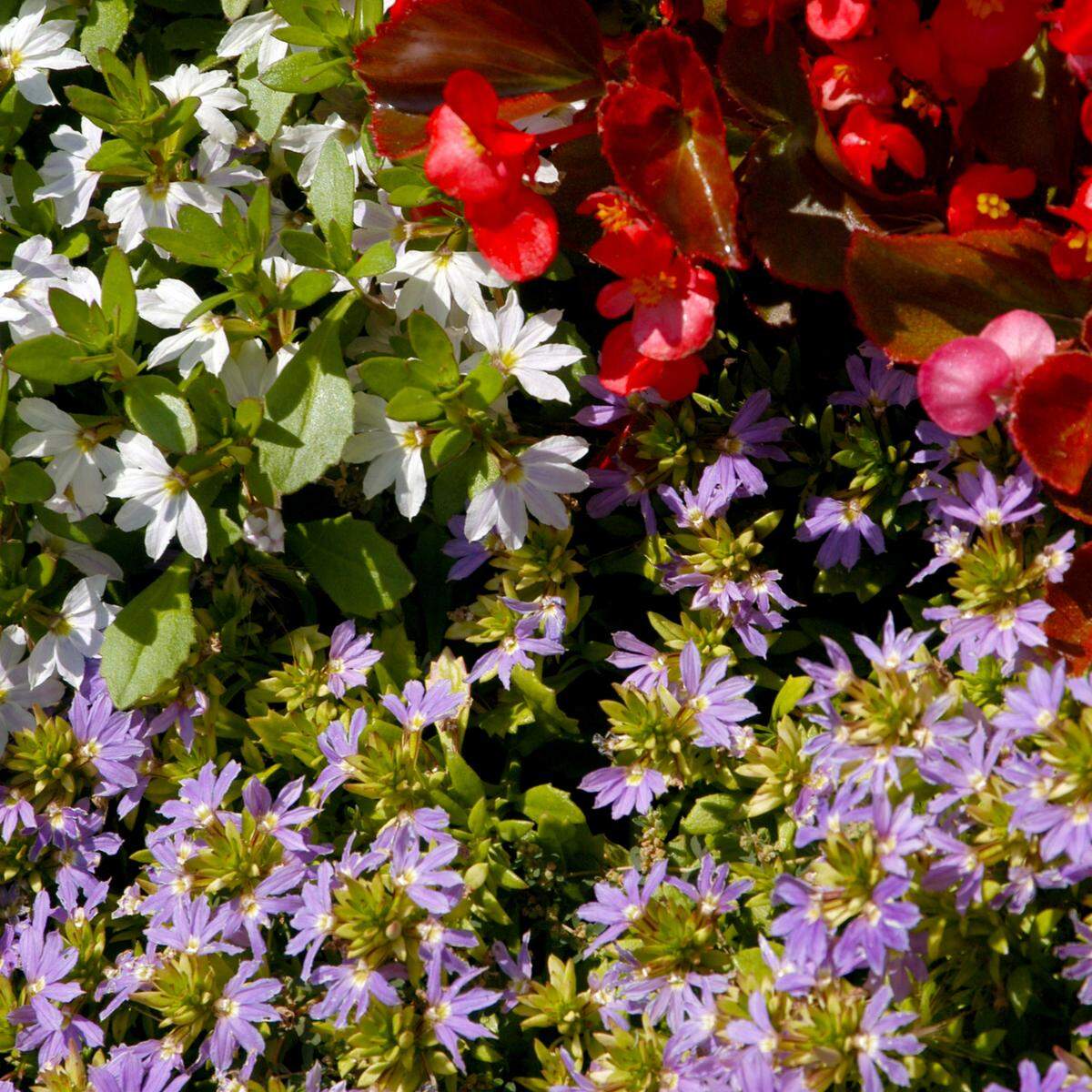
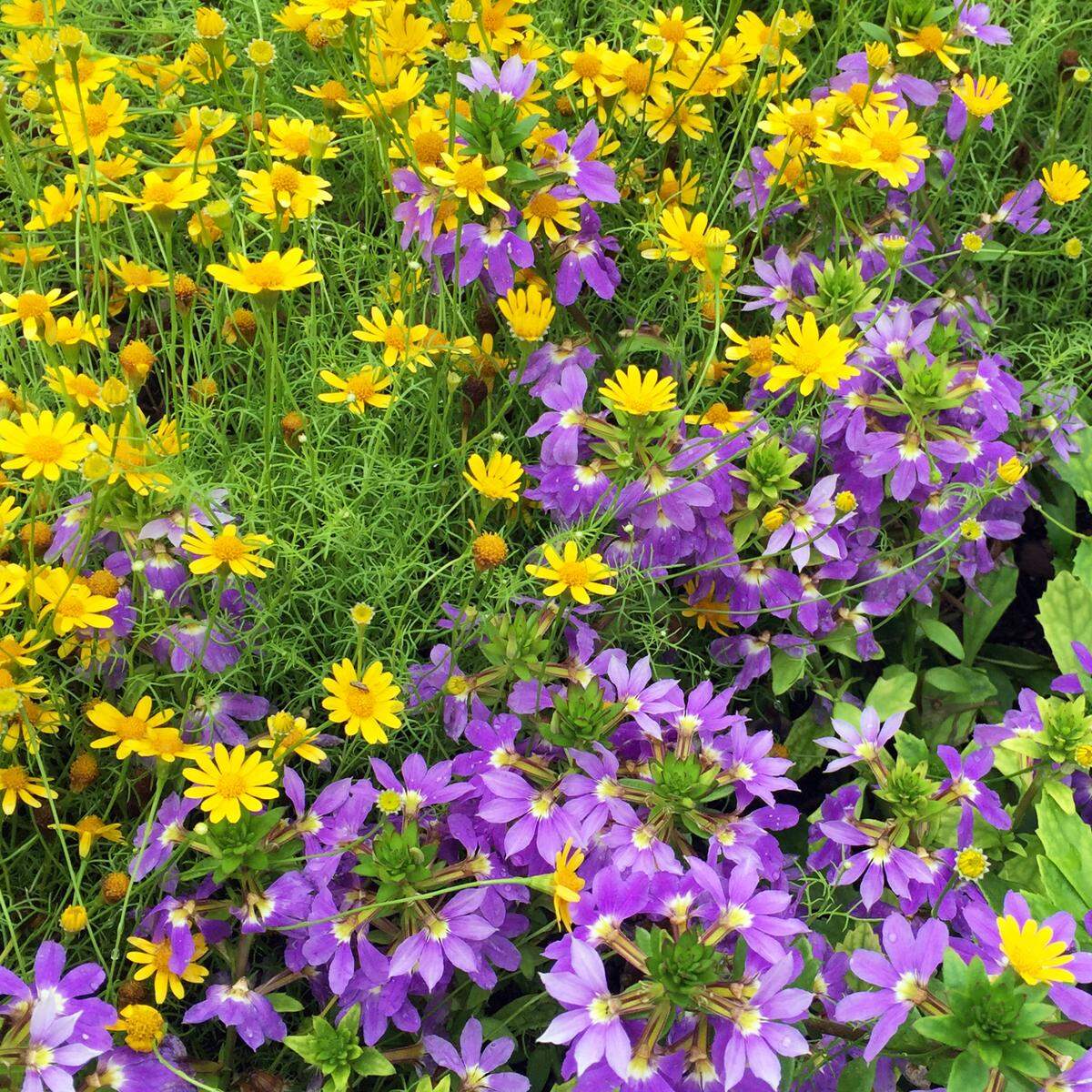
Still with me? Does that sound like something you’d like for your hot, humid Texas garden? Trust me — you would. Once you grow this plant, you’ll never be without it.
We grow fanflowers as annuals here in North Texas. They grow to 7 to 12 inches tall and they sprawl to as much as 24 inches. That description has “hanging basket” or “spiller plant” for a container written all over it, and those are exactly how most of us first saw this plant being used.
Once we had seen fanflower used in baskets and big pots, we decided that if it was good enough to perform its magic in those settings, why couldn’t it be used in the front edge of a wide floral border? And bingo, a new star was born for our landscaping. In fact, when you plant fanflowers in well-prepared garden soils they really take off. That’s when you see the most luxuriant growth and best flowering ever.
‘Blue Wonder’ was the first cultivar I ever tried. I bought it each spring for several years, but then it was replaced by ‘New Blue Wonder,’ but I don’t find any mention of that “upgrade” online any longer. The original ‘Blue Wonder’ remains one of the big sellers.
As you might expect, branded types have entered the picture and they’ve brought some lovely options. The Whirlwind Series from Proven Winners is offered with ‘Whirlwind Blue,’ ‘Whirlwind White,’ and ‘Whirlwind Pink.’ They’re all very attractive. It’s a shame the pink type hasn’t been bred into a red form yet. When that comes, we’ll be able to plant our flag in its entirety of blue, white – and red.
Suntory Flowers, a huge international plant-breeding conglomerate, has developed an entire series of many shades of fanflowers. They call them their ‘Surdiva Series.’ That group includes white, several shades of pink and rose, on to blues, even rich violet-blue. These are some flashy scaevolas!
How to succeed with your fanflowers …
Actually, it’s hard to fail in growing fanflowers. You’d have to forget to water them, or plant them into horrific soil to which you had done no prior bed prep. Let’s not do those things.
They’re best suited to morning and early afternoon sun (until 1 or 1:30). Like all of us, they’d prefer not to bake from 1:30 until 5. Sun from early evening on could wrap up their day.
Work up their planting bed prior to planting. Incorporate several inches of a variety of kinds of organic matter along with 1 inch of expanded shale soil amendment. Rototill to 10 or 12 inches. Rake to a gentle slope to ensure good drainage. The bed needs to be several feet wide to allow them ample space to grow and spread. (You don’t want them flopping out onto the turfgrass.)
I plant 4 inch pots on 12- or 15-inch centers checkerboard style — pretty much as I plant my groundcovers. Water them immediately after planting.
One week after planting apply a diluted high-nitrogen, water-soluble fertilizer to get them off to a quick start. Repeat one week later. After that, feed them every three or four weeks with an all-nitrogen granular fertilizer with 30% to 40% of that nitrogen in slow-release form. This is the same fertilizer you should be applying to your turf, also your shrubs and groundcovers. Be sure the fanflowers’ leaves are dry when you apply the granules, then use a broom to sweep off any granules that take up residence on the leaves after the feeding.
As for additional care and instructions, I’m pretty well done. These plants are just easy. You can root them from cuttings if you want more or if you want to carry them over in a greenhouse for planting next spring.
Otherwise, give a big American salute to this newcomer plant from another Hemisphere. It’s here to stay.