
It’s about to get hot in North Texas. How to help trees in extreme summer heat
I wouldn’t want to stand out in the middle of our yard now until fall without a little extra love and attention.
It gets brutal out there. But that’s exactly what we expect out of our shade trees. All the while they’re getting blasted by the same burning rays we want them to block so we can go out and chat by the pool.
Sperry here. Tree advocate at their service. Let’s discuss things we can do to keep our valuable shade trees healthy and happy. These are easy do-it-ourselves things that don’t require calling in a certified arborist, although that’s always a great idea if the wheels start to come off.
Here are your top tree care tips in North Texas
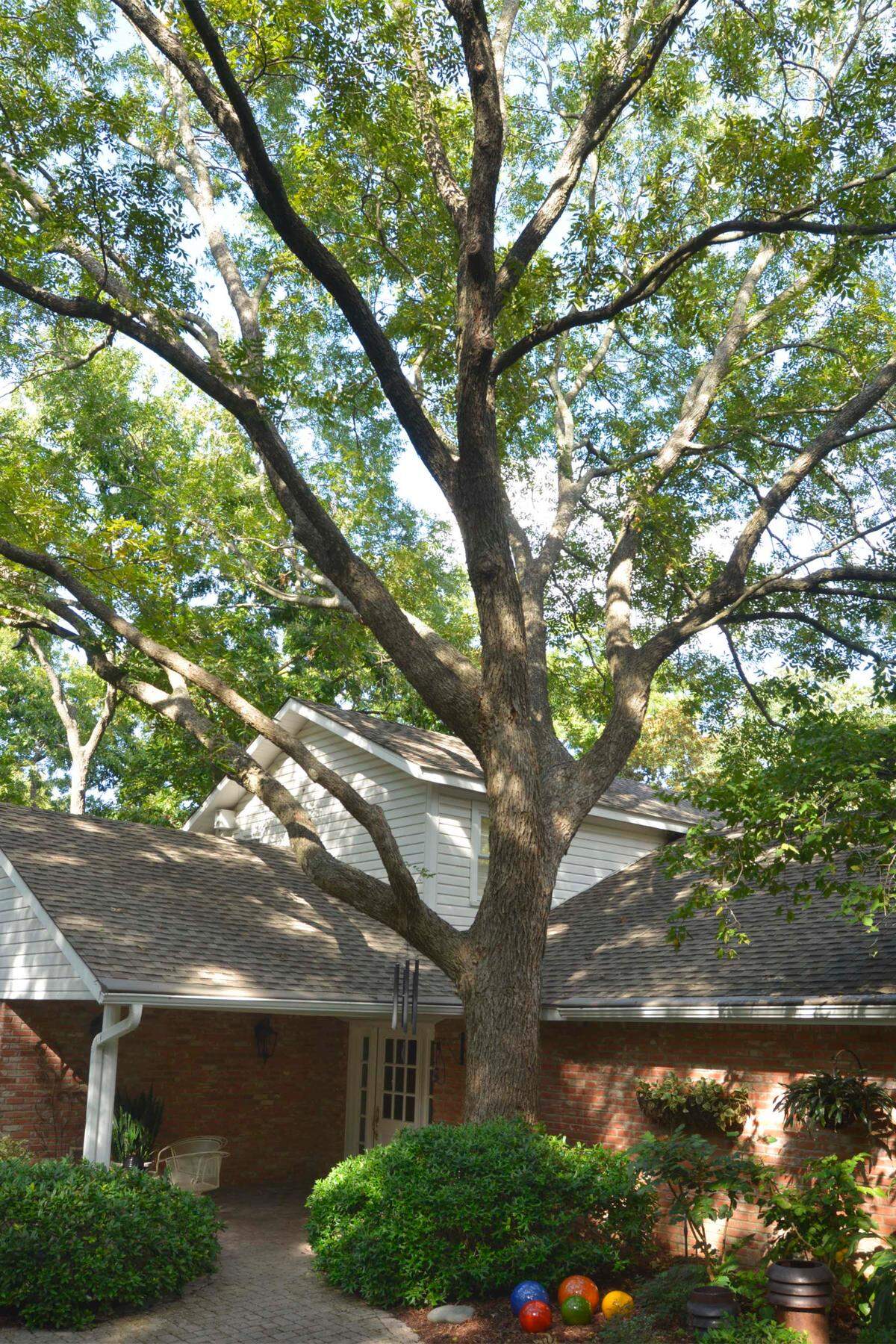
▪ The first one will obviously pre-date this discussion. Hopefully you chose a top-quality species. It’s hard to start with a problem-prone species like a silver maple, lacebark elm or sycamore and end up with a great long-term investment. So, let’s hope you began your landscape with an oak, cedar elm, magnolia, pecan, Chinese pistachio or other dependable type.
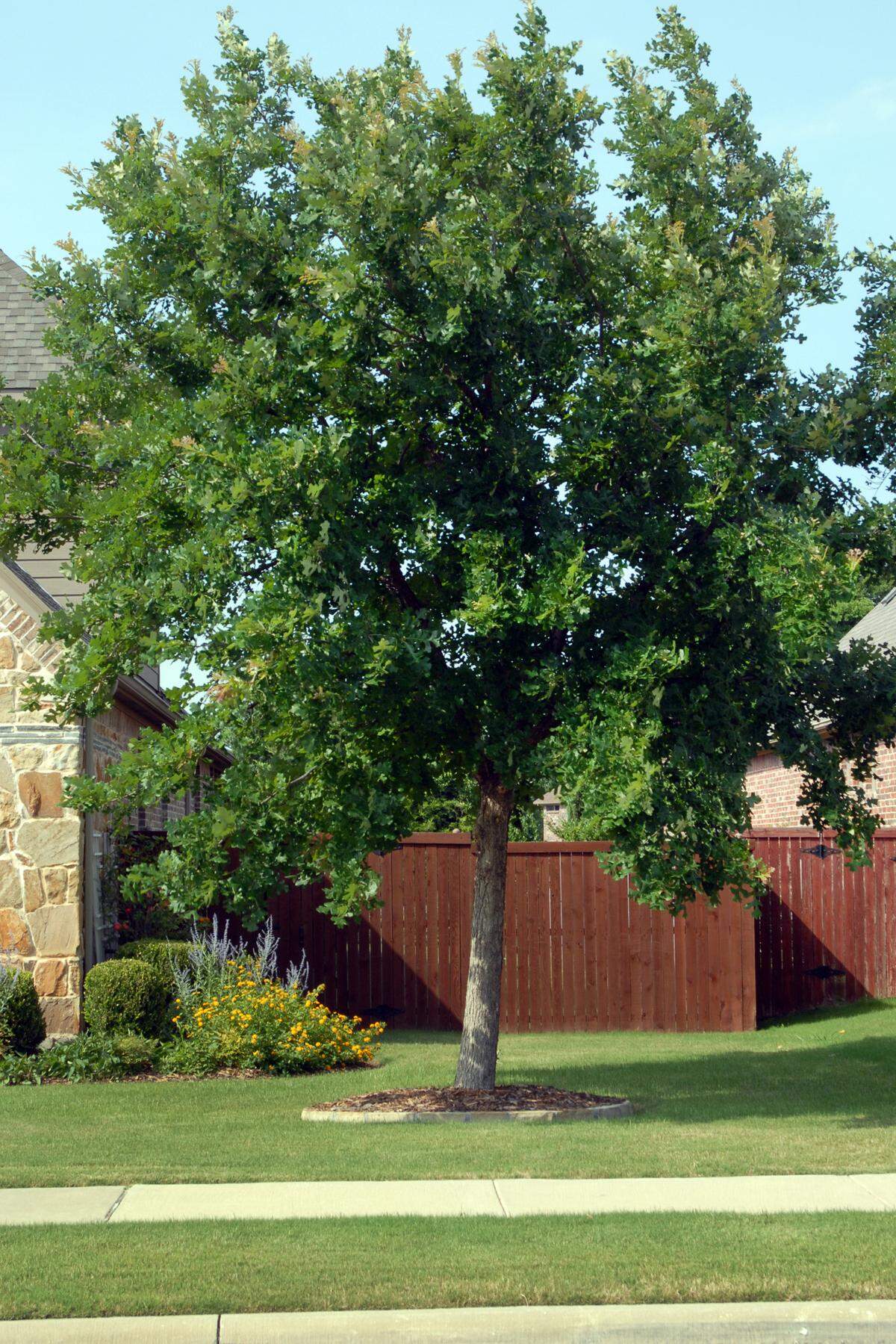
%20begins%20the%20day%20they%20are%20planted.jpg "5.19.25 Great care of shade trees (new red oak) begins the day they are planted.jpg")
▪ Protect young trees by wrapping their trunks for the first one to two years. Odds are they won’t have developed thick bark. They’ll be vulnerable to sunscald, and just a few dollars spent on paper trunk wrap from the ground up to the lowest branches could make a huge difference.
▪ Stake and guy trees that tend to develop a lean. If a new tree is already out of plumb, use a sharpshooter spade to “jiggle” its root system enough while it’s wet. Once you have it vertical, anchor it firmly in place for the first year. Keep the cables taut at all times, and protect the bark from rubbing by using rags or short sections of old garden hose.
▪ New trees should be watered two or three times weekly. Soak them slowly and deeply, aiming to put an amount of water equal to the container size from which they were planted. In short form, a 20-gallon tree would get 20 gallons of water, two to three times per week all summer long. A larger tree would get proportionately more. A water bubbler on the end of your garden hose works fabulously for that purpose. It allows you to run the hose at full volume without washing soil out from the root ball.
▪ Established trees won’t need such rigorous attention. Should a prolonged drought kick in, your trees can exist on the water you give a well-maintained lawn. If you are watering only the trees (for example, during watering cutbacks), use an old-fashioned soaker hose turned upside down. Lay it in a large spiral at the drip line. That’s where, if the tree’s leaf canopy were an umbrella, the water would run off. That’s where the most active “feeder” roots will be, so that’s where your deep watering is most critical. Let the water run there for several hours, then move it a couple of feet closer toward the trunk (or farther away from it) and let it run a few more hours.
“Deep-watering” rods are a waste — they put the water too far into the ground and they miss the highly functioning surface roots. And the water bags you put up around the trunks of trees become almost a joke. There are virtually none of the small active roots up in that area. Again, those roots are way out around the outer drip line.
▪ If you are going to fertilize your lawn in the next couple of weeks, your trees will share in that bounty as well. There is no reason to apply extra fertilizer to the shade trees themselves right now. You really don’t want to promote a lot of vigorous new leaf growth going into hot weather. The only possible exception in feeding would be for new trees that were dug and replanted over the winter. They would benefit from applications of a high-phosphate, liquid root stimulator solution monthly the rest of this growing season.
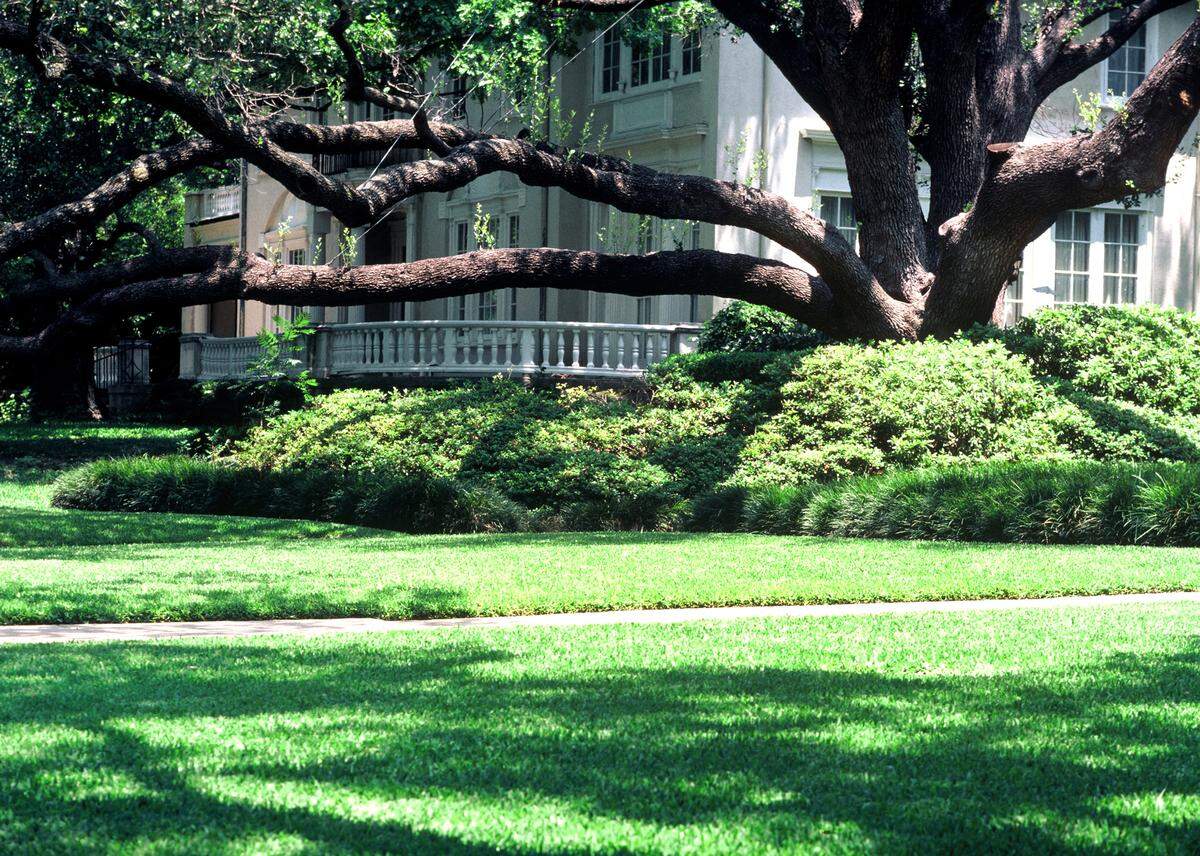
▪ This spring, for the most part, has been relatively cool and quite moist. Our trees have become acclimated to those conditions. There will soon come a time when conditions will turn to the normal blast furnace of a hot Texas summer. Veteran gardeners know to expect trees to start shedding leaves they gained during the great growing conditions of springtime. It will be older leaves — those farthest back on the stems.
They’ll turn yellow and drop, almost like autumn. That’s to be compared against iron deficiency, in which case the newest leaves are yellowed with dark green veins, and they remain attached to the stems — they don’t fall off. The premature leaf drop brought on by hot, dry weather is most pronounced on large-leafed, fast-growing shade trees such as cottonwoods, silver maples, catalpas, sycamores and mulberries, among others.
Don’t let this summer leaf drop concern you. It’s natural, and it may be very conspicuous this summer because of the great growing conditions your trees have experienced so far this year. Do the best you can to keep up the regular deep soakings and your trees will come through just fine.
▪ As the weather turns hotter and conditions become more challenging, you can expect insect and even disease problems to become more noticeable. Bagworms in conifers will be first. In fact, they’re probably getting an early start already on eastern red cedars, arborvitae, cypresses and others.
Tent caterpillars on pecans, persimmons, walnuts and a few other trees will come next, and then lace bugs on elms and oaks. Aphids will hit pecans, and so on and on. You can control most of these with modest spray equipment you can manage from the ground. Do your homework on identifying them and the best means of stopping them.
Summer tree care is critical. Ask any qualified arborist what a large shade tree is worth. Their response will give you incentive to pay more attention to your trees’ health and welfare.
This story was originally published May 22, 2025 at 5:30 AM.