
Japanese maples have captured Texans’ hearts. What to know growing them in DFW
They’re historically rich in the horticulture of the Far East, but Japanese maples are comparative newcomers to Texas horticulture. It’s only in the past 40 or 50 years that these trees have hit the big time across the landscapes of our area. By now, though, local gardeners rush to include them — often in the wrong places. Often that can be a costly mistake. Let’s cut through the fog and help guide you to a successful outcome with these most elegant of all our small trees.
The original species is botanically Acer palmatum, referring to its palmately (hand-shaped) leaves. In its natural form its leaves are bright green, star-shaped with bold lobes. It grows to 25 to 30 feet tall with vase-shaped branching, but early botanists noted that variations were found in nature in growth forms, heights, leaf shapes and sizes, and even leaf colors. They concluded that the tree either mutated freely or hybridized naturally. The website japanestmaple.org says that a 1710 garden catalog in Japan listed 36 varieties. By 1733, an additional 28 names had been added, and 150 years later there were more than 200 cultivars in the market.
However, World War II took horticulturists to other endeavors and collections were abandoned or even burned for firewood. It wasn’t until the 1960s and ‘70s when interest in Japanese gardens began to develop. These special maples again caught the eyes of enthusiasts.
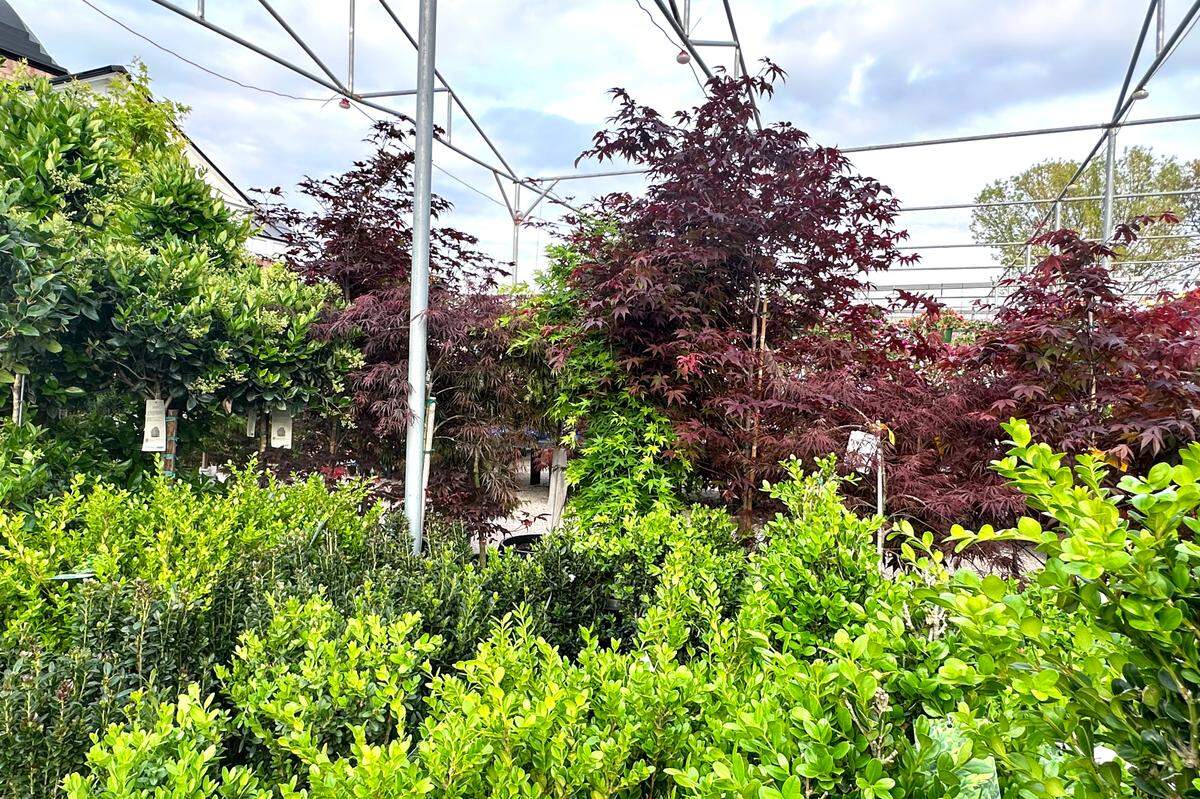
Now there are perhaps 1,000 cultivars in existence, although sloppy recordkeeping and naming practices may have resulted in many duplications. It’s a circus out there when you go shopping, compounded by the fact that many varieties’ names are in Japanese.
If you’re planning on buying a Japanese maple…
Most nurseries are stocked with excellent supplies of these beautiful trees. Odds are that they’ll be lining their main corridors just because they’re so eye-catching. So, this is probably a good time to warn you that the trees are a bit on the expensive side. That’s because they are all grafted onto more durable rootstocks. That’s what you must do if you’re trying to propagate a genetically special selection of a shade or fruit tree. There’s a great deal of hand work and time involved in doing that, plus a certain amount of mortality.
Japanese maples are also slow-growing by their nature, so that 5-, 10-, or 20-gallon specimen took extra time to make ready for market compared to a live oak or red oak, for example. Add to that the fact that the majority of Japanese maples in America are propagated and grown in the Pacific Northwest. There’s a lot of added cost in transporting them to Texas.
,%20but%20is%20most%20noted%20for%20its%20coral-red%20stems.jpg "4.07.25 Coral Bark Japanese maple has green foliage (with handsome fall shades), but is most noted for its coral-red stems.jpg")
My suggestions in buying your tree…
I think I can help you succeed in choosing and growing your Japanese maple. Here are things I’ve learned in 50 years of having them in my North Texas gardens.
▪ Be sure you have a space that’s right for your Japanese maple. They’re native to cool, moist hillsides where temperatures peak in the 80s. We don’t have those readings, so we must make compromises. They struggle with our summer temperatures and hot, drying winds, so we must locate them accordingly. For the record, winters will not be a problem here — they’re completely winter-hardy.
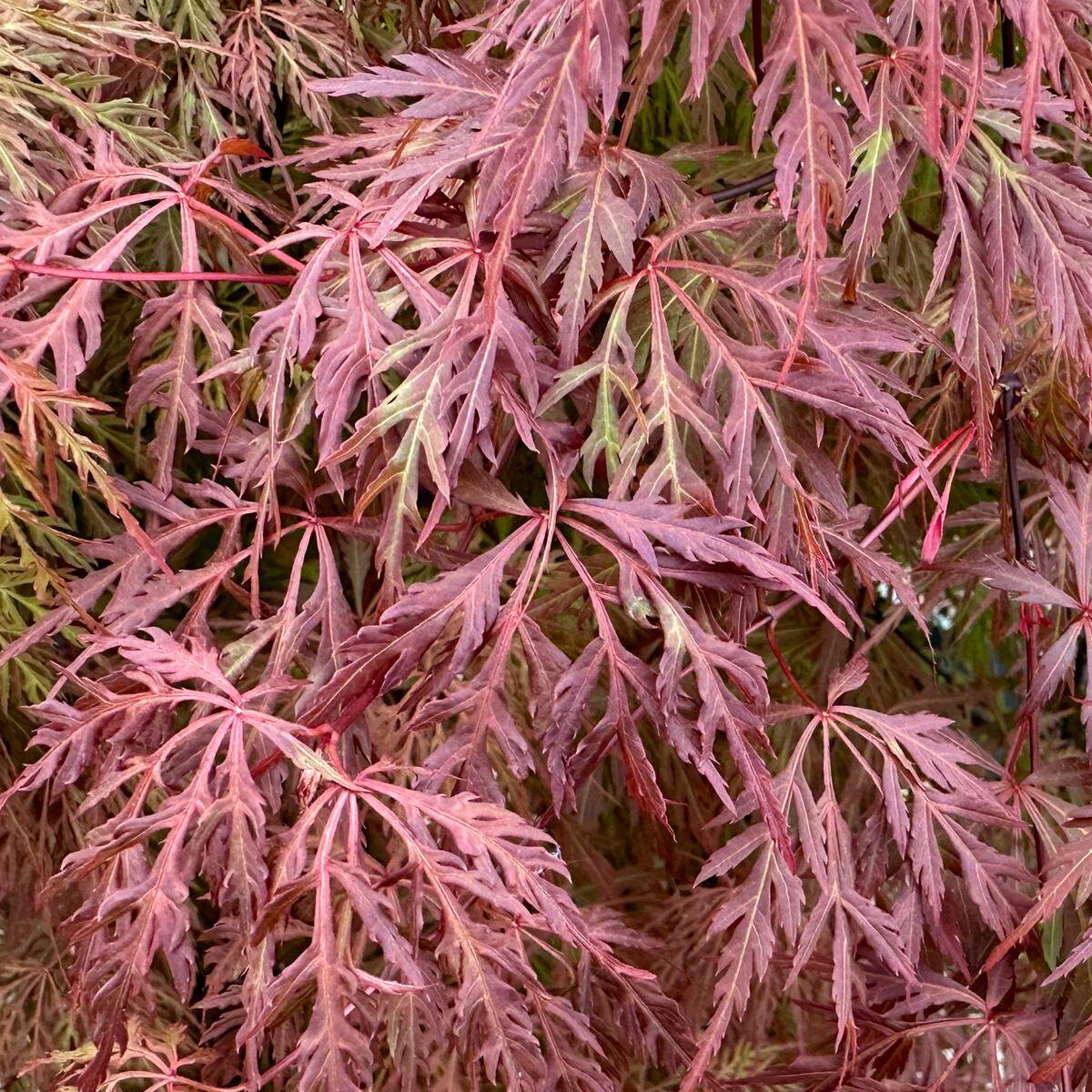
▪ Japanese maples do best with morning sun and shade from late morning on in the summer. Green-leafed varieties can handle sun better than the red-leafed and variegated types. Highly serrated types will be more fragile than those with full-bladed leaves. Planting in too much sun will cause leaves to scorch around their edges. So will exposure to drying winds.
▪ Japanese maples come in all sizes and growth forms, so know the space you have available. If you’re trying to frame a view across your patio, you’ll want a taller tree-form type. If you want something to highlight a tight entryway, you might step down to a compact shrubby type that grows only to 3 or 4 feet tall and wide. Know the mature size that you’ll need and discuss those ideas with your Texas Certified Nursery Professional.
▪ Know that the rich, red spring color will fade to a purplish-green as it gets warm. That happens with all red varieties, although some retain more color than others. That’s what makes the ‘Bloodgood’ variety so popular, for example. Come November, all varieties should display outstanding colors.
▪ Transport your tree home carefully or pay the nursery to deliver it for you. Wrap it in an old sheet to protect it from highway winds, and plant it as soon as you get it home.
▪ If you’re planting your Japanese maple into Blackland Prairie soil (as most of us in DFW are), incorporate 8 to 10 inches of organic matter into the top 18 inches of soil. Not only will that loosen the clay, but it will lower its pH (alkalinity) as well as helping it retain moisture and nutrients. Prepare a planting bed wide enough to accommodate future root growth over the years.
▪ Fertilize established Japanese maples as they begin their new growth in the spring but do so modestly. Remember that these are slow-growing trees. If you try to push them to grow quickly, you’ll run the risk of causing leaf burn from the nitrogen. Newly planted trees should be fed monthly with a high-phosphate liquid root stimulator and plant starter solution for their first year.
▪ Do not allow your plant to become dry to the point of wilting. That’s what causes tip and edge burn of the leaves. Soak the plant deeply each time that you water it.
▪ Few insects or diseases bother Japanese maples, which is one of the best reasons for growing them. Once you get the placement and watering down pat, there’s little to stand in your way.
This story was originally published April 11, 2025 at 6:00 AM.