
How we can be better neighbors using gardening as a catalyst? Here are some ideas
When I’m trying to assemble ideas for a story, I jot them down on note cards and shuffle them around until they start to work with each other. That’s what I did for this topic: How we can become better neighbors using horticulture as the catalyst. See what you think.
Take a few minutes to walk or drive through your immediate neighborhood. Take notes of what looks best. Maybe keep a list of what needs to be improved but keep it private so you don’t hurt feelings.
Drive to nearby neighborhoods to see what those people have done with comparable homes and surroundings. If it looks like they’ve worked as a team to have a commonality to their improvements, make notes and see if you can talk to their leaders.
Ask a couple of your local friends for their opinions. See if there might be interest in a clean-up, improvement day in the spring. Perhaps you could form a small group and then a working committee. Hopefully it won’t have to fall under the hammer of a demanding HOA with its box full of rules. I’m picturing a fun day together to help one another. A day capped off with a picnic at a school or church to celebrate all the good that you’ve done.
.jpg "11.01.24 Working as a team in a park (1).jpg")
What are some possible projects?
What are some things you might be able to do in a day or a long weekend? Here’s the list that came out of my mind and onto my note cards. You’ll have dozens of others.
▪ If there is a main entry point to your neighborhood, clean it up to maximize its appeal. That might mean pruning overgrown shrubs, removing low-hanging tree limbs, or replanting a color bed that has long gone untended. Keep it simple, however. Simplicity always works. When you try to do too much maintenance becomes difficult.
▪ General clean-up of brush — shrubs and dead branches frozen in February 2021. Arrange a pick-up date with your city, and line up tools, tubs, and trucks to transport the refuse to that location.
▪ Arrange to have tall weeds and grasses from alleys and vacant lots mowed and removed. That debris, too, can be taken to the landfill.
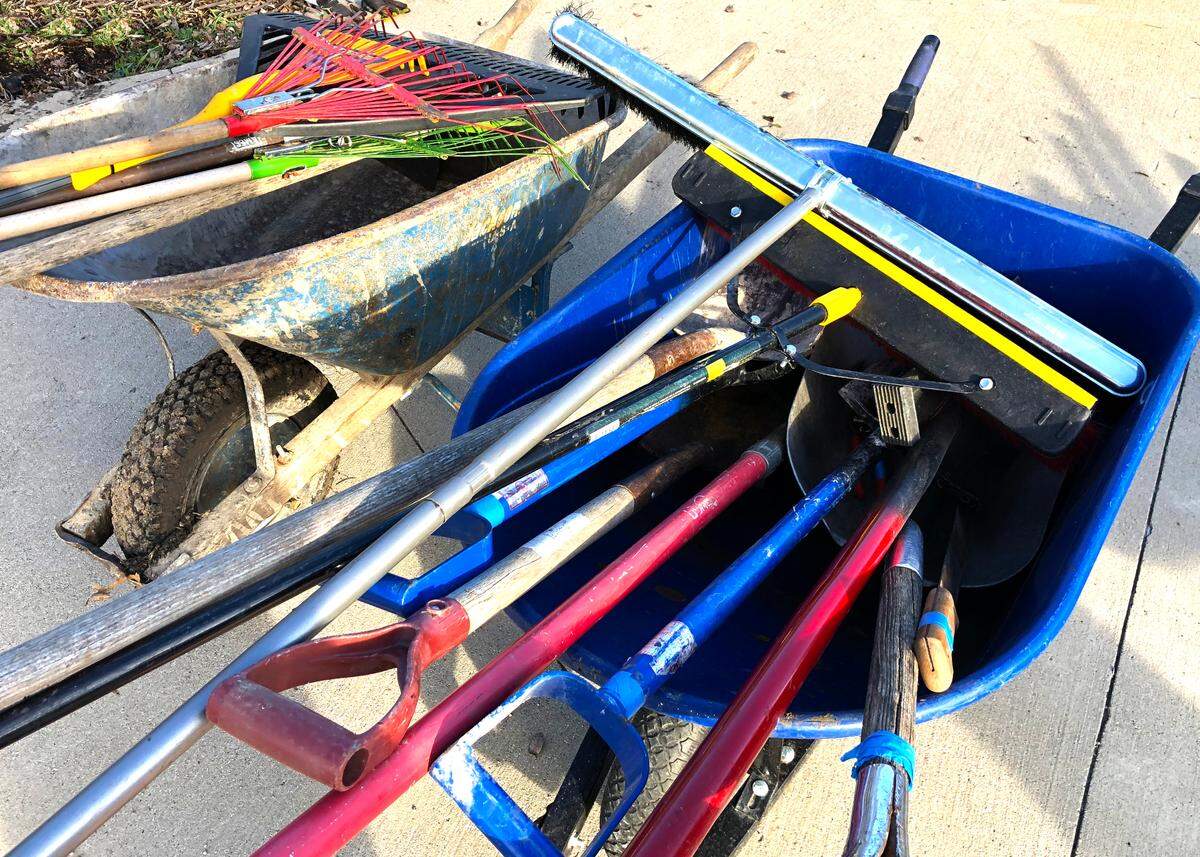
▪ Have two or three people with rear-tine rototillers on duty to prepare beds for spring vegetable gardens. If your city has a bulk recycling program that offers compost, schedule a delivery a few days ahead so you can have the compost on hand to mix into the soil as you till.
▪ If there are elderly or disabled citizens living in your neighborhood, arrange that their shrubs and groundcover beds can be pruned properly. Volunteers from the local Master Gardener class would probably be eager to give demonstrations. Contact your County Extension office. Make doubly sure that the pruning is done correctly. For example, never “top” a crape myrtle. Avoid formal pruning of shrubs into boxes and globes.
▪ Check community sidewalks where tree roots might be raising the concrete as they grow larger. Those roots can be removed one or two per year as long as long as they total less than 20% or 25% percent of the diameter of the trunk. You’ll need to cut them with a hand saw or ax, not with a chain saw. Contact with soil will dull the blade of your chain saw instantly.
▪ While you’re pruning roots, look also for tree limbs that block visibility at intersections. Check with the city if it’s public property. They may need to do that pruning, or perhaps they could assign someone to work alongside you. If it’s on private ground, offer to assist the homeowner if it’s a job that’s too big for their abilities or tools.
▪ If you have very much tree work in the neighborhood, including dead trees or limbs or bothersome roots, you could even pool your resources to hire a certified arborist to visit with your committee about work that could be done for the good of all. They could also determine if they saw any problems that might be of concern to a large group of trees. Oak wilt isn’t likely, but it comes to mind.
▪ Your local school might be able to use some help on your special clean-up day. The principal or PTA/PTO president could tell you if they have a special garden plot or a place where they’d like to put in a color bed for the teachers. Keep it small enough to be successful and be sure there’s water easily accessible as well as someone to pull both the weeds and the hoses.
▪ Recognize someone who has been very special in your community by planting a memorial tree somewhere within your neighborhood. Oaks are perhaps the best trees for that job. There’s something that says “permanent” when you plant an oak tree. Best types include live oak, Shumard red oak, and Chinquapin oak. Take photos as you plant the tree, and let it be the first planting of an annual event. Let these be the trees that provide shade in a park or school yard. Any memorial marker must be made permanent and anchored in the soil. Keep a duplicate record offsite in case of mower damage or vandalism.