
Follow these simple steps for better landscaping in your North Texas garden
I’ve been observing North Texas gardeners and our landscaping habits since 1970. I’ve tried to point out places where we could save time, energy and money, and, in a few cases, I’ve made progress.
For examples, we’ve ramped up to higher quality shade trees. No more mimosas, Arizona ashes, and Siberian elms and not nearly as many silver maples. Those trees just don’t last. No more spreading topsoil across the tops of our lawns every spring. (I never could figure that one out.)
But we still have some places where we could get better. Here are suggestions that might help as you work your way into the New Year. It may not be the first time that you’ve seen me mention them, and sadly, it probably won’t be the last. Just know I really am convinced these are ways you could make your life easier. See what you think.
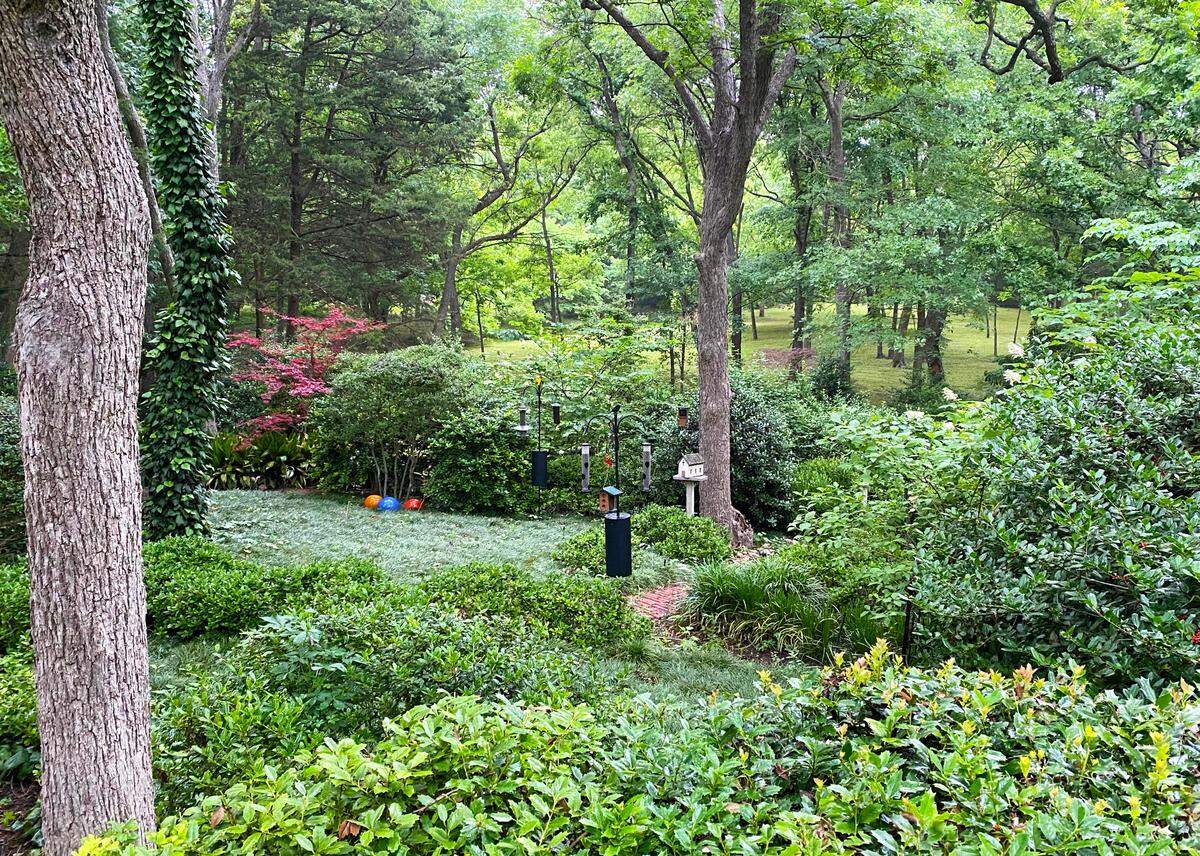
▪ Start with a plan. You have one when you build a new house. Wouldn’t you want one when you build or remodel a landscape? It becomes your road map to ensure you stay on the right path. It needs to be laid out on paper, and it should always be drawn to scale. It’s much easier to erase and redraw than it is to dig and replant a large plant out of a small space.
▪ Use only adapted plants. Any woody plants that you buy need to be able to stand up to the heat and cold we have here in North Texas. Unless they’re small enough to allow soil amendments to match the sizes of their root systems, they must be able to withstand our highly alkaline black clay soils. You need to know their exposure requirements. If they’re plants that need shade you can always provide it, but you should know that before you make a mistake.
This would be a good time to reinforce the fallacy of insisting that all plants in your landscape be “native Texas” plants. Our state is far too large and way too diverse for that to be practical. A plant is only truly “native” if you find it growing in your precise locale. Plants from West Texas in general aren’t native to our area because our soils stay too wet or our winters are too cold. Plants from East Texas usually can’t handle the alkaline soils. Ask a Texas Certified Nursery Professional to sell you only plants that are well proven to thrive in your area.
▪ Match each plant’s mature height and width with the space you have available for it. Again, your Texas Certified Nursery Professional (generally at local independent member nurseries of the Texas Nursery and Landscape Association) will be a great source of help. Most Texas-based gardening references will also be reliable. You don’t want to use plants that grow significantly larger than the space you have available, then have to resort to pruning to keep them in bounds.
▪ In most cases, bypass formalized pruning. That includes cutting shrubs into cubes or balls and whacking crape myrtles. If you have time to do that, you need a new hobby. If you can afford to hire somebody to do it for you, consider donating those dollars to a worthy charity instead. You’re going to be planting shrubs that fit their spaces anyway, so use the pruning tools to remove erratic branches so you can maintain those plants’ natural growth forms.
▪ Plan for responsible lawn care. We’ve had several bad winters and two terrible summers recently. North Texas lawns have suffered accordingly. But don’t overreact. This is not the time to give up on turfgrass and switch over to rock. Start by assessing the sunlight. All our grasses require at least six hours of direct sunlight daily in summer to hold their own. Bermuda needs eight. Once you’re sure you have that, you can definitely grow turf. Replant if you must, then care for it with a high-quality, all-nitrogen lawn food applied in spring, early summer, and early fall. Treat for any insect or disease problems that might arise.
Almost all weeds can be addressed with the proper herbicides. Pre-emergent granules can be applied immediately before germination of annual weeds, and post-emergent sprays can be applied to existing perennial or annual weeds. Your Texas Certified Nursery Professional can identify the various types of weeds and prescribe the best remedies. Timing can be extremely critical, so lay your plans accordingly.
▪ When you seek help, hire only skilled professionals. There are many facets of landscaping, and each brings its own set of professionals. Many have state regulations and licensing, and you certainly want to look for people with those credentials. It would start with Texas Certified and Master Certified Landscape Professionals and registered landscape architects. Turf irrigators are licensed, as are pest control operators. Tree service people should be certified by the International Society of Arboriculture. And the list goes on and on. Ask for references and contact those customers to see how the work has held up.
▪ Finally, a category that’s close to my soul. Avoid quack products. Texas has very lenient laws when it comes to requiring manufacturers to prove their claims regarding soil improvement. You can package almost anything, it seems, and state that it’s going to “active the microbes” or “enhance the enzymes” without having to show any reliable proof that it’s going to help your plants grow any better. I felt strongly enough that I quit at one radio station 44 years ago rather than doing ads for one of these useless products. That was my family’s sole source of income at that time, so you know I felt strongly. Sadly, that product is still out there wasting Texans’ money. Insecticides, fungicides, and fertilizers must prove their claims and any hazards they might pose, but soil amendments can run amuck with their claims. Look for university test data showing positive results from using them.