
A sweet smell of autumn: This type of clematis blooms its heart out in Texas fall weather
If you’ve ever gardened in the North, you’ve no doubt fallen in love with clematis. And equally likely, you’ve probably had your heart broken when you’ve tried them here in hot Texas. You can grow those showy, spring-blooming hybrids, but they aren’t easy, and they aren’t going to be as stunning as what you had in your gardens back in Illinois, Iowa or the outskirts of Rhode Island.
But there’s good news, my friend. We have a type that will grow for you, and it’s about to put on its big show of the year. It’s called sweet autumn clematis, and it’s an unsung vine for Southern gardens. Perhaps it’s one you’ll want to try.
Let’s plunge right into the facts of the matter. This is not a native plant here in Texas. It’s actually from Japan. But it likes Texas. So well, in fact, that it’s made itself at home in the Piney Woods of East Texas, where you’ll see it clambering through thickets blooming its heart out each fall. It’s nothing akin to kudzu as to being invasive, but we do need to point out that it has naturalized in some areas rather efficiently. In North Texas landscapes, however, you shouldn’t have any problems.
It does best in part shade, preferably morning sun and no hot, reflective afternoon sun in the summer. It prefers moist, highly organic soils, but then again, so do most of the rest of your landscape plants, so it should fit right in.
One of the things that sets sweet autumn clematis apart is its rampant growth. Most winters in our colder part of North Texas it will freeze back to the ground (or nearly so). But even in mild winters when it doesn’t, you need to trim all the vines back to 18 inches. This baby came from the factory with a willingness to grow, grow and grow. Given those good soil and moisture conditions I described, it will easily grow to 15 or 20 feet tall by the end of the season. If you don’t give it that trim, it will become leggy and lanky, rangy and unsightly — whatever adjectives you care to put on a plant that looks like it needed a haircut several months earlier.
I feel like I’ve just written a TV ad for a new medicine and put all the disclaimers up at the front. Now I’m going to tell you what’s good about this magical vine. It has handsome shiny green foliage all summer on those strong-growing stems. Then, comes the fall show.
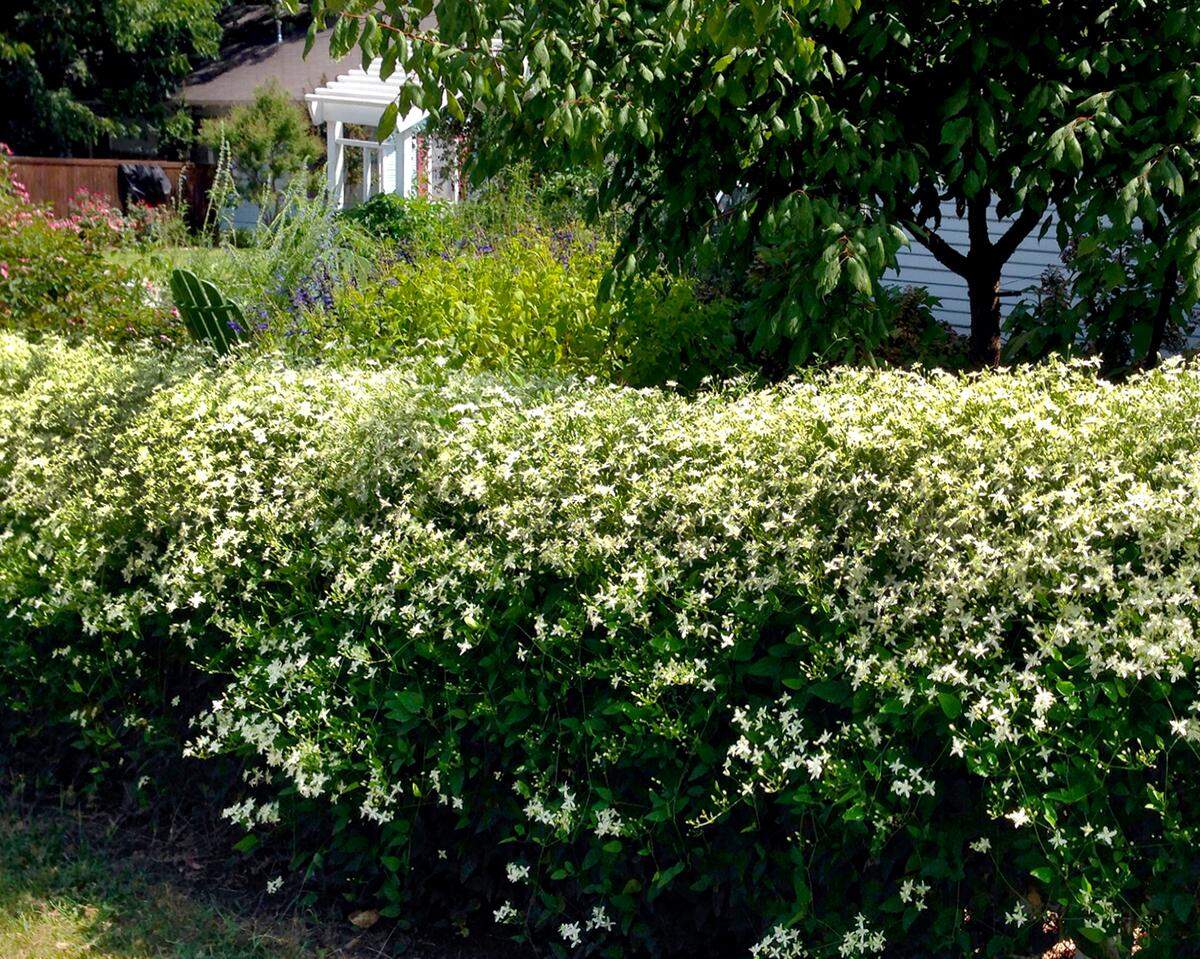
Sweet autumn clematis smothers itself with hundreds, yea thousands of inch-wide, creamy white blossoms. And they’re fragrant! Deliciously so. I’ve grown it in an open spot against our chimney for 30 years and I got an occasional whiff. But a couple of years ago, when I saw the planting in my photos, it was in between two houses where the aromas were trapped. Unbelievable. Enough so that I asked my wife to get out of the car and walk over to take a deep breath. She’s been tagging along with me for 56 years on these photo expeditions, and this was only the second time I’ve asked her to leave the confines of the car. It was that good.
I use the website of the Missouri Botanical Garden for a lot of my background information. They’re one of the finest sources in America, and they really came through this time. Here are a few of the fun facts you might have missed otherwise.
This plant is in the Ranunculus family. Who would have guessed it! And deer and black walnuts don’t bother it. I’m sure you are familiar with the fact that deer devour many landscape plants. Well, apparently not this one. And black walnuts are notorious for releasing chemicals into the soil that inhibit the growth of other plants nearby. This is called “allelopathy,” and sweet autumn clematis scoffs at it — in case you have any walnuts (or pecans) growing nearby.
The scientific name is a fun sidebar in its own right. Most commonly, it’s credited as being Clematis terniflora. However, the Missouri Botanical Garden says that’s synonymous with and sometimes sold as Clematis maximowicziana. Now, I’m not one to make fun of names, but if I ever do, I’m going to start with that one. I learned the plant as C. paniculata, but they say the one that carries that species name is native to New Zealand. At that point, I’m bowing out. The botanists can have it.
So, here’s my short summary. If you’re looking for a beautiful, fall-blooming vine that’s also wonderfully fragrant and that will show its gratitude for its time in your garden, you now have met it. Better independent nurseries will have it, and butterflies and honeybees will be glad that you’re buying it. You will be, too.