
Best time to make changes to your Texas landscape is around the corner. Here are the steps
“If Texans can get themselves revved up for fall football when it’s 105F outside in August, surely I can convince them that the best time for making big changes in landscaping is coming in the next couple of months.”
That’s what I kept telling myself last weekend as I broadcast across Texas and the Metroplex with my four weekly radio programs.
“Get that message out, Neil. You know you’re telling the truth.” After all, I’ve been redoing our own home landscape the past three weeks — in August. Not that I’m ready to show it off just yet. I’m still at war with the family of armadillos that dig up the bark mulch as fast as we spread it beneath our new plantings.
But I digress. The reason we’re gathered together today is to discuss how to keep your landscape lovely — without getting things cluttered. We can do it. Let’s work through the steps.
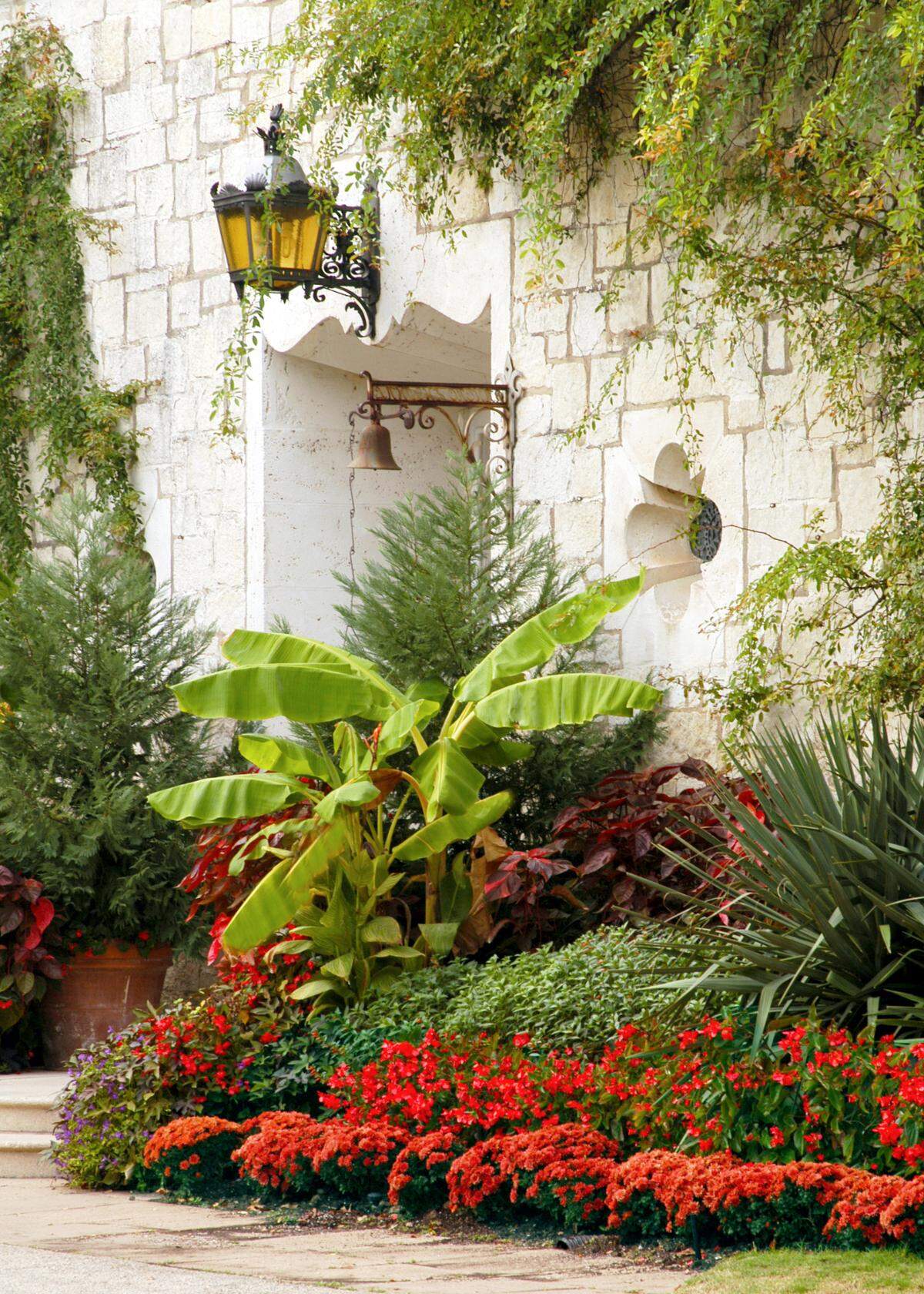
Establish the focal point. What exactly do you want people to see when they look at your landscape? (Hint: It’s not going to be that old bathtub you thought looked cool at the flea market.) It’s almost always going to be the front door and entryway. That’s where you want to draw the attention. Don’t distract by drawing attention to tree trunks, mailboxes, and fire hydrants. Keep your landscape simple. You never have to apologize for “simple.”
Frame the look. When you buy a fine painting, you put it in a nice frame. The last thing you do is to let the frame draw attention away from the artwork. Your home is the artwork. Your landscape is the frame. Use taller plants off to the sides and taper down to the focal point. Remember: that’s probably your front door. Maybe you use a small accenting tree to one side of the entry to draw additional attention to the doorway, but it’s usually distracting if you plant matching “goalposts” on opposing sides of the walk.
Know plants’ mature sizes and choose accordingly. Let me put that in different terms. Don’t set yourself up to use pruning shears to keep a plant in bounds for height or width. Hopefully you’ll never have to ask, “How far back can I trim my shrub?” Let a Texas Certified Nursery Professional help you choose the best-adapted plant for each of your landscaping needs. Ask plenty of questions beforehand so you won’t have regrets years later.
As long as I’m addressing pruning, stay away from formal pruning. I saw a landscape last week with probably 100 feet of free-standing dwarf Burford hollies that were pruned into square boxes. They poor guy got tired toward the west end of that row and his arms dropped down a bit — the boxes got shorter. It’s so much better to let plants grow naturally and just use their normal growth forms. Prune only as needed to correct errant shoots.
Plant in gentle sweeping curves. That is, after all, the way nature does business. Mountains, streams, seashores and forests are rarely arranged in straight courses. They sweep gracefully, and so can our landscapes. Use a supple garden hose. See if you can find a warm, sunny day. Hoses seem extra supple under those conditions.
Use the hose to delineate the boundaries of your new beds. It’s fun to play around with the designs. Have someone stand at the far end as you flip the hose into a variety of configurations. Let the sweeps be long and gentle, not jerky, and when you come to a walk, just let the sweep work its way right across it in continuation. Let the bed be wide enough to be in proportion to the height of the house. For a two-story house might be as much as eight, ten or 12 feet wide, rounding out at the corners.
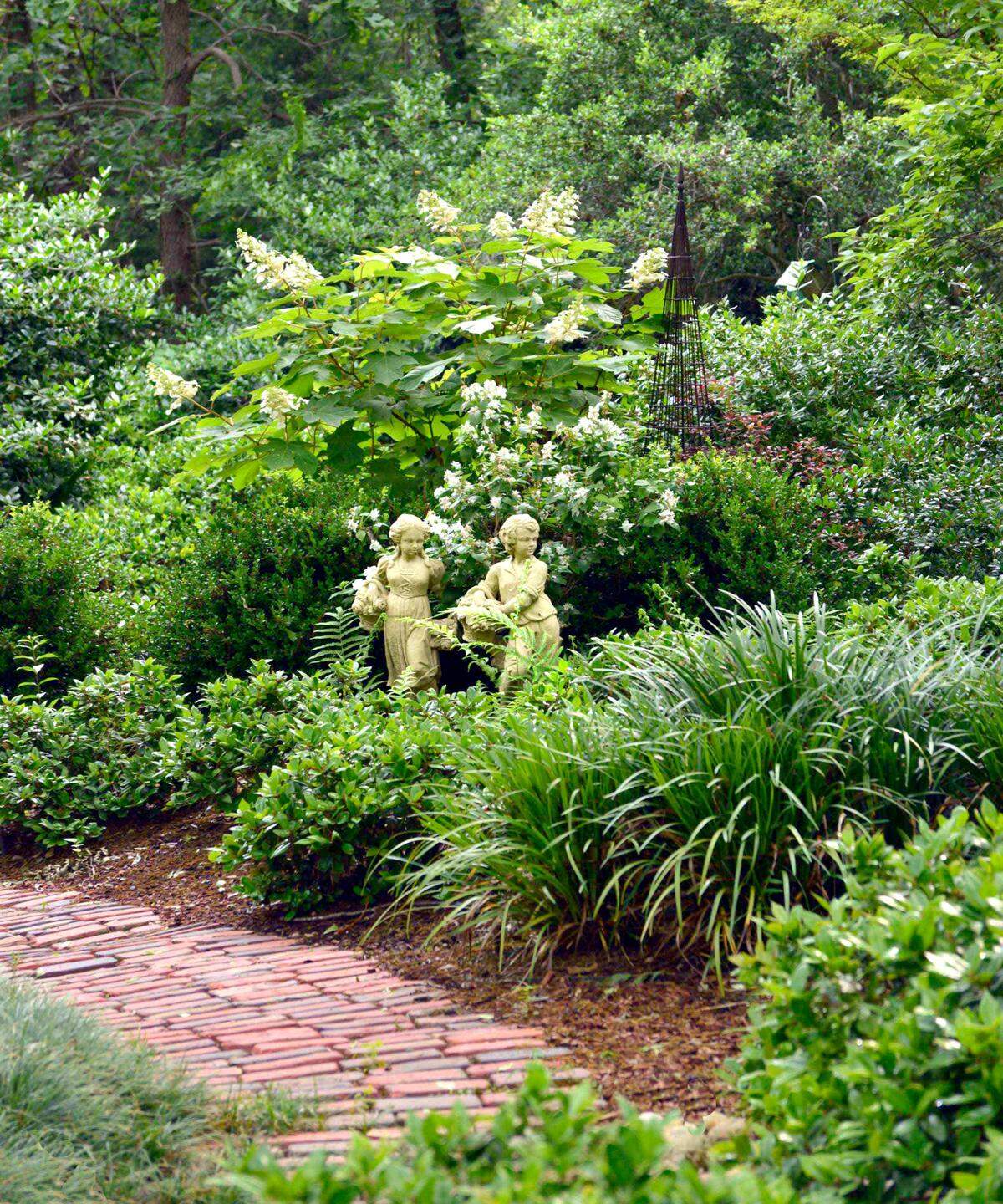
Limit the numbers of types of plants. When you decorate the inside of your house you don’t use eight different styles of furniture in six different colors and four different fabrics. You strive for continuity of look and feel. You should do the same in your landscape.
Limit the numbers of species and cultivars (“varieties”) that you choose to five to seven. And, for the most part, plant them in clusters of like plants (as example: a grouping of dwarf yaupon hollies off to the left and a bed of dwarf nandinas flanking the right).
Use a variety of color, textures, and growth forms. It’s easy to gimp up a garden by getting too many odd plants growing together. Variegated plants get over-used. They can be eye-catching in the right places, but they can be “busy” and very distracting when over-used and especially when they’re alternated with their green counterparts. They certainly won’t look natural in the finished product. Use them, instead, to highlight special spots much as you’d use color beds.
Plants’ textures are subtle. They show in leaf sizes and forms, from frilly ferns to monstrous elephant ears and bananas. Some trees have slick trunks, crape myrtles being great examples. Others’ trunks (bur oaks and persimmons) are rough and craggy. Each makes its own statement to its surroundings.
Think about plants’ different growth forms and how they relate to the rest of your landscape. Rounded and oval plants look the most natural, so they’re the simplest visually. Weeping plants are graceful, but they can also be quite dramatic. Vertical and notably columnar plants scream out for attention, so you’re going to have to use them with utmost discretion.
Keep things simple. The farther you depart from rounded or oval forms, the more risk you take that you’ll make your landscape look jumpy.