
Is it too late to plant? How often should I water? Summer questions for North Texas gardeners
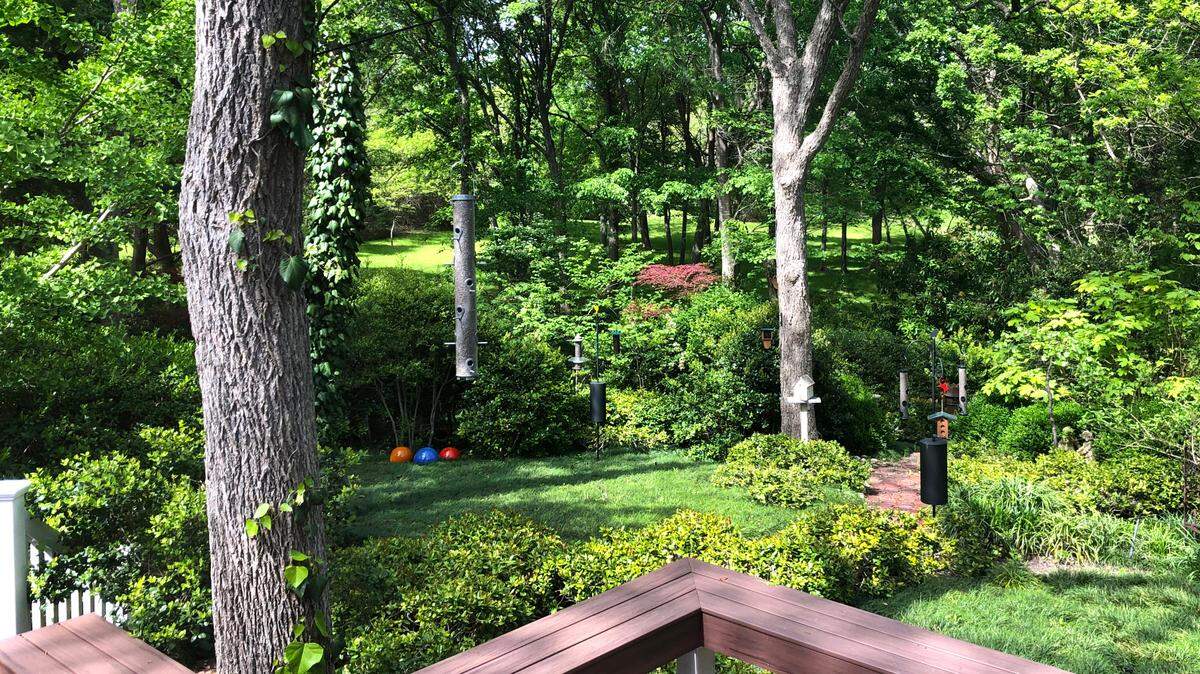
Daily high temperatures creeping into the 90s leave little doubt that summer is upon us. The same can be said from the questions I get repeatedly this time of the year. I’ve gathered up a few of the most common ones. See if they’re on your list as well.
“Is it too late to plant trees and shrubs now?”
No. The professionals — landscape contractors — plant 12 months a year. Transport the plants home from the nursery in a way that they will not be exposed to highway wind at all. Plant them immediately at the same depth at which they were growing in their containers. Water them thoroughly after planting and every two or three days thereafter. Wrap the trunks of red oaks, red maples, Chinese pistachios, and other thin-barked trees to protect them against sun scald.
“How often should I be watering my new plants, and what’s the best way?”
New plants will dry out much more quickly than established plants because their roots are still within the original lightweight potting mix. Use a water bubbler (water breaker isn’t as good but can be used) on the end of the hose to fill the reservoir around the trunk every two or three days. Apply the same amount of water as the container from which the plant was planted. Example: a plant from a 10-gallon pot would get 10 gallons of water every couple of days.
“What are some good sources of color I can plant now that will last the rest of the growing season?”
Annuals give the longest season of color. Best summertime sources include purslane, moss rose, trailing lantana, pentas, angelonias, gomphrenas, Dahlberg daisies, purple fountaingrass, copper plants, firebush, sun-tolerant coleus, and for shade, wax begonias and caladiums.
“Why is my St. Augustine pale green?”
If it’s been going on for a while it’s likely to be take all root rot (TARR). That’s a cool-season disease that attacks the roots of the grass and leaves yellowed patches interspersed with normal green patches.
If it’s just now showing up, and especially if you have recently applied a high-nitrogen fertilizer, it’s probably an early outbreak of gray leaf spot. You should be able to see the diamond-shaped, brownish-gray spots on the blades.
Both diseases can be controlled with an application of Azoxystrobin turf fungicide.
“What is causing my tomato plants’ bottom leaves to turn yellow?”
Probably early blight. It will cause bright yellow, thumbprint-sized blotches on the lower leaves. Those leaves will turn brown and shrivel as the disease progresses up the stem toward developing fruit. Apply a fungicide labeled for vegetable plantings to stop it (usually an easy task).
Several weeks from now you will begin to see the lower leaves turning mottled tan. Thump one of those leaves over a sheet of white paper. Look at the paper under bright light and you’ll see tiny specks moving about freely. Those are the mites. Apply an insecticide that is also labeled for control of spider mites, and be sure the spray hits both the top and bottom leaf surfaces. Re-check the plants in one week to be certain you stopped them.
“I have new shrubs that I planted in April. They’ve suddenly turned brown. Is that a fungus?”
No. Diseases don’t develop that rapidly. There’s almost a 100% chance that the plants got too dry one or more times. I’ve seen it happen so often that I don’t even have to know the type(s) of plant(s) involved. The symptoms are always the same. Many of our best landscape plants don’t wilt when they’re dry so we get almost no warning that they’re passing the point of no return. When they turn brown we’re clueless as to what might have happened.
“Areas of my lawn have almost no grass. It seems to be worst beneath my trees. Is there a grass that I should be planting there? The rest of the lawn is bermuda.”
That is excessive shade, and it will happen beneath every shade tree we plant if the tree lives long enough to grow to its full and mature size. You can see the pattern of thinning grass as you get closer and closer to the trunk.
St. Augustine is our most shade-tolerant turfgrass. However, it’s also the dominant grass when it’s allowed to compete with bermuda, so be prepared to watch your lawn switch over to St. Augustine if you plant it. Also, be forewarned that even St. Augustine requires at least five to six hours of direct sunlight to thrive. If you get less than that you may want to change to a shade-tolerant groundcover such as mondograss (monkeygrass), liriope or even purple wintercreeper euonymus.
“What are the purple spots on the leaves of my Indian hawthorns? What can I do to stop them?”
Entomosporium fungal leaf spot. Sadly, it’s the same disease that has rendered our popular redtip photinias to be useless landscaping shrubs. That’s because it kills both types of shrubs, yet we have no reliable spray for control or prevention of the disease. If you get to the point of needing to replace your Indian hawthorns, Carissa hollies are far better landscaping plants.