
After historic North Texas rain, here’s how to get your yard back in shape for fall
The timing couldn’t have been better. I wasn’t sure what I was going to tell you if we didn’t get some relief from this summer’s dreadful hot and dry weather, but now we’re back right on schedule. Lawns were hurt by it all, but here are the steps I’d suggest to get the train back on the track. I’ll list them in sequence.
Begin by mowing to remove the weeds and dead stubble. You probably don’t want to scalp the lawn like you might in early spring, although you’ll see commercial landscapers doing that if they’re planning on overseeding with ryegrass sometime in early September. But, in most cases we’ll just leave that to them.
Now that we’ve had deep, soaking rains, apply the fall feeding to help your grass recover its vigor (and re-cover the bare spots). Tens of thousands of tests over several decades that have passed through the Texas A&M Soil Testing Laboratory have proved that we don’t need any more phosphorus in our heavy clay soils here in North Texas. Apply a high-quality all-nitrogen lawn food with upwards of half of its nitrogen in slow-release form.
It’s fine to feed bermuda, St. Augustine and zoysia now. Worries about gray leaf spot in mid-summer heat should be behind us. Water the fertilizer off the blades and into the soil, but if your ground is wet be careful not to let runoff carry the nutrients down the street.
Pre-emergent application …
Next responsibility is application of pre-emergent granules to prevent germination of cool-season annual weeds. These are the pesky plants that sprout in the fall, establish roots in the cool weather, then flourish (to your dismay) in the spring. There are two categories: cool-season grassy weeds and cool-season broadleafed weeds.
Cool-season grassy weeds include annual bluegrass (Poa annua), rescuegrass and annual ryegrass. These are especially bothersome because you only get one chance to deal with them. The window for applying pre-emergent granules Dimension, Balan or Halts is between Aug. 25 and Sept. 5 (give or take a couple of days on the closing date). Once these weeds have sprouted and are growing, there is no post-emergent product that will kill the existing plants without damaging your permanent lawngrass. So, if you miss this current window and end up with the weeds, you’ve pretty much blown it for another entire year.
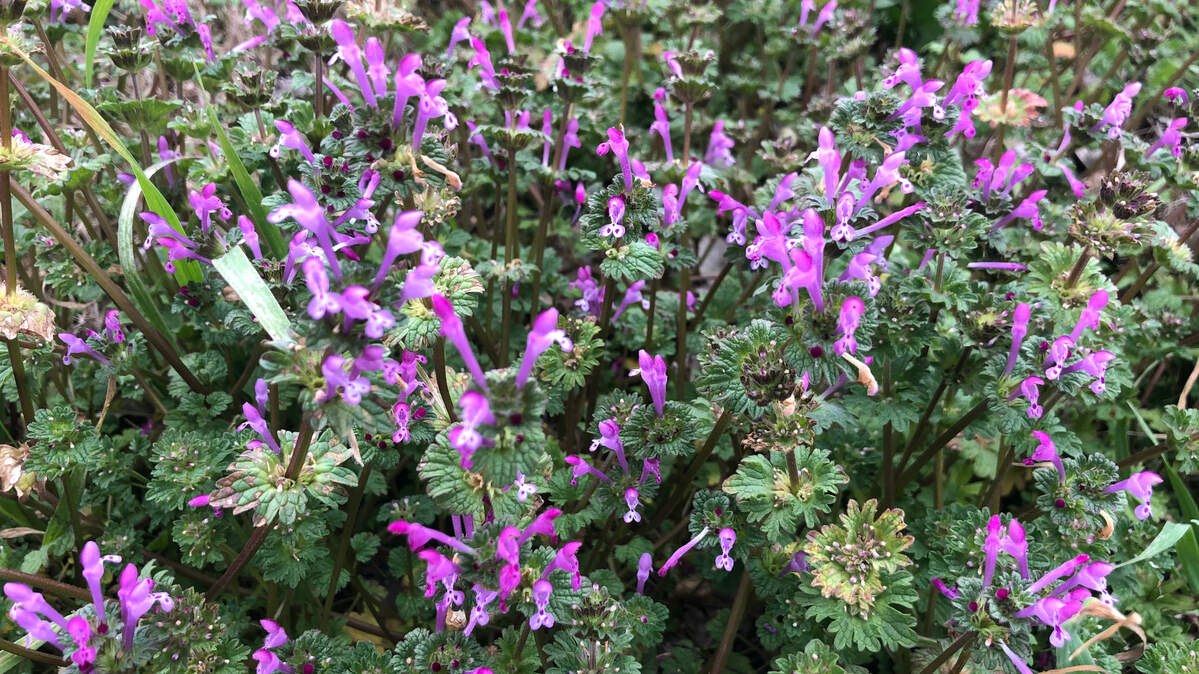
Cool-season broadleafed weeds include henbit, chickweed, dandelions and clover. The product Gallery prevents germination of these weeds’ seeds in the same way. Again, it must be applied prior to germination. It also must be applied separately from the other pre-emergent product for grassy weeds. They can be done sequentially, but you will need to make two applications.
You will notice that Gallery is more expensive than the other three intended for grassy weeds. And, with broadleafed cool-season annuals, you do get a second chance. You can eliminate existing broadleafed weed seedlings after they have sprouted by applying a 2,4-D broadleafed weedkiller spray.
When you have finished applying your pre-emergent weedkiller granules you will want to water your lawn modestly — just enough to spread them across the surface of the ground. They will form a layer of the product that will stop the development of weeds’ roots as their seeds try to grow.
Do not apply pre-emergent granules where you intend to plant new grass this fall, either by seed or sod. Do not use them on brand new grass that was planted less than five or six months ago. They should be safe around trees and shrubs, but always read and follow label directions. And do not apply them where you will be sowing wildflower seeds.
An additional note: I’ve been asked by a couple of people about reports of annual bluegrass building resistance to the three pre-emergents I mentioned. That is a fact, and 16 southern Land Grant (agriculture) universities are working on a solution. However, their research is more geared toward golf courses, sod farms and other commercial applicators. The two types of products that are available to homeowners are not types I am comfortable in recommending. But research is ongoing.
Addressing issues of the past weeks …
I have had dozens of questions from gardeners whose St. Augustine turf “burned up” in the heat. Almost all felt that it could be attributed to high temperatures and drought. However, I’m fairly certain that an insect pest was working deviously alongside the bad weather events to destroy Texas turf, and this year more than ever, that it went unnoticed.
Chinch bugs make St. Augustine look like it’s dry. They arrive during the hottest part of the summer, and they’ll always be worst in the sunniest part of the lawn. It’s easy to see, then, why so many people mistake their damage as being the lawns’ reaction to bad weather.
As a result we’ve ended up with large parts of lawns, even entire lawns, that are completely browned and crisp. Runners are lost and grass will have to be replanted. I guess it could still be done if you got right on the job, but it would be safer if you waited until April. As we’ve discovered all too well, we never know what a North Texas winter will bring to our doorsteps. It’s probably better to wait.
If, on the other hand, you hope to make the changeover to bermudagrass turf, its sod can still be planted now. (It’s very late to be seeding bermuda in North Texas.) Remove the old St. Augustine. Rototill lightly and rake the ground smooth. Lay the bermuda sod flat and smooth. It will take root within days and should look like it’s been growing there forever before September is over.
You can hear Neil Sperry on KLIF 570 AM on Saturday afternoons 1-3 p.m. and on WBAP 820 AM Sunday mornings 8-10 a.m. Join him at www.neilsperry.com and follow him on Facebook.