
Watering plants, killing weeds: These are North Texas homeowners’ top gardening questions
I’ve made a 50-year career talking and writing about my favorite hobby. Most folks would love to have that luxury. And over that time, I’ve answered a lot of questions. Some more than once. Some of them thousands of times. I’ve brought six of them in with me today. These are among my all-time most-asked questions. I figured there are good odds there are people who still need the answers.
Why can’t I get grass to grow beneath my trees?
This happens to almost every homeowner who plants a tree. As it grows larger the shade grows denser. When there are fewer than 7 or 8 hours of direct sunlight daily the bermudagrass starts to thin out. Zoysia dwindles at 6 or 7, and St. Augustine struggles if it doesn’t get 5 or 6 hours of hot, direct sun daily in summer.
If you’ve tried removing lower branches as far up as you’re comfortable, and if you’ve tried St. Augustine without good results, it’s probably time to switch to a shade-tolerant groundcover such as mondograss (mondograss, lilyturf or Ophiopogon — same plant, just pick any name), liriope, English ivy or others. Planting more sod is just going to frustrate you, and those “miracle” grasses from seed are nothing more than a hoax. Go with the groundcover.
What is the best fast-growing shade tree?
Those terms are mutually exclusive. All fast-growing trees have one or more fatal flaw. They’re notoriously weak-wooded, so insects and diseases are common, and life expectancies are short. Trees to avoid: silver maple, willows, cottonwoods, mimosas, catalpas, hackberries, ashes of any type, fruitless mulberries, ornamental pears, Siberian elms, Eldarica pines and Leyland cypresses.
The much better investments are trees that are likely to live for 75 to 150 years — including live oaks, Shumard red oaks, Chinquapin oaks, bur oaks, pecans, cedar elms, magnolias, eastern redcedars and Chinese pistachios. These trees will grow two-thirds as fast but live 10 or 20 times longer and without all the problems. That assumes you will give them the best possible care.
How often should I water my plants?
Whenever they’re dry. That should be all that’s needed for my answer. There’s no need for anything more.
Practically speaking, however, we all realize that things like temperature, sunlight, wind, vigor and species of plant, soil type and time of the growing season all impact the amount and frequency of irrigation. So, common sense needs to enter the picture.
You need to learn how to recognize early signs of dry plants and dry soil, then be ready to intervene when necessary. Most plants lose their bright green color. Most wilt to one degree or another. Soil begins to crack away from the side walls of pots.
One important point I always try to make regarding watering is that any newly planted tree or shrub must always be watered by hand for its first full year in our landscape. Its roots won’t yet have grown out into the surrounding soil. New plants will dry out much more rapidly than established plants. You’ll need to soak them deeply every two or three days all growing season. If you miss just one watering, you might lose the plants.
What are the secrets to growing tomatoes?
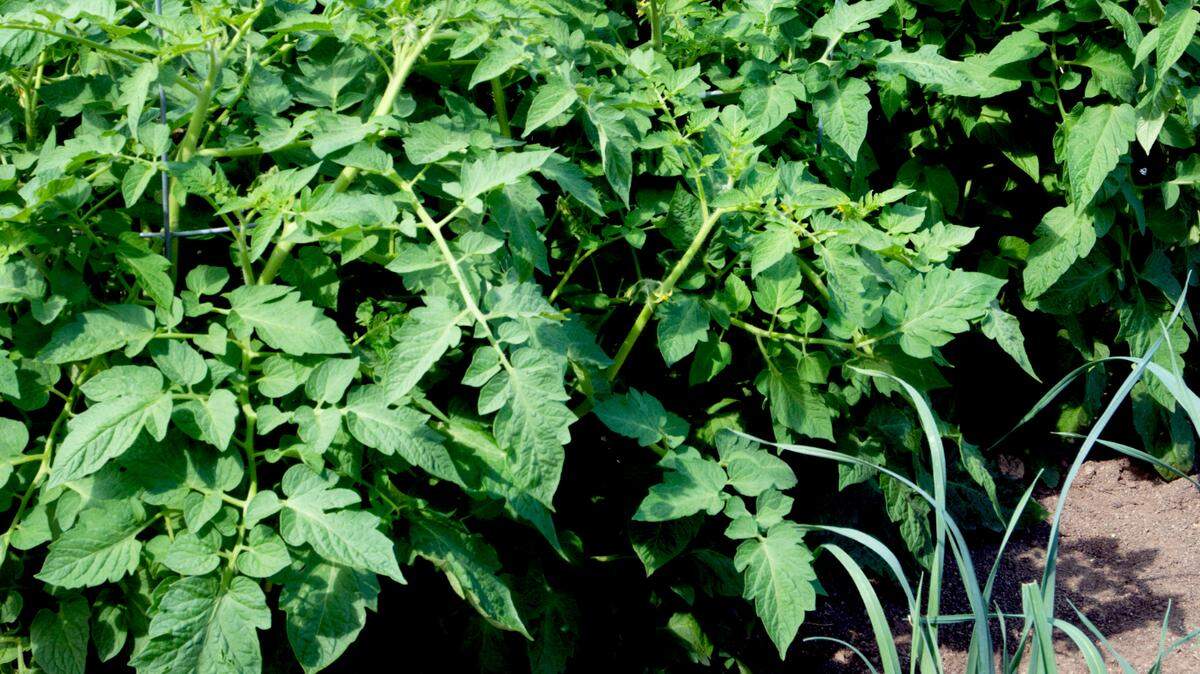
Plant small to mid-sized varieties. Large-fruiting types won’t set tomatoes at high temperatures. Plant at the correct time: In North Central Texas that would be the last two weeks of March or the first week of April. Grow your plants in 4-foot wire cages that are 16 inches in diameter. Plant in full sun. Protect against early blight, then spider mites with appropriate sprays. Thump flower clusters to improve pollination. (Tomatoes are pollinated by mechanical agitation of wind, not by insects.) Plant fall tomato transplants around July 4 — they’ll be far more productive than if you try to carry spring plants through the summer.
How can I get rid of weeds?
Keep your lawn as vigorous as possible by applying a high-quality all-nitrogen fertilizer with upwards of half of its nitrogen in slow-release form. Water regularly unless curtailments won’t allow it. Mow at the recommended height. Grass that is kept fairly short will be thick and dense, best able to crowd out the weeds.
If you’ve done all of that and weeds still show up, use the appropriate herbicide. It’s my own personal recommendation that you should bypass the home remedies and go with thoroughly tested and legally labeled products. I watched my dad spend his career with Texas A&M researching product labels for the government to be sure herbicides did what they were claiming. I am very comfortable recommending products that carry full EPA labels — much more comfortable than with something concocted in somebody’s sink.
How far back can I prune my shrubs?
That depends on the type of shrub and whether it has been pruned repeatedly or if this is the first time. Generally, however, you can remove 1/4 to 1/3 of the top growth if you do so in late winter before the big burst of new spring growth. If you have done that repeatedly, the plant may be growing thin from having suffered repeated setback year after year. It may have lost its inherent vigor. It could be time to replant with a more compact species that can grow to its mature size without requiring shearing.
You can hear Neil Sperry on KLIF 570AM on Saturday afternoons 1-3 p.m. and on WBAP 820AM Sunday mornings 8-10 a.m. Join him at www.neilsperry.com and follow him on Facebook.
This story was originally published July 15, 2022 at 5:30 AM.