
Want to keep your North Texas plants healthy this summer? Here are the critical steps
Please scroll through these quick little factoids. They’re critical to the success and survival of plants in your landscape. I’ve covered some of these here before, so I’m going to bounce over them quickly. Just know that each is essential.
▪ Water new trees and shrubs by hand. Lawn sprinkler irrigation will not be enough. Nor will drip irrigation or those virtually useless bags around their trunks. Fill new trees’ water reservoirs at least three times per week. Forget one time and you risk losing them entirely.
▪ Trunks of new thin-barked trees (oaks, maples, pistachios) must be protected from sunscald for their first 2 or 3 years with paper tree wrap. Non-negotiable.
▪ Mounds of soil or mulch up around tree trunks are not a good idea. They make it difficult to get water down to the roots. You want each tree’s root flare to be visible, and trees should be planted at the same grade at which they were growing in the nursery. Carefully remove excess mulch and soil from around the trunks.
▪ The only way to get a tree that is growing crooked back into a vertical position is to dig and reset it. You can’t stake it or prop and support it. As soon as you remove the support, even years later, it will start going back to the old position. If you have a new tree that was planted this spring, and if it’s not plumb, carefully reset it now at a time that its soil is wet. Then stake and guy it, taking care to pad the trunk to prevent damage from the guy wires. Remove them in a couple of years before they can girdle the tree’s trunk.
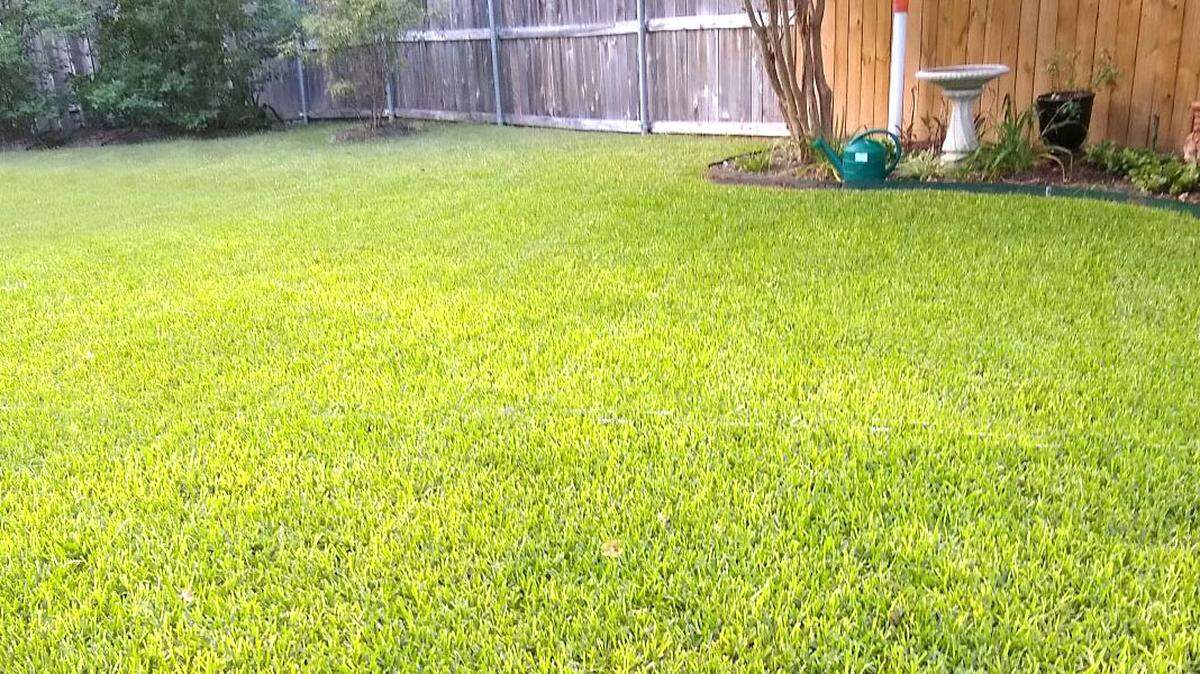
▪ St. Augustine turning yellow now that it’s hot is probably due to gray leaf spot. You should be able to see elongated gray/brown lesions on the blades and occasionally on the runners. Discontinue feedings with nitrogen mid-June into early September since nitrogen promotes this fungus. The fungicide Azoxystrobin stops the current outbreak.
▪ St. Augustine appearing dry even though you have watered it is probably being attacked by chinch bugs, especially if the affected areas are in the hottest, sunniest parts of the yard. Part the grass with your hands and look for the small black insects with irregular white diamonds on their backs. They’ll be at the interface of healthy and dying grass. The insecticide Merit will eliminate them.
▪ If grass (St. Augustine included) is thinning and dying beneath trees, it’s almost always due to excessive shade. If there is no low-hanging limb that can be removed to allow more light to reach the turf, it may be time to consider a shade-tolerant groundcover such as mondograss, liriope, English ivy or even purple wintercreeper or Asian jasmine (listed in my decreasing order of preference).
▪ If runners of St. Augustine are lifting up and arching across the top of the lawn, failing to attach to the soil, that’s a very minor issue. There may be some type of fungus involved in the root system that keeps it from pegging down to the soil, but it only lasts for a few weeks each summer and it never amounts to much. I’ve always just lifted the runners up with my foot as I’m mowing so that I can mow them the next time around. It’s never been a problem for turf that I’ve maintained.
▪ Crape myrtles that aren’t blooming yet could be facing one of several situations. Some varieties simply bloom later. Country Red doesn’t bloom until late July in Fort Worth-Dallas. Muskogee blooms in early May. So, be patient for one thing. Second, if you topped your crape myrtles, that will slow all of their blooming down by 5 to 6 weeks. It may cut what would normally be three or even four bloom cycles in a summer to only one. And finally, crape myrtles need full sun to bloom to maximum potential. If you have a plant that has been gradually overtaken by shade trees, that could be the cause of its non-blooming problems.
▪ Pruning seedheads off a crape myrtle after it finishes blooming does not help it produce a new round of blooms any faster. Save the effort.
▪ No tomatoes this year. I’ve heard this a lot. Some people got their transplants set out too late. Tomatoes do best in cool conditions. We were slammed with high temperatures unusually early, so that cut into their productive season. And large-fruiting varieties like Big Boy and Beefsteak (among all other large types) are notoriously poor at setting fruit when daytime highs exceed 90F. Try thumping the flower clusters to vibrate the pollen loose within the flowers, but if that doesn’t work, be sure to stay with small to mid-sized types next time around.
▪ Squash and cucumbers not setting fruit. By this time in the season this is usually due to lack of pollination. Male flowers have straight stems, while female flowers have swollen stems where the fruit will develop. It’s getting late in the season, but if you’re not seeing good bee activity, clip a male flower off and trim the petals off to expose the pollen. Carefully daub the pollen onto the female flowers. (Note that early in the season all flowers are male for the first couple of weeks as the plants ensure they will be adequate supplies when they start producing female flowers.)
You can hear Neil Sperry on KLIF 570AM on Saturday afternoons 1-3 p.m. and on WBAP 820AM Sunday mornings 8-10 a.m. Join him at www.neilsperry.com and follow him on Facebook.