
Want your North Texas lawn to look gorgeous this spring? Follow these simple tips
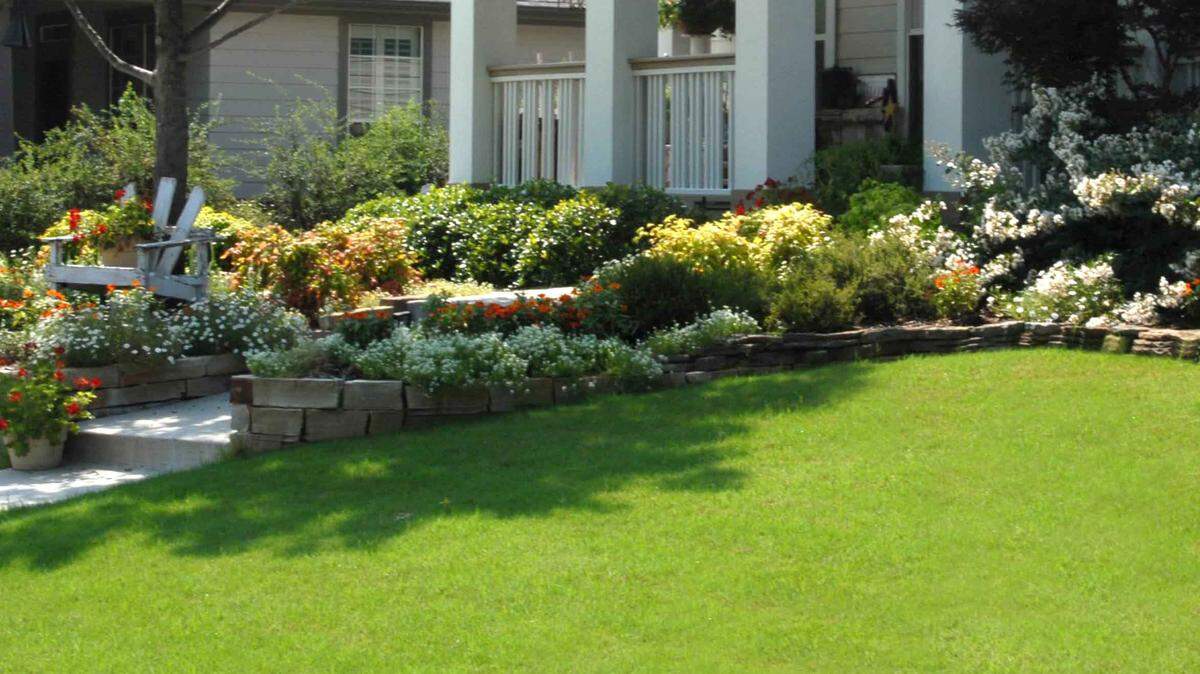
Our lawns are hobbling out of the starting gates this spring, but at last they’re picking up speed. Those weekly cold spells in late February and March really slowed things down to a crawl. But now here we go. Let me outline your steps to great looking turf. It’s not as tough as you might think.
Start with the right mowing height. Too many people cut their grass way too high. You’ve heard this verse before here, so sing along, choir: “Tall grass becomes weak grass.” Keep bermuda and St. Augustine toward the short ends of their recommended mowing heights and they’ll spread rather than sending blades vertically in search of the daylight.
The best mowing height for St. Augustine is 2 to 2-1/2 inches. Zoysias will vary with variety, from 2 to 3 inches. Bermudagrass will also vary. Common bermudagrass (the type that grows naturally in local fields and ditches, also that is most commonly planted from seed) should be mowed at 1-1/4 to 1-1/2 inch. Dwarf hybrid golf green types are cut much shorter (1/4- to 3/4-inch) with a precise reel mower with a bagging attachment.
Your first mowing of the spring, if you haven’t already made it, will remove a great deal of dried grass and cool-season weed growth. It will allow the sun’s rays to reach the soil and warm it up so the grass can start growing more rapidly.
Follow the mowing with an application of an all-nitrogen fertilizer with one-third or more of its nitrogen in encapsulated or coated, slow-release form. That’s critical to good, long-term growth of Texas turfgrasses.
Avoid inexpensive fertilizers that contain only ammonium sulfate nitrogen (21-0-0). It’s also my personal opinion that “weed-and-feed” products are risky because they put herbicides in the root zones of important trees and shrubs. It’s my feeling that we should do those two processes separately.
Feed St. Augustine and zoysia mid-April, early to mid-June and again in early September. Bermuda should be fertilized every two months: early April, early June, early August and early October. The same fertilizer will work well for each feeding.
Water fertilizer into the soil with a good, deep soaking. I used to suggest timing your feedings to coincide with expected rainfalls, but an expert suggested that it’s better to use a controlled amount of watering to get the nutrients right where you need them to avoid the chance of runoff into the rivers.
As for your ongoing irrigation the rest of this growing season, conserve water whenever possible. Soak your grass deeply, then wait until the soil begins to dry out before you water again. If you have a sprinkler system, run an “irrigation audit” on it to be sure that all the valves are functioning properly and that heads are aligned correctly, clean and flowing as they were intended, and covering the lawn and landscape as needed. I generally find 20 or 30 minor tuneups and a handful of repairs that need to be made each time that I check.
If you don’t have some type of “smart” controller installed in your system, this is a great time to invest in one. They conserve water and they do a good job of ensuring uniform watering. Book the installation now, before your irrigation contractor gets weeks behind during the hot weather.
If you’re planning on planting new grass, you’re approaching the prime time to do so. Soils and air temperatures are warming and new grass will establish quickly without the burden of twice-daily watering that you’d have with a mid-summer planting.
Bermuda, dwarf hybrid bermudas, St. Augustine and zoysia can all be planted from sod or plugs. Common bermuda can be sown from seed, although you might have better success if you were to wait another few weeks for the soil to warm just a little bit more.
Soil preparation should be the same whether you’re planting from sod or seed. You need to rototill to a depth of 2 or 3 inches. Rake out all roots, rocks and building debris and establish a smooth grade that drains away from your home. It’s easiest to do that with a garden rake turned upside-down. That loosened soil is essential to helping the new grass form a good root system quickly as it establishes. It still amazes me to see people (even “professionals”) laying fresh sod down over untilled soil.
Water new sod or seedings at least daily (unless it rains). The new grass will have very shallow roots that can dry out and die very quickly if you’re not attentive to its needs. These first several weeks’ waterings will be for shorter intervals and they’ll come more frequently. Gradually you’ll increase the time between waterings and you’ll water more deeply.
One final note: If you’re thinking about sodding an area that has become bare, be sure that the cause hasn’t been a lack of sunlight. This is the most common issue I address on my radio program, and people waste thousands of dollars trying to fix it by planting more sod. Make note of these facts: St. Augustine is our most shade-tolerant turfgrass, and St. Augustine must have 5 or 6 hours of direct sunlight to survive, even more if it’s to survive and thrive. It’s not a matter of nutrients or water. If the sun is inadequate, nothing else will correct it.
You can hear Neil Sperry on KLIF 570AM on Saturday afternoons 1-3 p.m. and on WBAP 820AM Sunday mornings 8-10 a.m. Join him at www.neilsperry.com and follow him on Facebook.