
Kimbell Art Museum celebrates 125th birthday of architect Louis Kahn
Sue Ann Kahn, the daughter of renowned architect Louis Kahn will speak Friday, Feb. 20, at the Kimbell Art Museum about the book she edited, Louis I. Kahn: The Last Notebook, published in 2024 by Lars Müller Publishers, in a conversation with museum director Eric Lee as part of a two-day celebration of his 125th birthday.
Kahn, a flutist and music educator in New York City, spent 16 years trying to publish the facsimile, a near carbon copy of the last notebook he carried before his death in 1974.
The talk coincides with the 52th anniversary of his death.
The museum, considered one of the late 20th century architect’s greatest structures and among the greatest in the 20th century, was commissioned by Kay and Velma Kimbell to house their diverse art collection. Kahn was selected from a competition that included major architects, including Mies van der Rohe and Marcel Breuer.
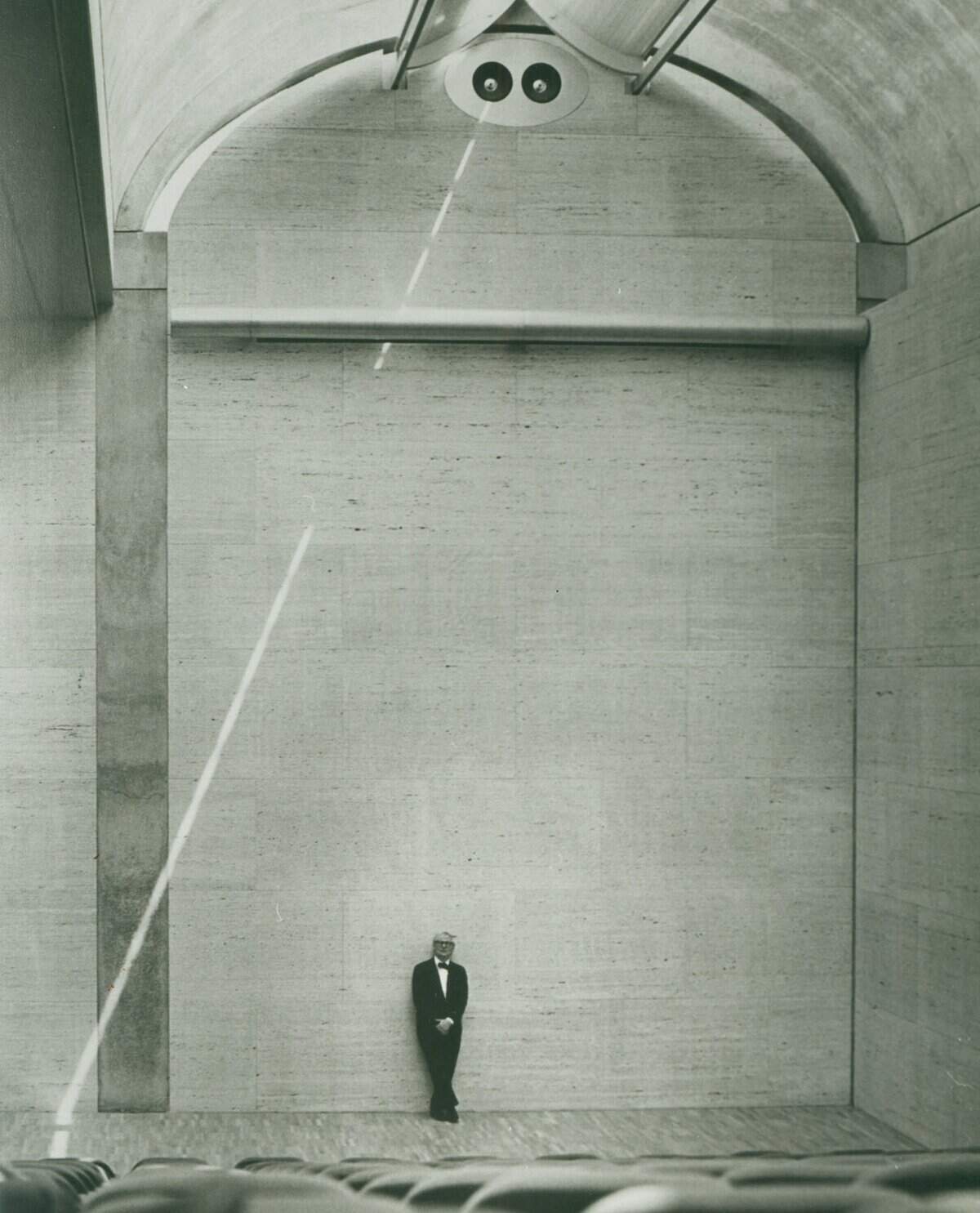
Construction began in 1969 and it opened in 1972. It was instantly hailed as one of the most important buildings of the 20th century, notably for its vaulted ceilings, and slim slots in the ceilings and walls that regulate light.
The red notebook and accompanying book with an essay by art critic Michael J. Lewis provides a look into the professional and personal life of one of the world’s most renowned architects.
“He always wanted something on hand so he could draw,” his daughter said in an interview with the Star-Telegram.
His preferred notebook was a compact red and hardbound designed by the British company Winsor and Newton, which she speculated he most likely found it around the corner from his office in Philadelphia. It was likely convenient and consistent. But she knows a notebook’s value. They are the first draft of ideas for many people, especially those in visual professions. (Ironically, she doesn’t keep any; her recordings are her preferred form of documenting.)
But she knows well why people would want to see the otherwise private musings of a star architect.
When she saw Beethoven’s notebooks, she was ecstatic. She also learned he didn’t write music with the typical five lines seen on blank music sheet paper. He drew 25 lines, with notes squiggled all over the paper. It gave her insight to how a famous composer conceived his masterpieces.
“You could feel the creative process,” she said.
Publishing notebooks comes with a risk. They are private. They are not meant for sharing, which she struggled with as she first thought about publishing it 16 years ago. But this one of his almost 20 was the most important to her, and, she argued, to the public.
The notebook is the rare chronological notebook covering 1973-74, the final years of his life.
Among the blank pages, indecipherable scribbling, smudged charcoal drawings of planned and current projects are completed and uncompleted projects. In it, he sketched the early and final products for the Roosevelt Memorial on Roosevelt Island in New York City. Now called the Franklin D. Roosevelt Four Freedoms State Park, it was completed in 2012. He also worked out plans for Abbasabad, a civic center in Tehran, which was never built, and she never knew about.
She was particularly touched by a simple drawing of a star.
“It’s the most beautiful thing, like a fairy tale or from the book ‘The Little Prince.’ He loved fairy tales,” she said. “It has a lot of personality.”
Most of all, this notebook was personal. She didn’t see her father in the years before and when he died. He was always traveling, getting awards and in different countries working on different projects. The laborious process was a chance to connect with him.
“Every time I opened this one, I felt him,” she said.
The lecture takes place from 6-7 p.m. on Friday, February 20 in the Kahn building auditorium. The event is free but Seating is limited.
Schoepp’s talk, part of the ongoing The Artist’s Eye series, takes place from 11 a.m.-noon Saturday, Feb. 21. in the Kahn Building’s South Gallery. Registration is not required.
Free drop-in, docent-guided tours of Kahn’s building take place from 1–1:45 p.m both Friday, Feb. 20, and Saturday, Feb. 21. Registration is not required but tours are limited to 30 people.
This story was originally published February 19, 2026 at 2:14 PM.