Warmth of Fort Worth’s Cliburn Competition remains, ‘It’s just been wonderful’
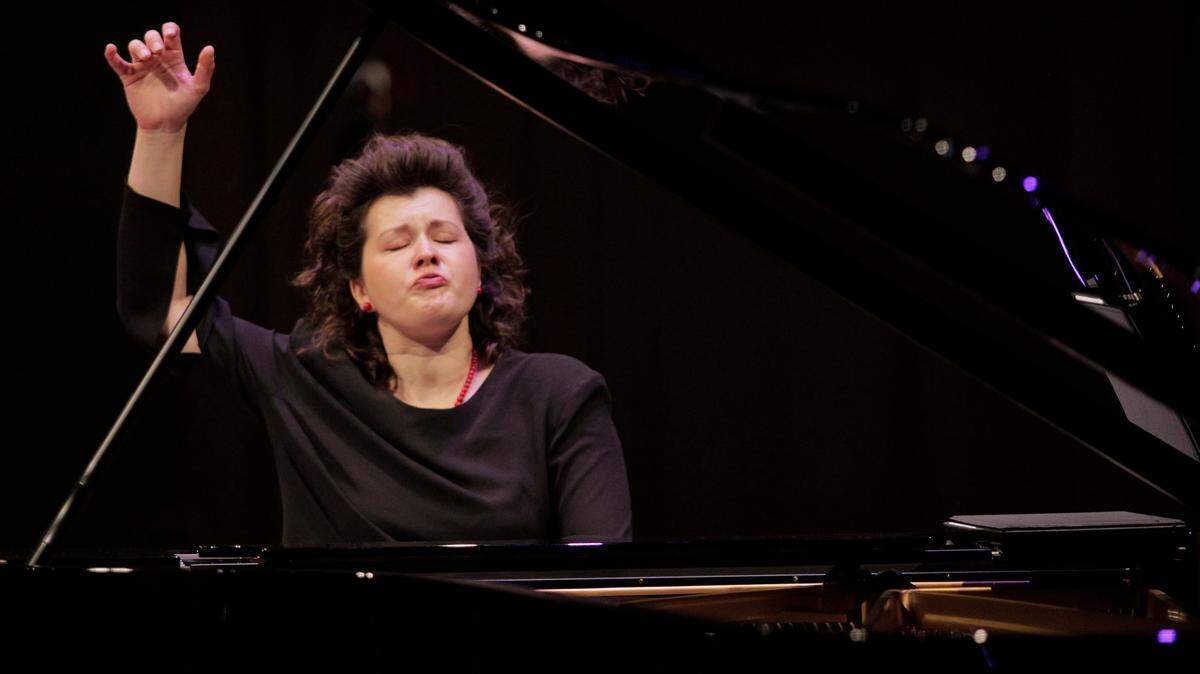
In 1973, at the Fourth Van Cliburn International Piano Competition, 23-year-old Russian pianist Vladimir Viardo lit up with a smile when he was announced a semifinalist on the TCU Ed Landreth Auditorium stage. Van Cliburn came up to Viardo and quietly asked him what he’d like to play for his next performance. Viardo was so dazed that he couldn’t think of anything to say, but he later decided on works by Brahms, Chopin, Prokofieff, Debussy and Shostakovich.
Afterwards, Cliburn stopped by the house of Martha Hyder, who had been hosting Viardo, and asked him to play the Chopin B minor Sonata. Cliburn sang and conducted as he played, and a friendship between the two was ignited.
“He was not only the legend of this time but he also created this air around him which is very cozy because you understand lots of people come from different countries away from home,” said Viardo, who won first place that year and has been a piano professor at the University of North Texas since 1989. “It meant a lot for not only me, for others too.”
Almost 50 years later, Cliburn is gone, but the warmth surrounding the competition remains. The first two rounds of the competition have ended, and 12 contestants will be performing in the semifinal round.
“Some nerves for contestants...that’s what unites people here,” Viardo said. “Sometimes the public is more worried for the contestant than the contestant himself or herself.”
John Owings, piano chair at TCU, has been livestreaming the competition with his wife.
“We have just been thrilled, I mean absolutely thrilled by the caliber of the playing we’ve been listening to, it’s just been wonderful,” Owings said. “As far as I can remember, this is the best ever, in terms of the level of playing, not just technical level, but the imagination and the ability to communicate with the audience. I mean, it’s just been a wonderful listening experience. And we really think the jury has made the right decisions, we’re 100% in agreement with the ones they’ve chosen to go on.”
How the jury judges pianists in big piano competitions is subjective, Viardo said.
“Sometimes I was not completely with the decision of the jury, sometimes I was for,” he said. “We don’t know the code of success, the code of real musicianship. Maybe it makes it more interesting.”
Judging several international competitions, Viardo always remembers the words of novelist Fyodor Dostoevsky, “The world will be saved by beauty.”
Owings says he’s proud that the first two rounds were held at TCU, the original venue back in 1962. Most contestants played on a Steinway piano he handpicked in Hamburg right before the pandemic.
“The Steinway piano is, for me, the gold standard of pianos,” he said. “You need an instrument that’s going to respond to everything you’re giving it. You always hope that you’ll have an instrument at your fingertips that you can just really fall in love with.”
In the first round, the 30 starting contestants each chose pieces to play for 40 minute recitals, and they all performed a short commissioned work by Stephen Hough. They were then narrowed down to 18 in the second round and then 12 for the upcoming semifinals from June 8 to 12.
There are always contestants who surprise you when it comes to competitions like this, Owings said, which is part of what makes being an audience member so thrilling.
“You read the bios of some of the contestants and you go ‘Wow, this one just has everything going for them,’ but then it doesn’t always work out that way,” he said. “And then there’s some you think, well, maybe haven’t done that much, but then they go out and they play and you think where has this person been?”
The 12 semifinalists are different types of artists who all have something to say, Owings said. “Hearing the individuality of each performer is really a unique experience,” he said.
One of the performances that stood out to Owings was that of semifinalist Anna Geniushene. Her choice to play Four Ballades, op. 10 by Johannes Brahms was an unusual choice for a competition, he said.
“Usually, you would choose something very brilliant and impressive,” Owings said. “These are stories, and they’re rather dark and introspective and extremely beautiful and extremely difficult because they’re not pieces you can show off your technique in the sense of brilliance and everything. You have to have a depth and you have to have a sense for the sound. She really captured the spirit of these pieces.”
The pianists chosen have three characteristics, Viardo says: they’re fast, exact and loud. What makes a performer best is the soul of the music, Viardo said, and how creative the performer is. He goes by his feeling during the performance.
“I’m looking for sincere mastership, they cook it right now before my eyes, not prepared at home and brought here. I want spontaneity, I want sincerity,” he said.
As a pianist, Owings looks for performers who can make him forget it’s a competition and instead make it feel like a musical experience.
“They’re making music and they’re communicating with the listener. When I feel that communication, that’s a very special experience. And that’s what I hope to hear,” Owings said.
For the semifinal round starting Wednesday, the 12 remaining contestants will be heading to Bass Performance Hall, which has hosted since 2001. Judges will choose half the semifinalists to advance to the last round. Each pianist will perform a Mozart piano concerto with the Fort Worth Symphony Orchestra, conducted by Nicholas McGegan. That’s important, Owings said, because most careers are made on orchestral performances. Contestants will also have up to one hour to perform, which Owings says will allow judges to see a wider range of their abilities.
“That will be very revealing and very interesting to hear...how they perform in both the solo and the concerto setting,” he said.
The semifinalists:
Dmytro Choni, 28, of Ukraine
Anna Geniushene, 31, of Russia
Masaya Kamei, 20, of Japan
Uladzislau Khandohi, 20, of Belarus
Honggi Kim, 30, of South Korea
Yunchan Lim, 18, of South Korea
Jinhyung Park, 26, of South Korea
Changyong Shin, 28, of South Korea
Ilya Shmukler, 27, of Russia
Clayton Stephenson, 23, of the United States
Yutong Sun, 26, of China
Marcel Tadokoro, 28, of France and Japan
Full details of the webcast and schedule can be found at cliburn.org/2022-webcast.
For ticket information, visit cliburn.org/2022-tickets.
This story was originally published June 7, 2022 at 4:15 PM.