
Amon Carter Museum showcases 2 new exhibits
When the Amon Carter Museum of American Art reopened in September after significant remodeling, the new configuration made the building more conducive to hosting two large exhibits simultaneously.
With the museum reopened this summer after shutting down due to the pandemic in March, this perk of the new design is now on display with two very different new shows.
“Acting Out: Cabinet Cards and the Making of Modern Photography” includes 120 photographs that are mostly from the late 1800s. “Texas Made Modern: The Art of Everett Spruce” is a retrospective with over 50 paintings from the 1920s thru the ’70s.
Both shows open on August 18 and run through November 1.
Cabinet cards
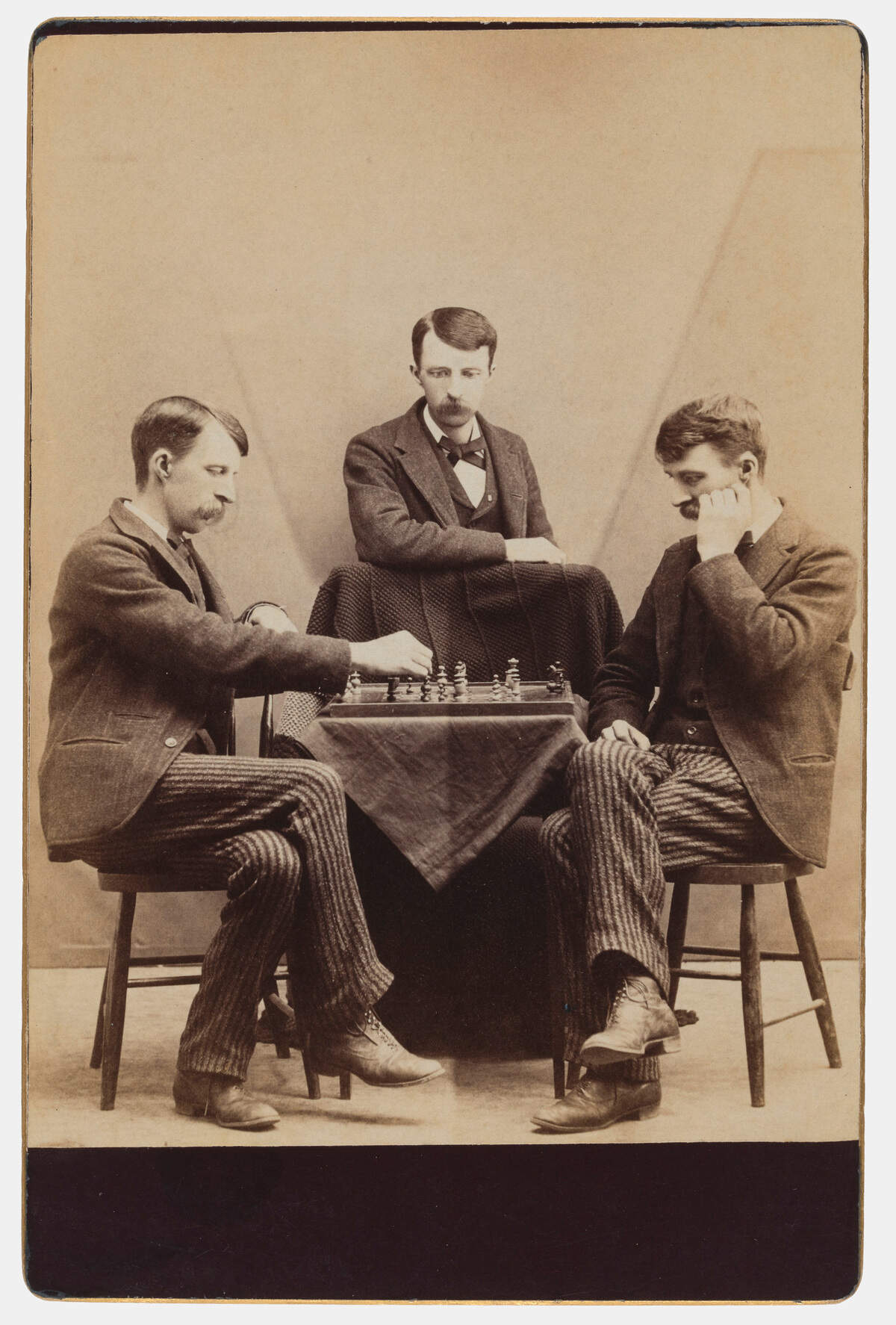
Cabinet cards made photographs cheap, quick, and commonplace in 1870. John Rohrbach, the museum’s senior curator of photographs, admits that he had thought of these old portraits as mundane for much of his career. But a few years ago, he started recognizing these images as an important part of photographic history that has been mostly ignored. He also saw roots of today’s selfie culture.
“Cabinet cards were the go-to format for the middle class over the last quarter of the 19th century,” Rohrbach said. “You’d go to the studio and generally come out with 12 cabinet cards. People’s whole attitude about getting their portrait made changed dramatically. If you went and got your portrait made during the Civil War or before, you were generally doing it to record your appearance and perhaps your status. And you generally came away disappointed with the results. You had to stand there for 5 or 10 seconds at a minimum—oftentimes more—so you’d get stiff and the results would look stiff.”
For decades, few had more than one image of themselves.
But this new format eventually made people comfortable with presenting themselves in photographs, and they started to enjoy it. Portraits of famous people were collected as trading cards and businesses quickly created their own astounding variety of images for advertisements. This is when facial expressions, fashion, poses, elaborate backdrops, and humor came into focus.
Cabinet cards quickly spread across the country and overseas, and they were about the size of our smartphone screens.
“If you’re a small-town photographer and you see these kinds of images show up, you think, ‘Maybe I can do something like that,’ ” Rohrbach said. “And the public thought, ‘Maybe I can look like that.’ And everybody starts going along with the game.”
Texas Made Modern
“Texas Made Modern: The Art of Everett Spruce” is the first retrospective in three decades on the Texas painter, who died in 2002.
Spruce was a member of the Dallas Nine, the group of regional artists with a naturalist approach inspired by Lone Star landscapes. With members including Jerry Bywaters, Harry P. Carnohan, and Alexandre Hogue, the Dallas Nine were especially prominent in the 1930s and ’40s. Spruce and his peers were admired by Marsden Hartley and have works in the collections of major museums across the country, but fell out of favor by the ’50s in the wake of abstract expressionism and pop art.
“Suddenly Americans had finally superseded Europe in terms of progression and advancement,” said curator Shirley Reece-Hughes, who hopes the retrospective will renew interest in Spruce, which could also help his lost paintings resurface. “New York became the focus of the art world and Texas artists were just kind of isolated.”
Spruce is best known for his early paintings from the ’30s and early ’40s, but this retrospective also focuses on his later works, which were often overlooked and deserve to be reassessed out of historical context.
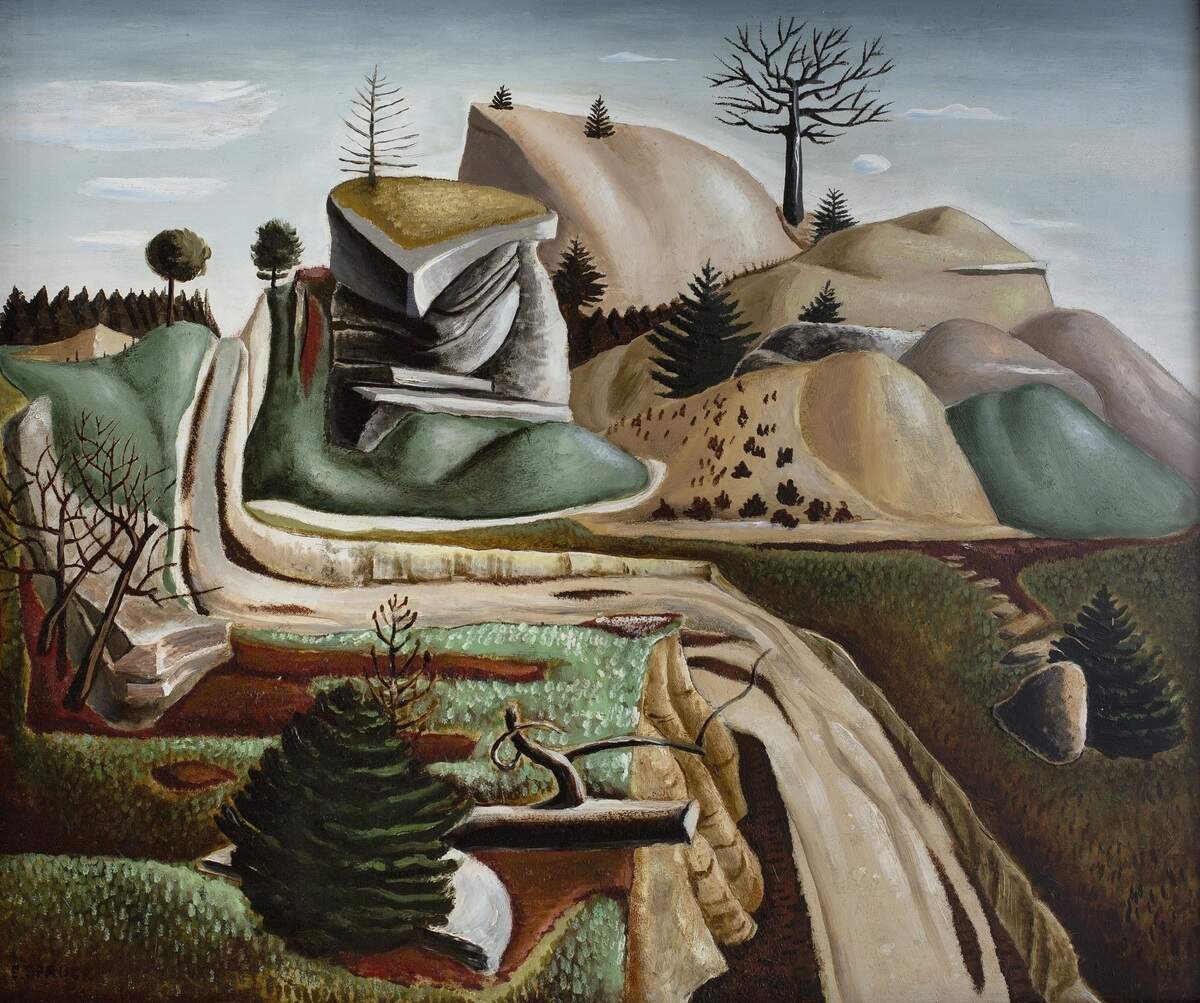
“The thing about Spruce in the context of the Dallas Nine is that he really evolved his style,” said Reece-Hughes. “Some of his late paintings seem to border on abstraction.”
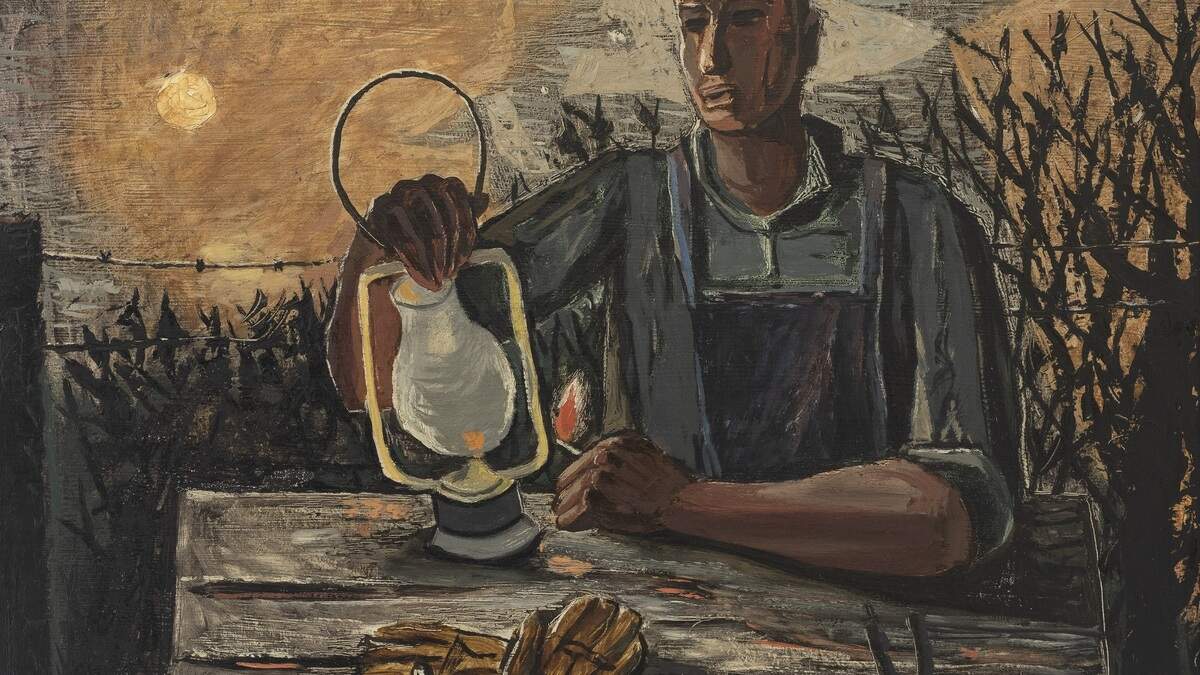
Indeed, “Man Lighting Lantern” has a background that seems Rothko-esque and “Broken Jetty, Port Aransas” captures an agitated atmosphere.
“His interest in depicting conventional reality kind of disappears,” said Reece-Hughes. “The Dallas Nine experimented with surrealism, but Spruce kept going. He wasn’t afraid to experiment. For him there was always this objective to communicate some kind of spiritual transcendence. But you still always have some kind of horizon line or middle ground that keeps him connected to Texas.”
“Texas art hasn’t been as appreciated as it should be,” Reece-Hughes adds. “We need to reclaim these artists that have been forgotten. During their lifetimes in the 20th century, they were in the cannon, collected, and highlighted—particularly Spruce.”