
New Amon Carter Museum exhibit showcases artist’s exploration of Texas
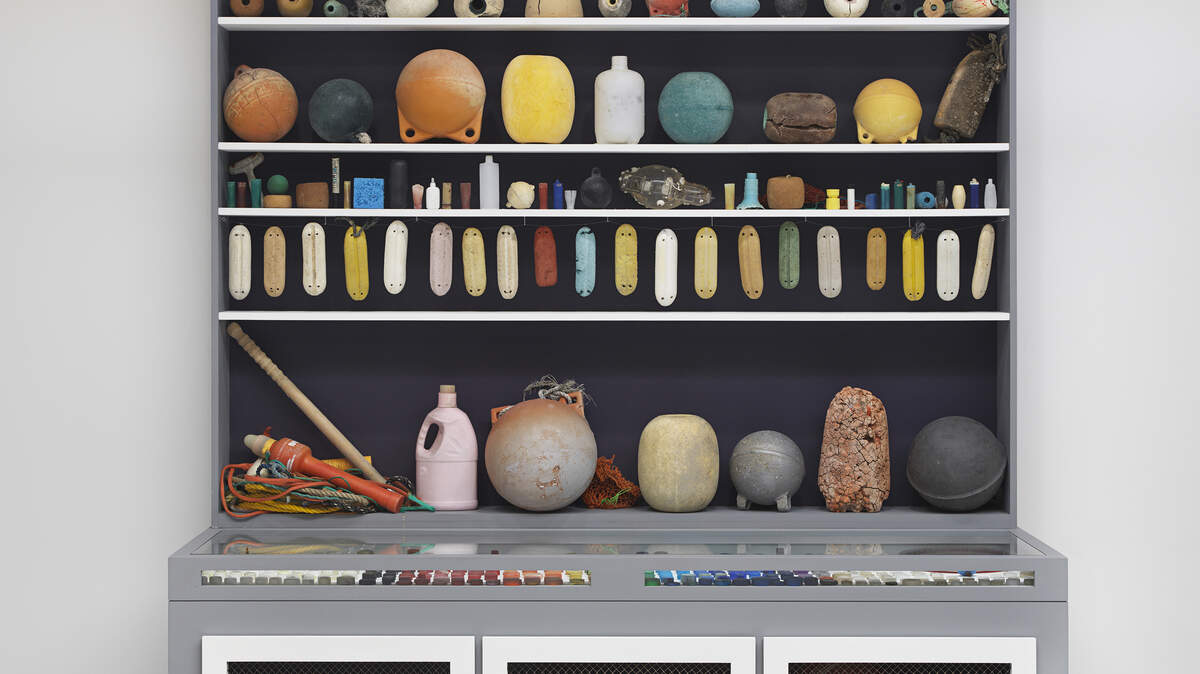
A conceptual artist, explorer, historian, naturalist, and collector of curiosities, Mark Dion spent two years retracing the footsteps of 19th century explorers in Texas for his site-specific new exhibit, an exclusive at Amon Carter.
Dion visited the Gulf Coast, West Texas, King Ranch, Austin, and San Antonio.
The results are essentially collections of oddities from Dion’s adventures. Some of these items are ecological and presented scientifically, or at least with schemes of classification. Dion’s installations are paired with nearly 100 historical works from the artist-explorers he was retracing, which are from the Carter’s permanent collection and are mostly works on paper, paintings, and archival materials.
“The Perilous Texas Adventures of Mark Dion” is on view at Amon Carter Museum of American Art from February 8 through May 17.
Curator Maggie Adler, who participated in some of the adventures, came up with the model of the artist-traveler five years ago as a way of bringing the museum’s historical collection to light. The original idea was to have Dion retrace the steps of Sarah Ann Lillie Hardinge, a self-taught painter of watercolors who provided early pictorial documentation of Texas in the 1850s.
“There’s a different kind of Texas in Hardinge’s watercolors,” Dion said. “She was not speaking for a sophisticated audience or presenting a grandiose idea of the natural world. But these are everyday landscapes with homes, ferry crossings, and vistas that everyone could encounter.”
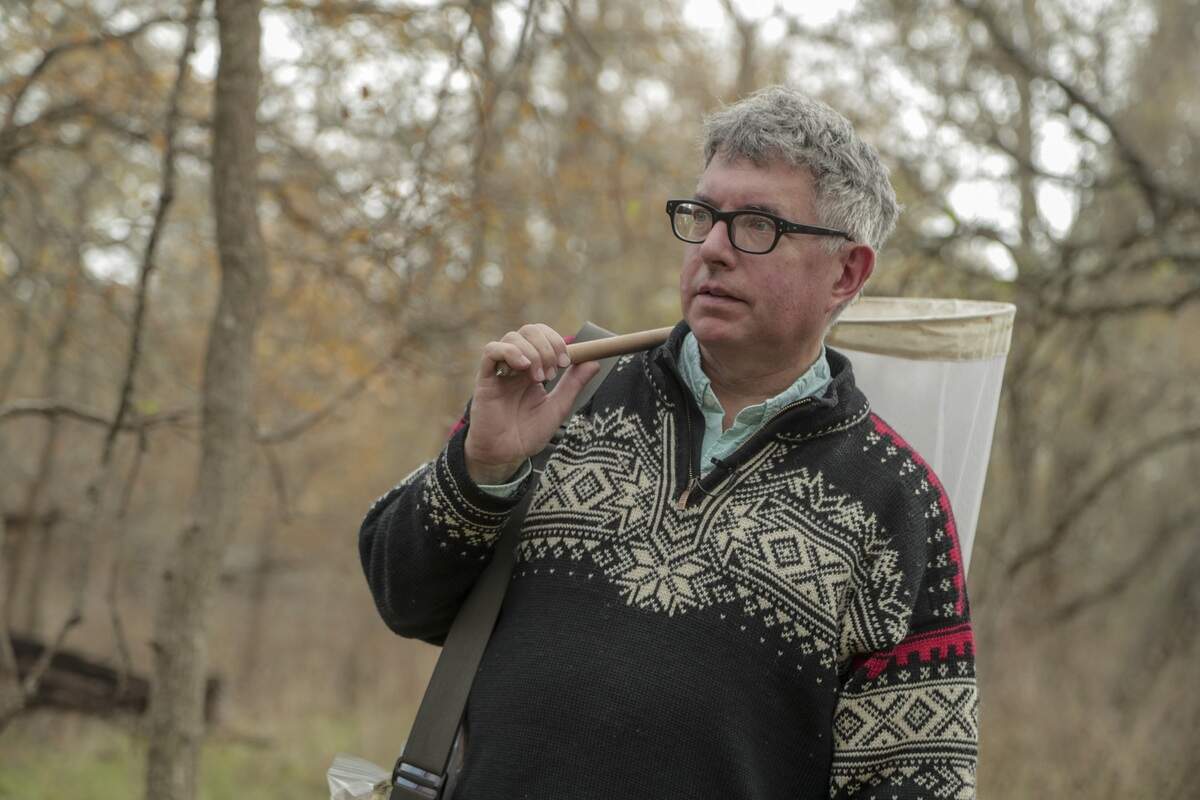
Dion was so impressed with the museum’s permanent collection that he made the project bigger by adding three more characters.
“Amon Carter has an exceptional collection of American art,” Dion said. “It’s breathtaking. As someone who is very engaged in 19th century American art, this is a treasure trove.”
In addition to Dion and Hardinge, the cast of characters includes botanist Charles Wright, who spent over 100 days walking from San Antonio to El Paso in 1849 collecting plant samples, which eventually led to the discovery of about 50 new plants. Also included are journalist and landscape designer Frederick Law Olmsted, who became Chief Architect of Central Park.
Corresponding for The New York Times, Olmsted went on a Texas road trip in the 1850s to provide a vivid account of social conditions. Dion also added John James Audubon, a naturalist and painter who documented birds in their natural habitats and published “The Birds of America”, a monumental book on ornithology.
“We were always thinking about the politics of representation and the meaning of images,” Dion said. “There is always the desire to be spectacular and capture the public’s imagination.”
One room has a few different works that feature bison, an animal with a mythic story in the American West, depicted in very different ways. Made for popular audiences, bison appear to be ferocious in some works, but are presented scientifically in others.
“The Amon Carter is an insane resource for researchers, for people thinking about the construction of the West, and for people thinking about how we’ve thought about the West, and how those attitudes and ideas are changing,” Dion said.
But after seeing these works from the permanent collection that functioned as research materials in the first rooms of the exhibit, the shift to Dion’s installations is a dramatic departure from what Texas once was to what it is now.
“There is something inherently strong in the American artistic vernacular about travel,” Dion said. “Some of our first great books are about travel and everyone has a notion of the road trip from literature and films. But perhaps not in sculpture.”
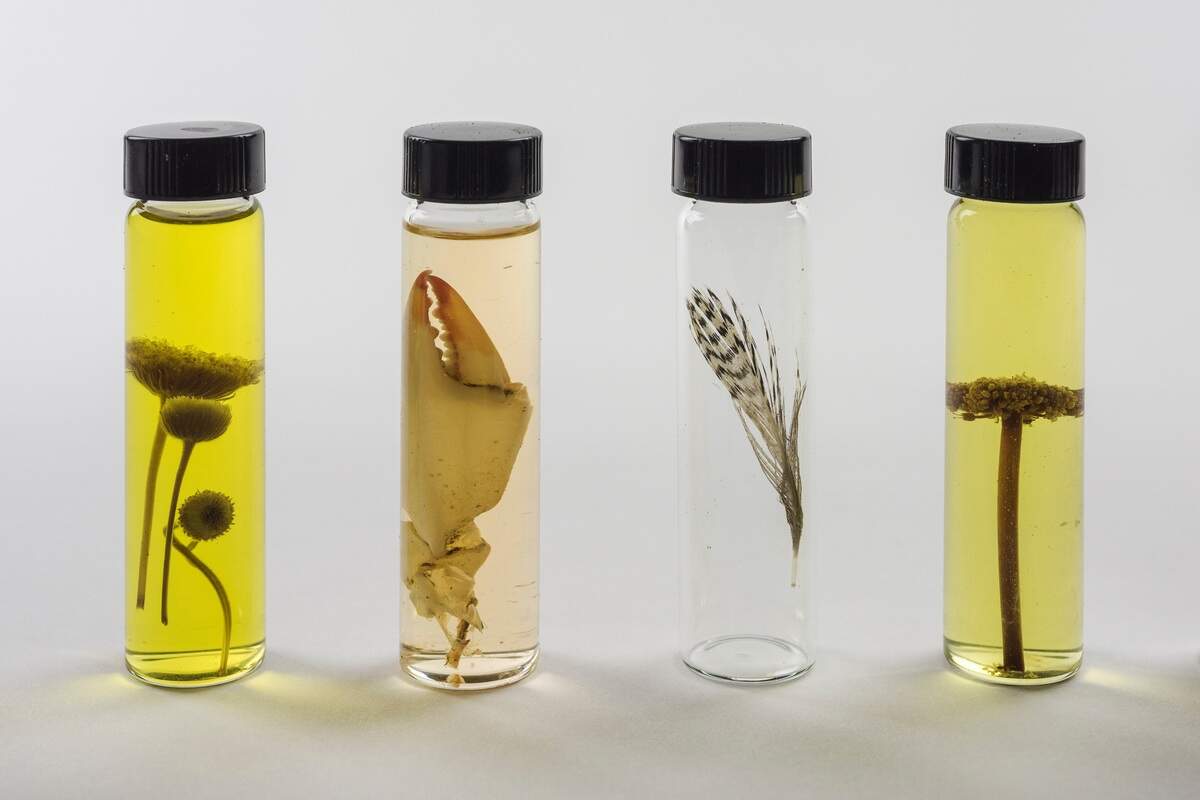
Dion’s large installations are put together with the stuff he collected from his Texas travels. There are journals, photographs, and field equipment. But carefully arranged and displayed like scientific specimens are pottery shards gathered in Galveston, skeletal remains, peach pits, Girl Scout paraphernalia, ashtrays, cigar boxes, and vials containing insects, plants, Dion’s fingernail clippings, fruit loops, and shampoo from hotels.
“We impose this model of wilderness as an untouched landscape, wild and empty,” Dion said. “My idea of nature has always been one that lives side-by-side with human presence. In a way, nature is what survives despite our best abilities to wipe it out.”
A great example of this is when Dion and some botanists retraced Wright’s journey to Frontera in West Texas. The coordinates were now an abandoned parking lot between a Walmart and a McDonald’s, but it still had plants they were looking for.