An often fatal mistake Texas homeowners make when planting trees in their yard
One of the things I’ve never understood is why so few landscape contractors and nursery workers wrap the trunks of newly planted trees. It could make a giant improvement in the survival rate of their plantings.
Let me explain why it’s on my “non-negotiable” list when I plant certain new trees.
Nursery-grown shade trees are produced in close proximity to one another. The trees shade adjacent plants as they are repotted into consistently larger containers.
Eventually, they are sold and planted into our landscapes. Suddenly their trunks are exposed to full, baking sunlight.
Some species have very thin bark when they’re young. Most notable among them are Shumard red oak, Chinquapin oak, water and willow oaks, red maple (Acer rubrum and its cultivars), and Chinese pistachios.
Those trees’ bark, because it’s very thin, is vulnerable to sun scald on the west and southwest sides for the first couple of years we have them in our landscapes.
Sun scald happens to a large percentage of those trees’ trunks, but it doesn’t become visible until the third or fourth year (or later) that we have the trees in our gardens. By then any guarantee has expired.
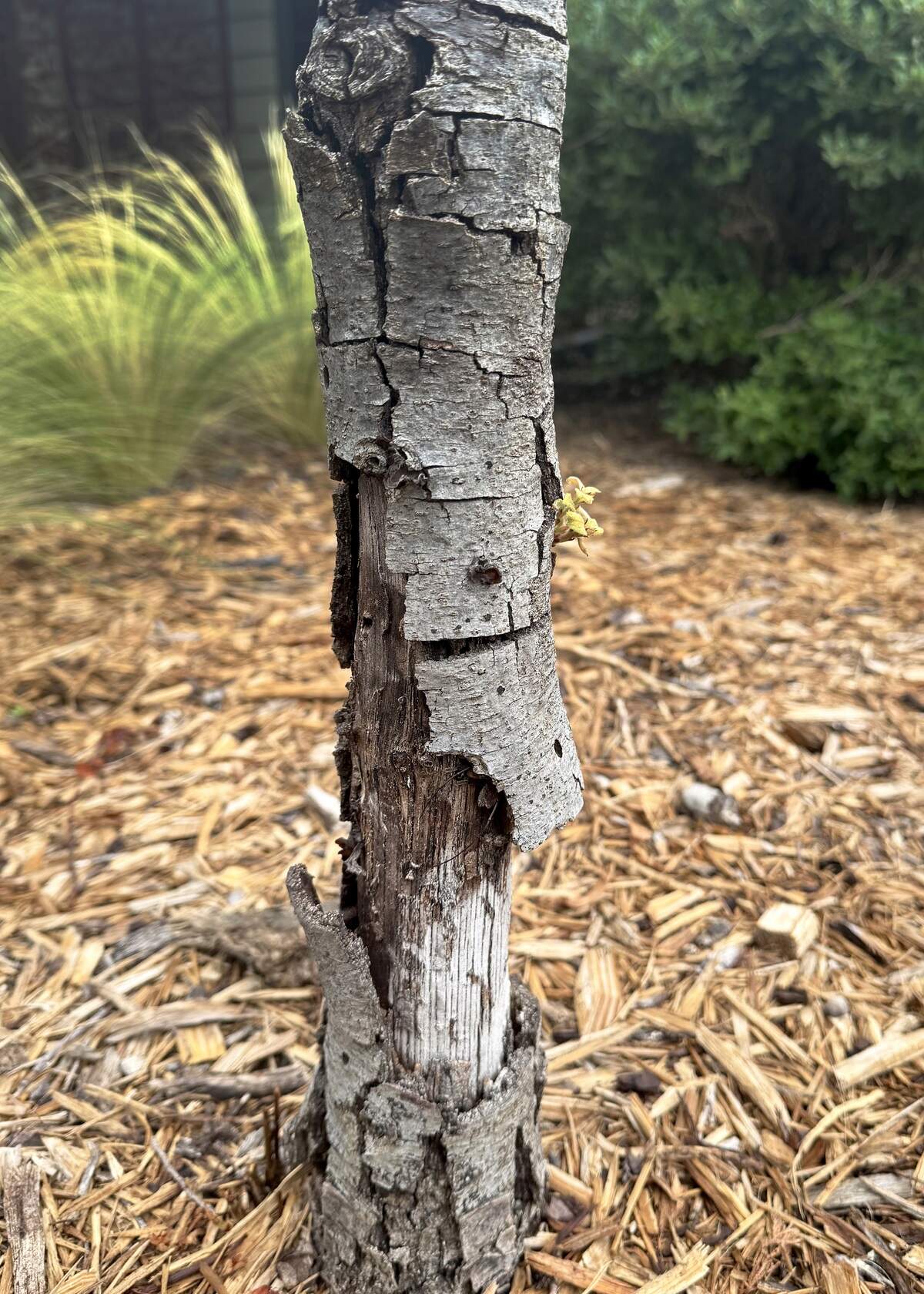
Once the sun scald occurs, the bark develops vertical cracks, then begins to separate and fall away. Internal tissues are exposed. Borers (insect larvae) may invade the trunks.
Just inside the bark is the phloem, a cylinder of tissue that conducts manufactured sugars from the leaves down to the roots. Inside the phloem is the cambium. It functions to produce more phloem and, to its inside, more xylem. The xylem is the “wood” of the trunk. It eventually ends up as dead cells that function as drinking straws, carrying water and suspended nutrients up from the roots to the leaves.
When the bark peels off, so does the cambium. The supply line to the roots is lost. The roots die because the phloem has been lost and no new phloem is being produced. The problem starts on the side with the sun scald, but decay and borer damage eventually engulfs the entire trunk.
All this could be avoided if the trunk were simply wrapped from the day the tree is planted.
Let me show you wrapping step-by-step.
When a friend took delivery of a lovely Shumard red oak recently, he hired the nursery to plant the tree for him. He showed me a photo of the finished planting, and I noticed they had not wrapped the trunk. I bought my old standby, Treekote paper tree wrap from A.M. Leonard and Sons in Piqua, Ohio. They’ve been my source of this product for more than 65 years, even when local sources do not stock it.
Here, in sequence, are photos showing the process.
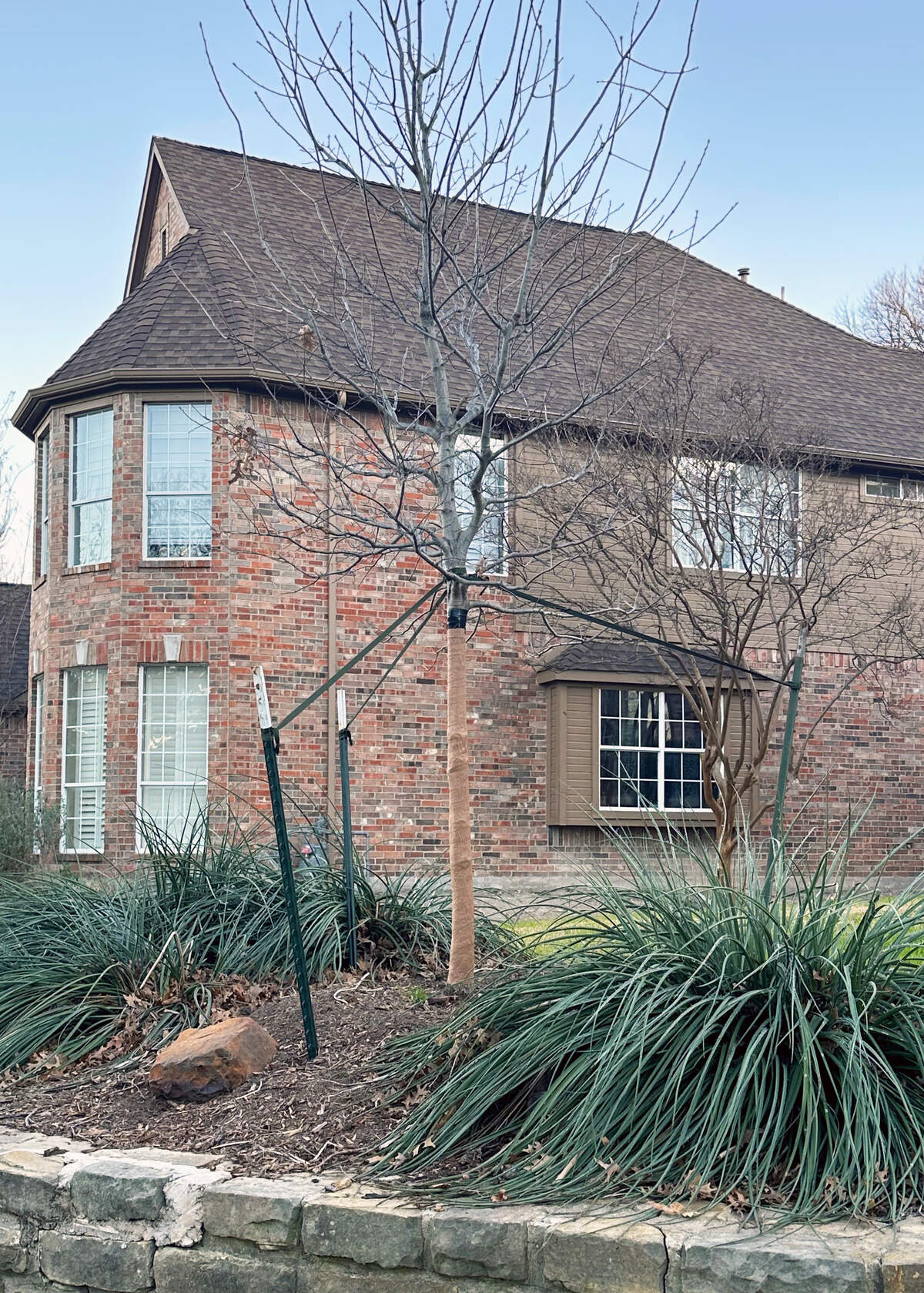
My friend’s newly planted Shumard red oak. Note how carefully it has been staked:
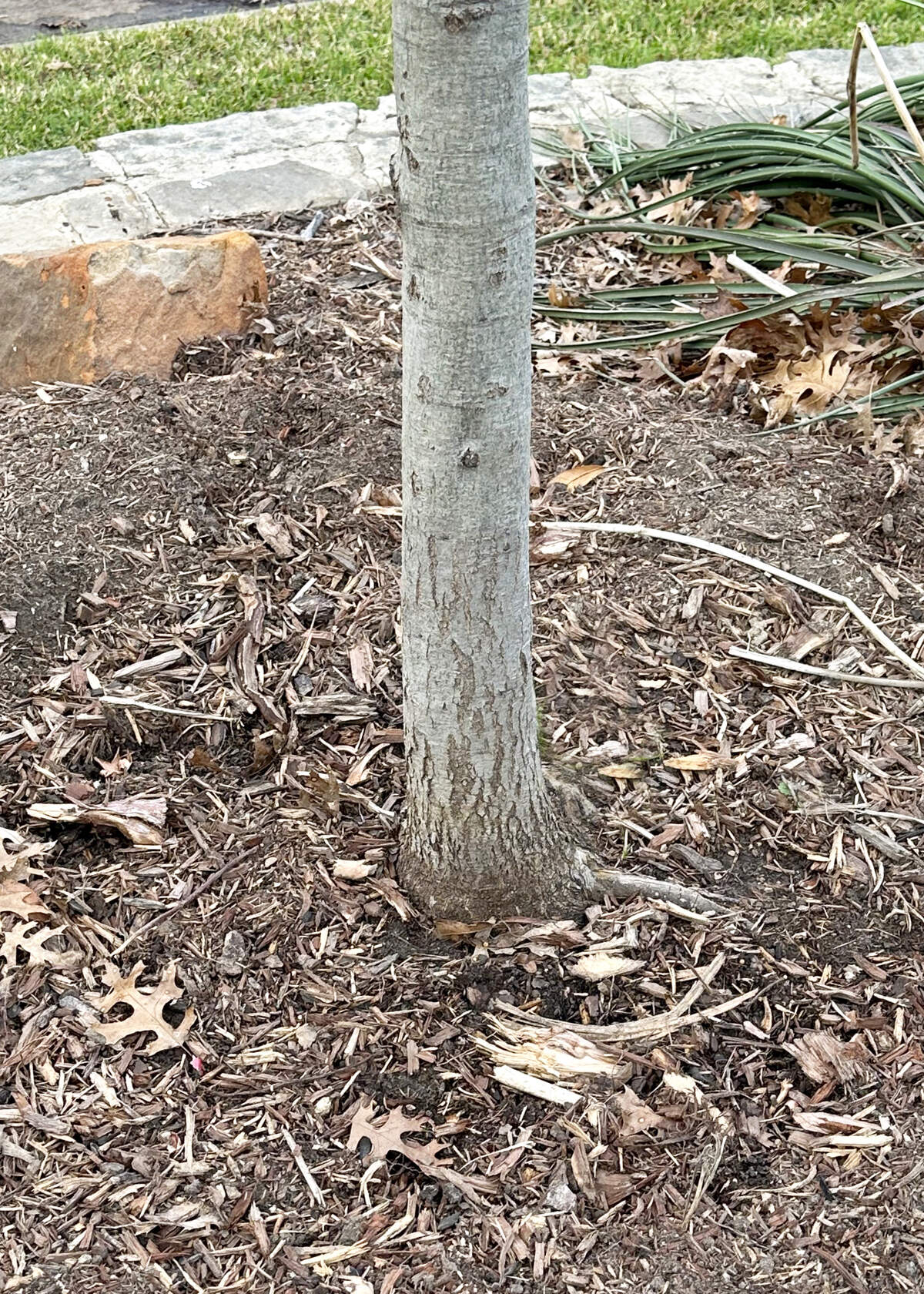
This is sun scald – what we’re trying to avoid.
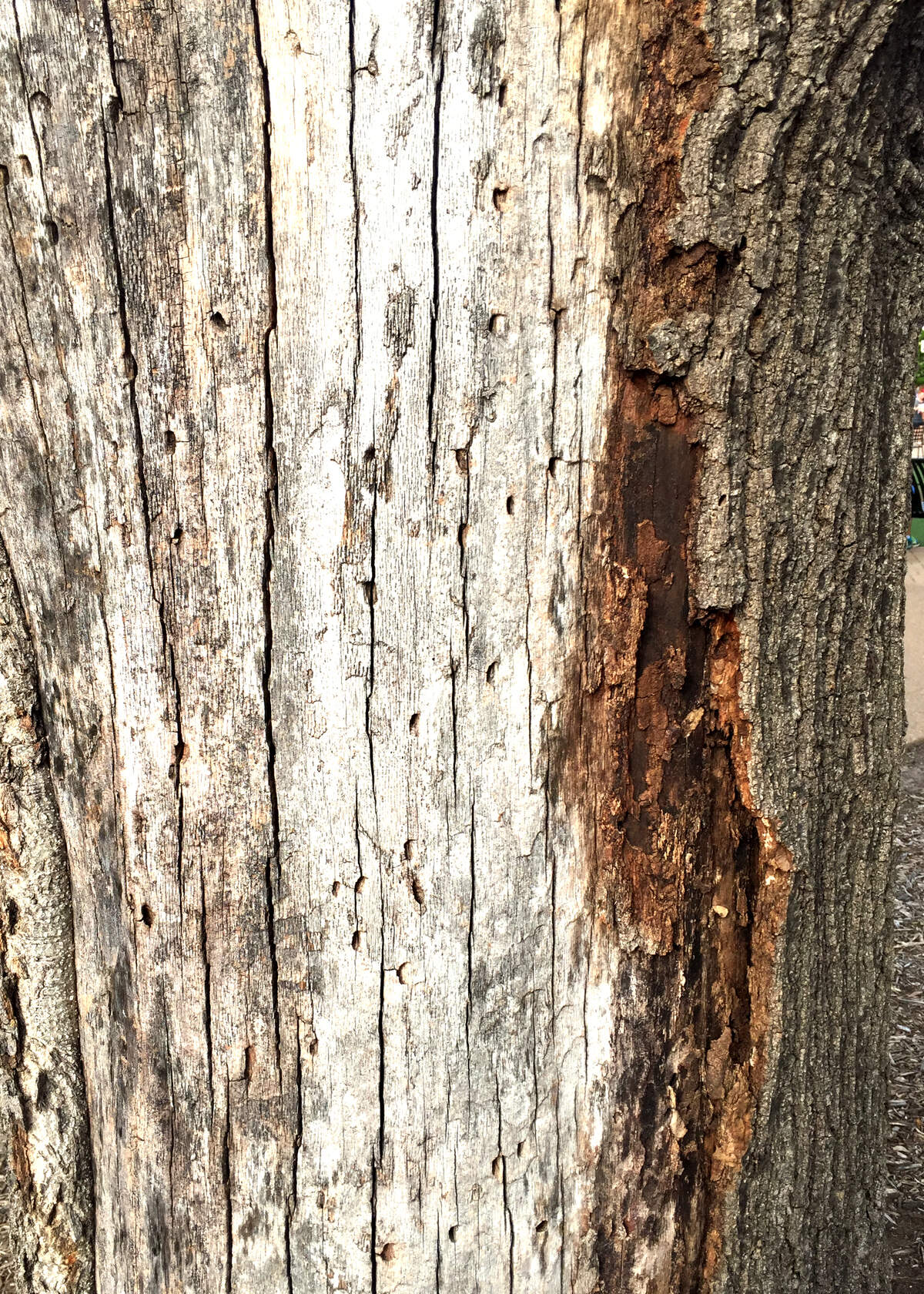
Decay and borer invasion into a Shumard red oak trunk in a commercial landscape:
While there are other types of tree trunk wraps, this is the one style I prefer:
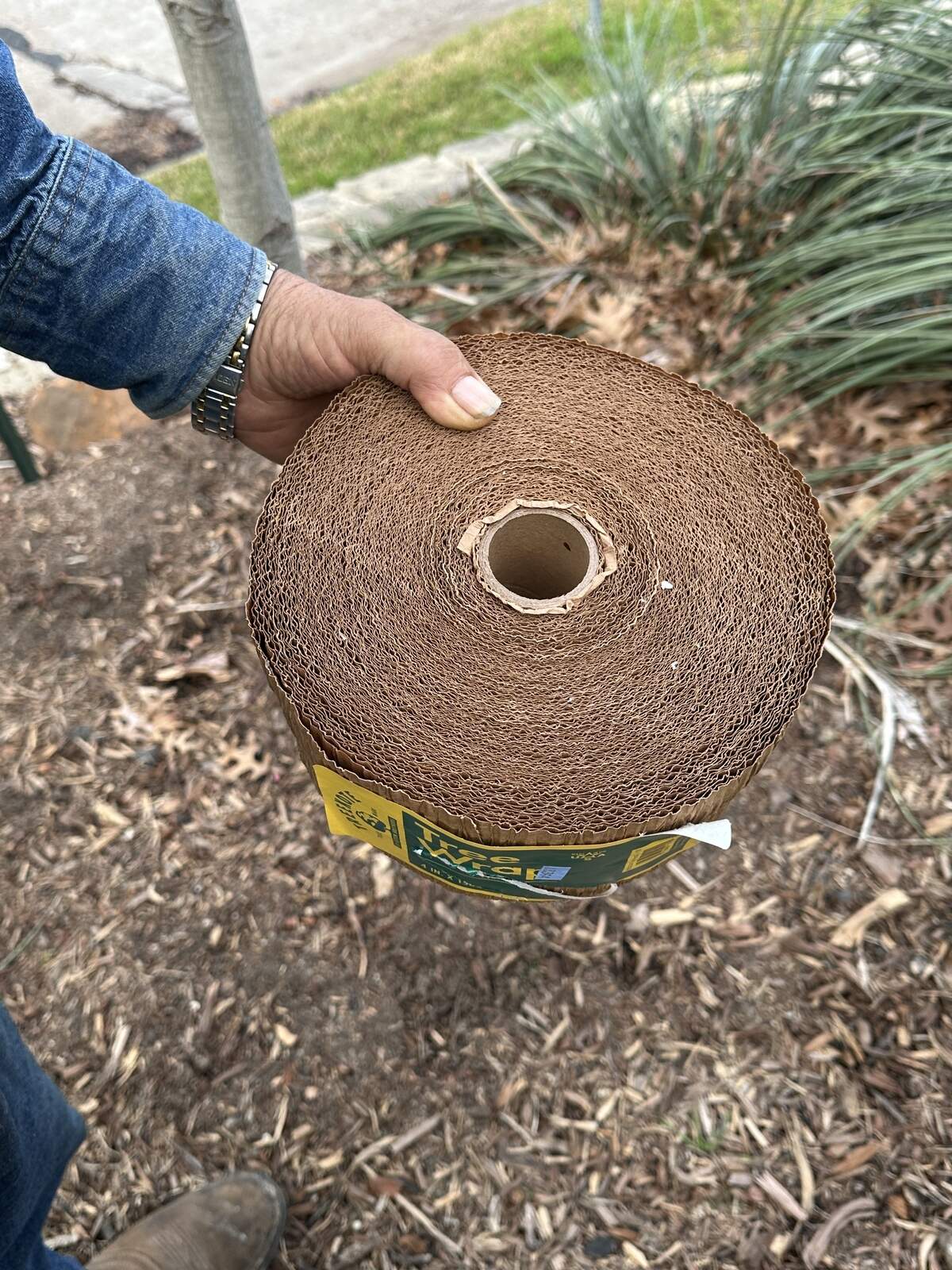
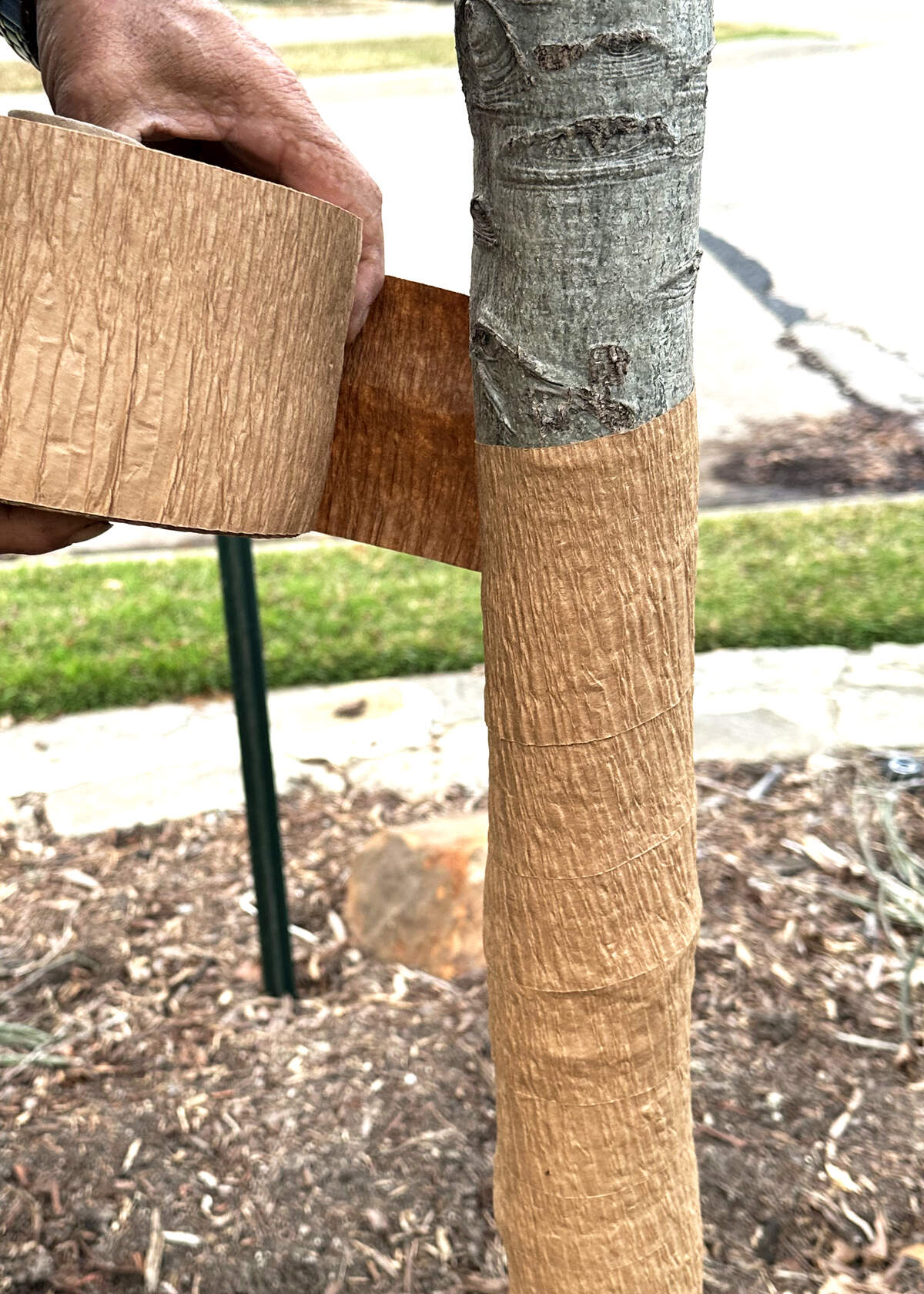
Begin the wrap near the soil line, preferably just a couple of inches above the ground:
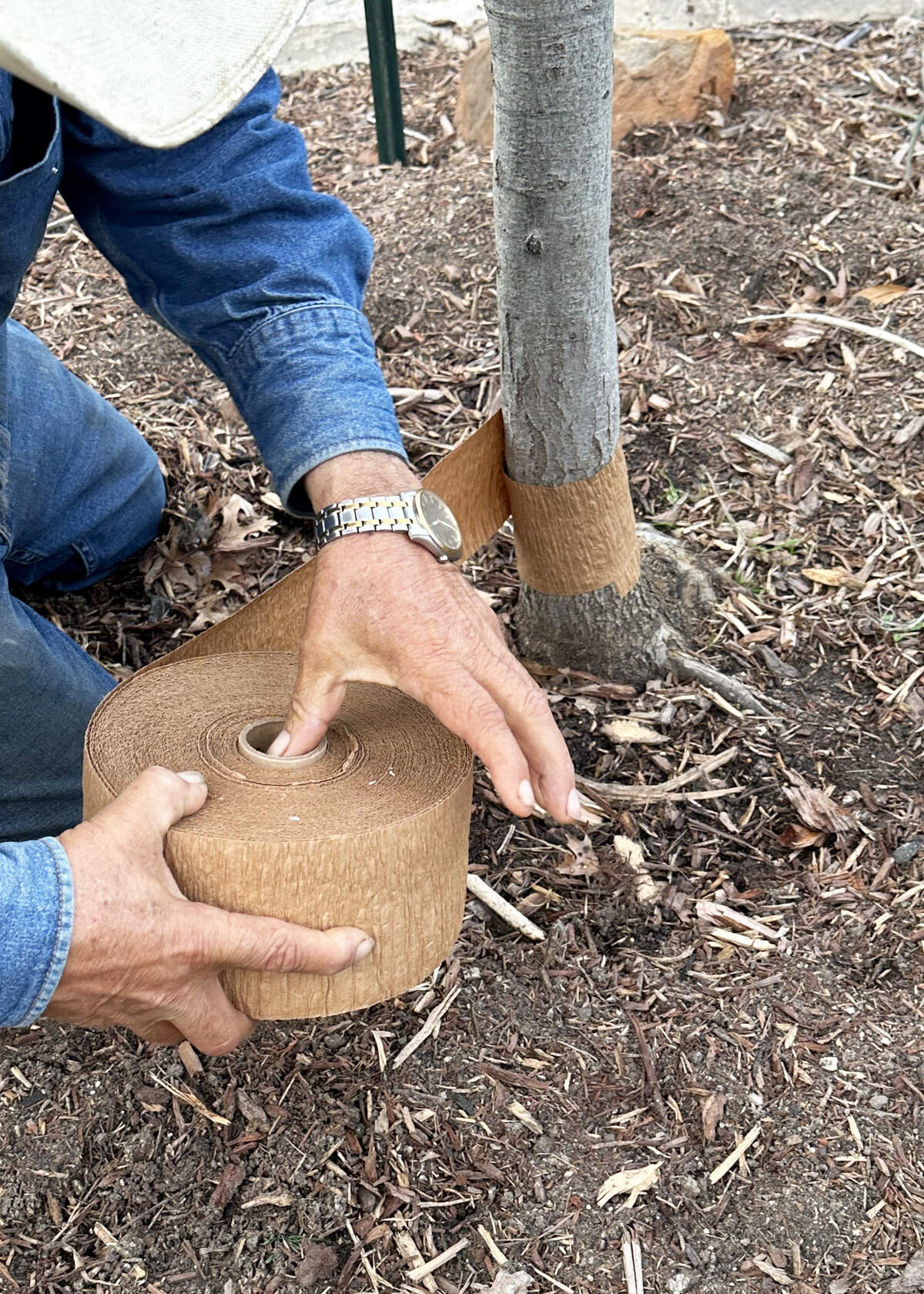
Pull the wrap snugly in place. It will adhere to itself.
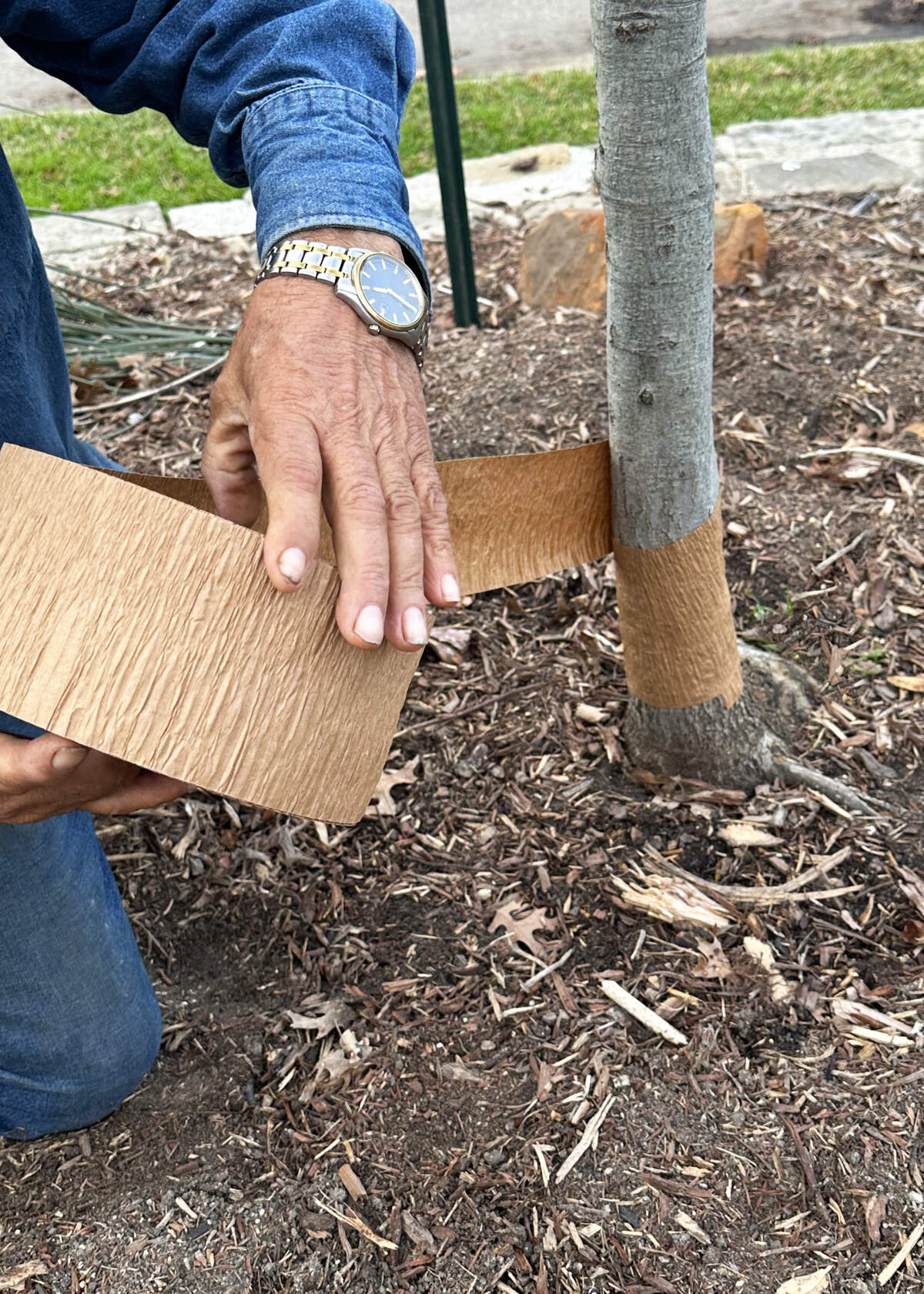
Smooth the wrap against the trunk:
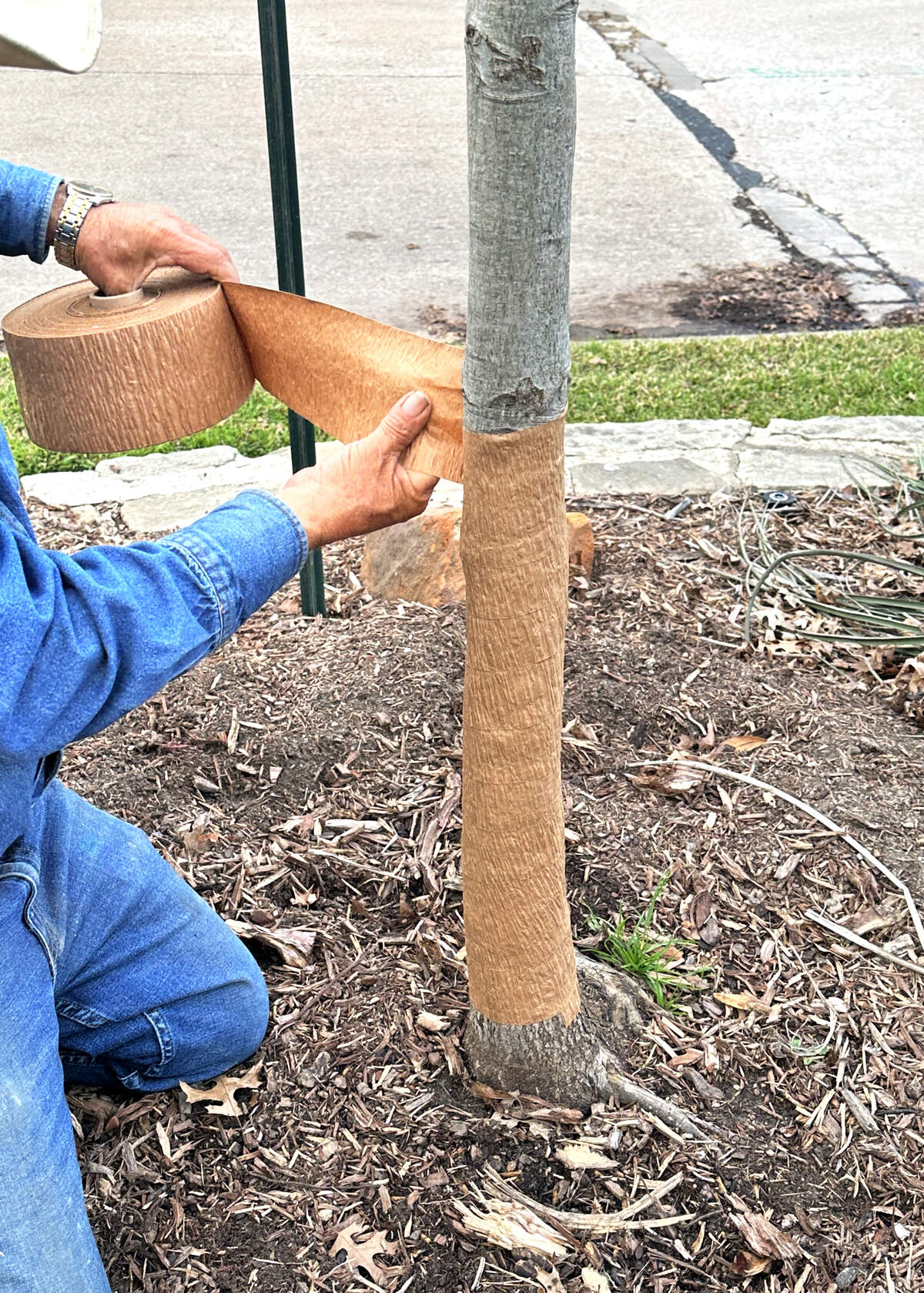
The wrap will conform to all the irregularities of the trunk.
To prevent unraveling of the wrap, close it off at the top with a short section of duct tape or some other weatherproof elastic tape. This is black Gorilla tape.
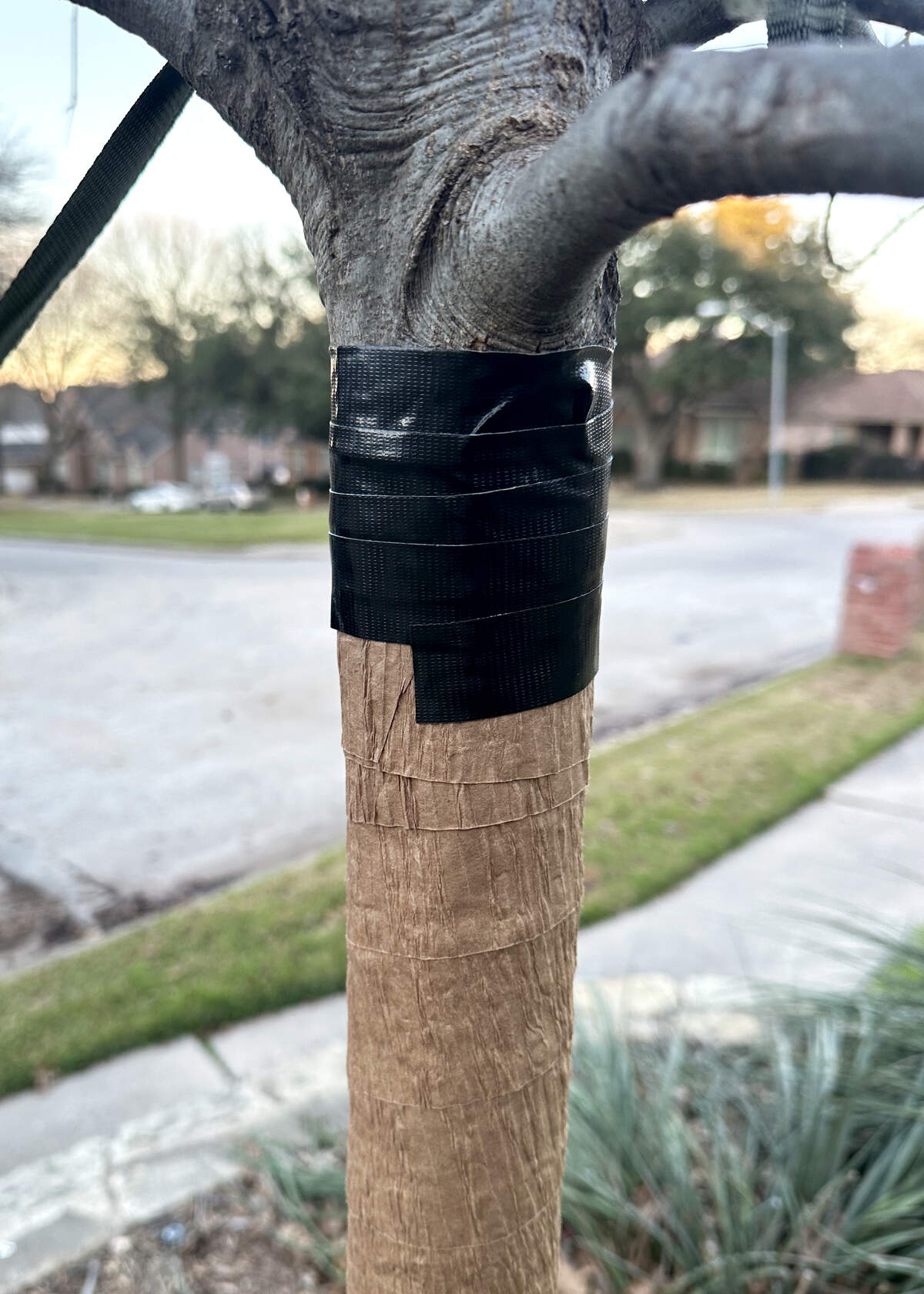
See how unnoticeable the new wrap is in the landscape. It will expand as the tree’s trunk grows larger. Once the tree’s leaf canopy has grown dense enough to provide shade, usually after 2-3 growing seasons, you can remove the wrap permanently.