This is how credible reporters work and what you can do to evaluate news websites
Around 10 p.m. after a particularly long day, I received an email from an attorney I had interviewed via email for a story earlier.
“I saw this piece online that changes a lot of the wording of my email to misstate the law and seems to confuse my meaning,” he wrote. “Is there a way to correct this?”
I was confused. I don’t change direct quotes. So what happened?
Then I noticed the link he sent me.
Daily Fort Worth News.
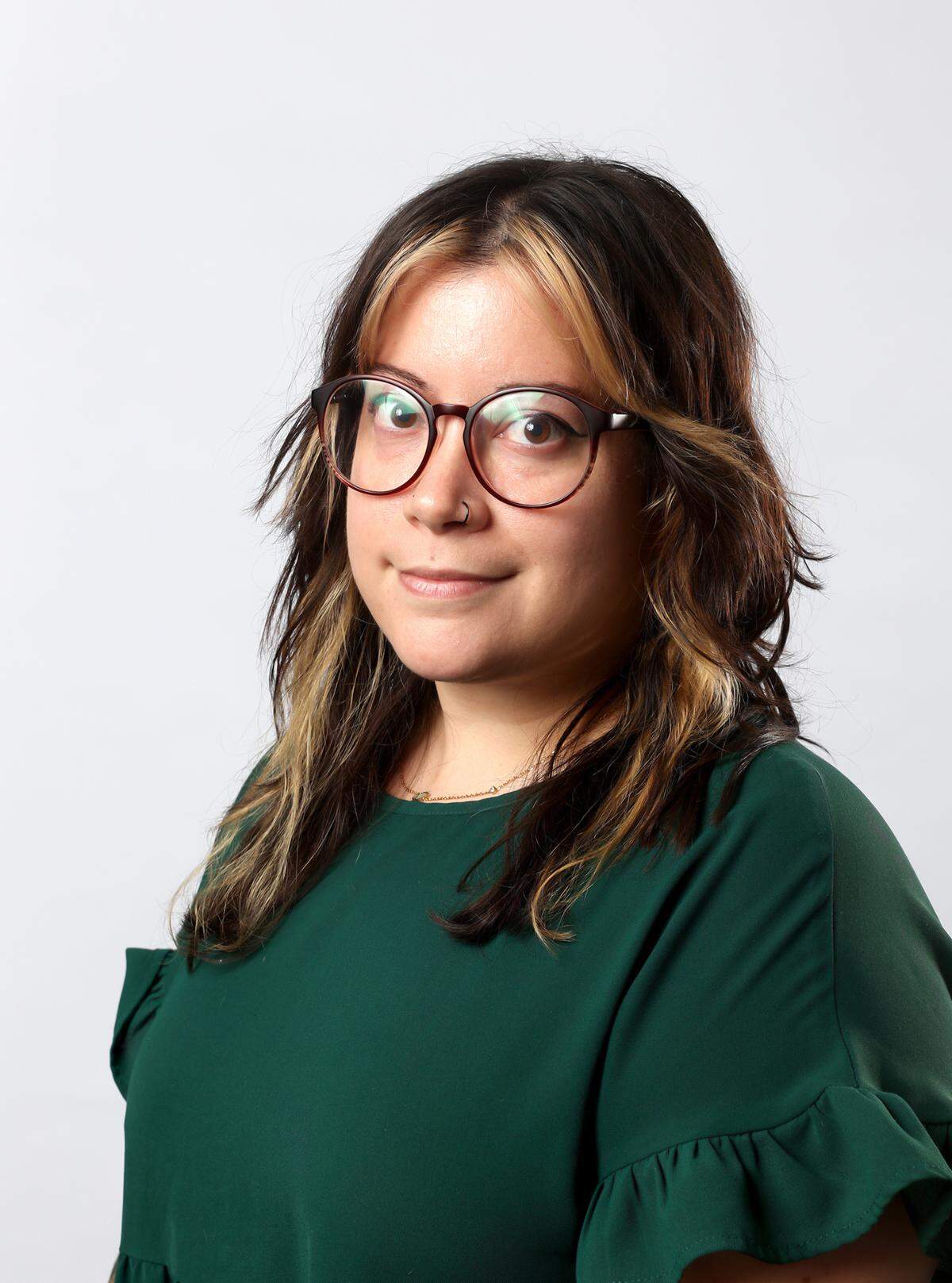
I had never heard of that publication and my heart sank when I clicked the link and found my Fort Worth Star-Telegram employee photo staring back at me. I scrolled through the story and immediately realized that some words had been changed. Even my dateline, FORT WORTH, became FORT VALUE.
That’s when I realized the website was masquerading as a news outlet. Whatever bot ran it stole my entire story and tried to subtly replace certain words with synonyms, effectively changing the statement the attorney sent me hours earlier.
After a couple emails back and forth, he made the same realization.
“Whoa, I just looked at your original article and the quote is exactly what I wrote in the email,” he wrote. “These plagiarists stole your work and twisted my words.”
If you come across a website like the Daily Fort Worth News and you notice that things appear to be off, they probably are.
Chip Stewart, an attorney and journalism professor at TCU, said news consumers should double check what publications they’re getting their information from by doing a quick Google search or glance around the website. Because the bot-run blog is likely foreign-based, there’s not much I (or anyone) can do about it stealing work other than ignore it and educate people on how to identify websites like it as fake.
If you scroll through the website, you can see pretty quickly how sloppy it is. The writing is bad, there are no ads, the layout is amateurish. It doesn’t look like any legitimate news service I’ve seen. When you Google it, there’s no information about it outside of its own URL. And when you scroll to the bottom of the page, you can see it was created in 2021.
There’s no “contact us” page, no address, no phone number and no one listed on the website as an owner, reporter or editor — all telltale signs that the website isn’t a legitimate news source.
The story it stole from me was one I vetted through numerous sources and court documents. My version of the story, like every other story produced by a reporter at the Fort Worth Star-Telegram, included a short biography of myself at the bottom with a link to go to my full reporter author page.
The story was about a man named Aaron Dyson, who was over-sentenced in the 1990s after he was accused of an elevated crime he didn’t commit. He was being released on bond.
To write that story, I spoke with the Tarrant County District Attorney’s Office and Dyson’s attorney, Chris Self — both the type of credible sources I use in my stories. I also used official court documents for background about the case and I had previously talked with Dyson’s family.
These are the actions that I, and other credible journalists across the country and at the Star-Telegram, take to ensure that the information we are reporting is accurate and true.
We vet sources to make sure they are experts or officials (such as District Attorney Sharen Wilson, attorneys, professors, police sources, elected officials, etc.) We ask for documentation to back up claims (such as court documents, cases files, letters and emails — some of which are obtained through public record requests). When we talk with the people our stories are about, we use those experts and documents to confirm what they’re telling us.
When you’re trying to decide if the story you’re reading came from a legitimate news source, ask yourself some questions: Does the writing make sense? Does this website look real? Is there contact information or an about us page? Where else has the author published work? Does the story have multiple sources or documents to back up what it’s telling me? What date was it published (some stories you’ll find on your social media feeds might be real, but they might have been published years earlier)?
If you don’t know the answer to some of those questions, or you’re not sure, perform a Google search: “Fort Worth news sources”, “Who is Nichole Manna?”, “Who owns the Fort Worth Star-Telegram?” You can also search for key phrases or keywords you found in the story to see if others have published news articles: “Aaron Dyson prison release.”
Asking yourself if there are multiple sources in the story is an important question. If I’m writing about a dispute, I will always try to get a response from both sides. If I can’t get a comment from one side, or they decline to comment, I will note that in the story.
For example, in March I wrote about how the Tarrant County Jail failed its inspection, and I used information from a state document to describe what happened. I was clear in my writing that the information about the failed inspection came from the Texas Commission on Jail Standards, which would be considered a reliable source. When I contacted the Tarrant County Sheriff’s Office for its response (the jail is under the sheriff’s responsibility), I didn’t get a reply, and that was noted in the story.
So just remember, if you come across a story that seems off, or gives you pause, listen to your gut and do some research. Journalists work too hard to get truthful, nuanced news to consumers to later be undermined by bots.