
Black Mountain's Fort Worth data center: tax revenue, ERCOT & political headwinds
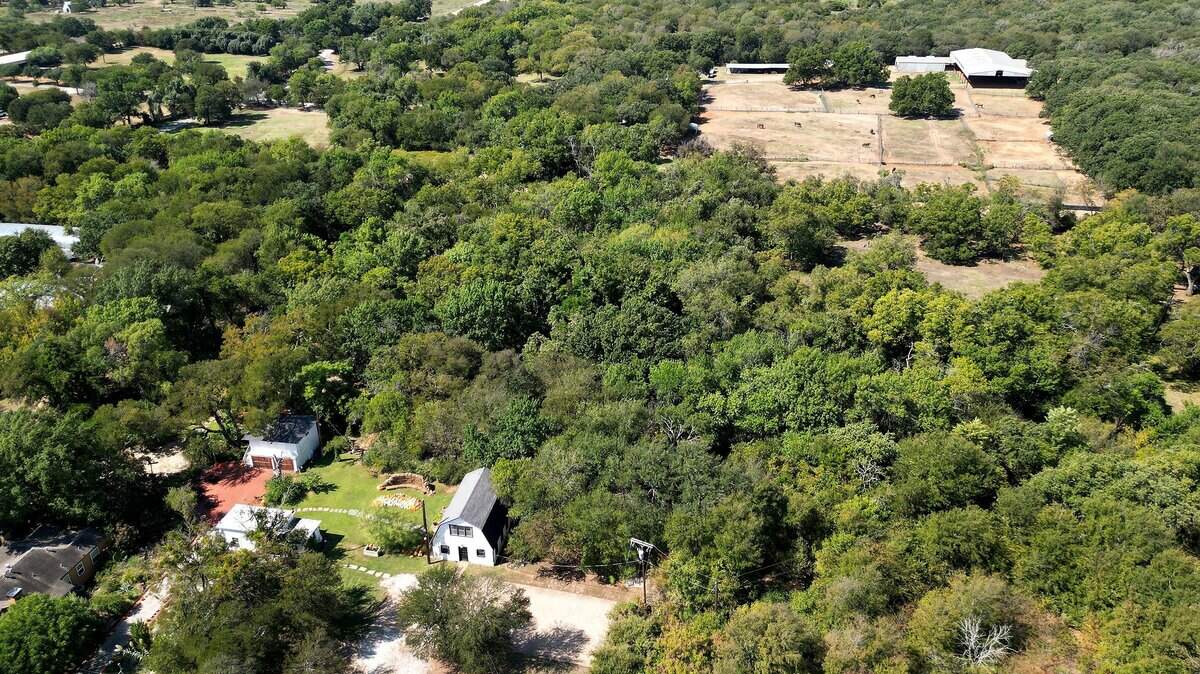
Fort Worth-based energy consortium Black Mountain is pushing a $10 billion data center project through a zoning gauntlet on the city’s southeast edge — a development that has become a test case for how Texas balances digital infrastructure investment against community resistance, grid integration questions and the political optics of campaign finance.
For energy, real estate and government-affairs professionals tracking the next leg of the Texas economic boom, the project offers a read on what data center expansion actually looks like on the ground.
The tax revenue pitch — without a formal agreement
Black Mountain CEO Rhett Bennett has told city officials the data center is expected to generate $30 million annually in tax revenue for Fort Worth and Tarrant County, plus “hundreds of high-skill, high-wage full-time jobs in technical facility operations, logistics, and security” with average wages above $75,000.
Notably, the company does not have a formal economic development agreement with the city of Fort Worth. That gap matters for analysts comparing Black Mountain’s pitch with structured incentive packages other Texas municipalities have used to lock in capex commitments, employment thresholds and clawback provisions.
Neighboring property owner Sue Weston, who owns the historic Weston Gardens adjacent to the site, has been blunt about the math.
“It’s prime real estate to be developed for homes and other things, not a data center,” Weston told the Star-Telegram. “If you look at the few jobs that it’s going to create after construction, it makes no economic sense at all.”
That critique — heavy upfront capital and tax base contribution versus thin permanent headcount — is the central economic tension following hyperscale projects statewide.
The footprint and the substation
Black Mountain has successfully petitioned Fort Worth to rezone roughly 431 acres near Forest Hill and Everman. The 187-acre site plan at the corner of Lon Stephenson Road and Forest Hill Drive calls for a 68-foot-tall campus spanning 232.5 acres, with four buildings totaling 2.2 million square feet of enclosed space and an electricity substation in the center of the property. Bennett told zoning commissioners the substation would deliver power only to the data center.
Two additional rezoning requests — for 42 and 38 acres — remain pending. The Fort Worth City Council tabled the site plan vote less than three hours before its scheduled May 12 meeting, pushing it to June 23. A city staff briefing on data centers was scheduled for June 2 ahead of the vote.
Parker County expansion and natural gas turbines
The Fort Worth project is no longer the only Black Mountain footprint in the metro. In 2025, the company purchased over 2,000 acres in Parker County near Weatherford with an assessed value exceeding $57 million, according to the Parker County Appraisal District.
In April 2025, Fort Worth Power Core LLC — which lists Bennett as CEO — received Texas Commission on Environmental Quality approval to operate five natural gas turbines at 501 Pearson Ranch Road, at the southern end of that property. The TCEQ application described the turbines as “backup/bridge power for a new data center.”
Weatherford officials have publicly declined to host the project. In a Jan. 16 statement, the city said: “We have heard your concerns and, given additional uncertainties, data centers will remain NOT ALLOWED in Weatherford.” City Manager James Hotopp said he was unaware of the TCEQ turbine application until contacted by the Star-Telegram and called it “concerning.”
Bennett disputed Weatherford’s framing, telling the Star-Telegram the city “did not tell us they don’t want us in the city” and that the company is “evaluating many sites, only a fraction of which actually make it all the way through development.”
Fort Worth Power Core LLC holds TCEQ air emissions permits across Tarrant, Jack and Somervell counties — some referencing data center backup power, others describing turbines that would “generate power for sale.”
ERCOT integration and the legislative runway
The grid question is now squarely in front of the Texas Legislature. The House State Affairs Committee held its first data center-focused hearing after receiving an interim charge from House Speaker Dustin Burrows, with the next session convening in January.
Public Utilities Commission of Texas Chairman Thomas Gleeson and ERCOT President and CEO Pablo Vegas anchored the opening panel. “The companies that we talk to are committed to not having residential rate payers bear the cost of this,” Gleeson said — a key signal for residential rate watchers and a flashpoint for any legislative cost-allocation framework.
Industry witnesses framed the moment in expansive terms.
“I think we can see this as the next iteration of, kind of, the oil boom that happened in Texas,” said Haynes Strader, chief development officer at Dallas-based Skybox Datacenters.
Bennett, testifying as Black Mountain’s CEO, emphasized competitive pressure on the integration process. Speed and time are “of the essence,” he said.
“Certainly data companies want to be in Texas,” Bennett told the committee. “I think we want the economic development, but there’s no doubt that other states are competing for that economic development as well.”
Rep. Ken King, R-Canadian, who chairs the committee, signaled the topic will dominate interim work: “We’re going to say ‘data center’ a lot through this interim.”
Campaign finance optics
Bennett’s political spending has added a layer of scrutiny. He donated a combined $46,000 to eight Fort Worth City Council members and Mayor Mattie Parker in 2025, according to a Star-Telegram review of campaign finance records. For most council members, the contributions accounted for a small share of total fundraising — under 1% in most cases, but roughly 25% for District 8 council member Chris Nettles, whose district would house the project.
At the state level, Texas Ethics Commission records show Black Mountain Power LLC donated $500,000 to Gov. Greg Abbott on Nov. 14.
Council members who responded uniformly said the contributions do not influence their votes. Parker said in a statement that Fort Worth is “actively working with our Water Department and with ERCOT to understand potential strain on resources.” Council member Carlos Flores said: “All of us have the ability to critically consider zoning cases that have come before.”
Bennett, for his part, framed his giving as routine civic participation: “My donations to local officials whom I think are doing a great job for our city and region are not to be interpreted as a one off. That’s my right as a citizen and a taxpayer.”
Community pushback and the zoning timeline
Resistance has been concentrated and persistent. Residents have raised concerns about environmental racism, pollution and transparency, with over 30 people registered to speak on the tabled item at the May 12 council meeting. A March 11 community meeting in Forest Hill grew tense as residents held up “No Black Mountain” signs.
The Fort Worth Zoning Commission unanimously recommended approval of the site plan amendment on April 8, with modifications including a 70-foot setback increase and a building height bump from 55 to 70 feet. The next decision is the June 23 council vote.
This story was originally published May 20, 2026 at 4:17 PM.
CORRECTION: The story has been updated to reflect that the substation will not be operated by Oncor.