Tennis legend John McEnroe raises alarm over affordability in youth sports
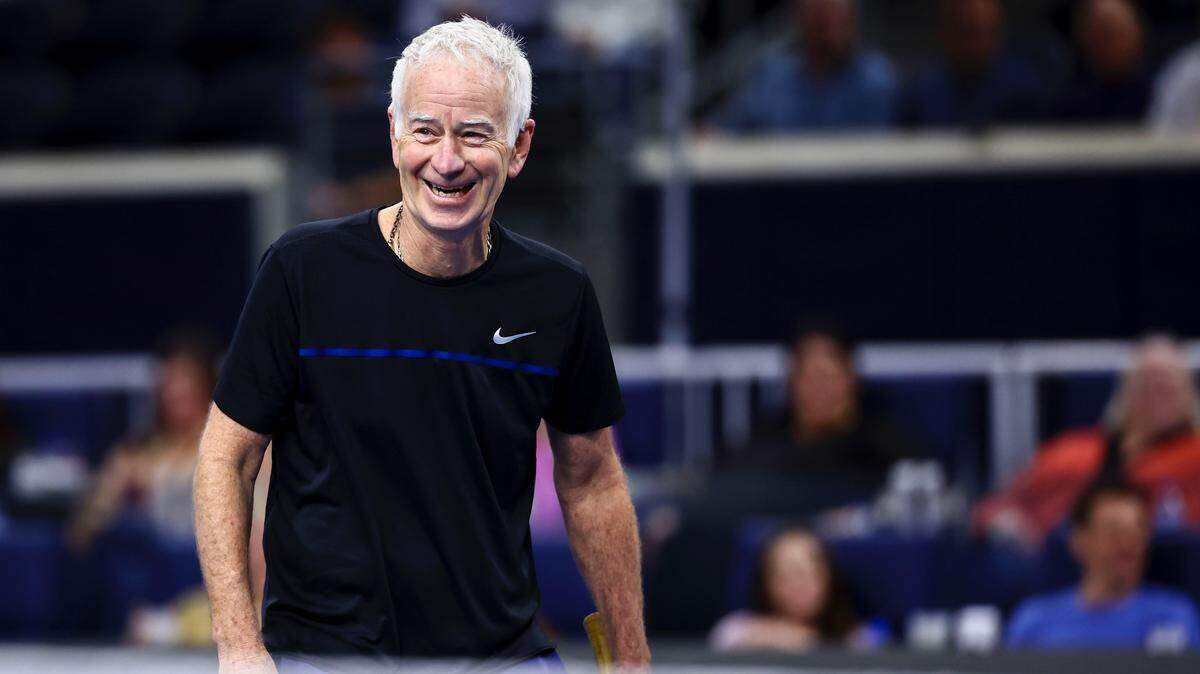
John McEnroe is talking about tennis, but he could as well be speaking about baseball, basketball, football, track, field or any other sport that requires a stick, bat, ball or puck.
The retired tennis legend was in Frisco recently to promote the 2026 Nexo Dallas Open, and there are few current — or former — athletes who are any more fearless in front of a mic. Charles Barkley, Martina Navratilova, Pat McAfee, Johnny Mac … there are precious few.
I asked McEnroe what single element of tennis he would like to change.
“In a nutshell, because this has been an issue forever, since I was growing up. My father was a lawyer, became a partner in the law firm, and he needed some help in the early days for the cost of (tennis),” McEnroe said.
John McEnroe’s dad was an attorney, and he needed to find the extra money to help pay for his son to play tennis.
“So I recognize, and I think we all did, everyone did, that it’s too expensive,” McEnroe said. “Generally, there’s not enough people that have the chance to do something that I believe is a tremendous sport.”
America’s youth sports revenue potential
To play almost anything these days is to pay a wallet-crushing amount. The Winter Olympics is always fun to watch, and it features a menu of sports that can only be played by those with the financial resources.
A study in 2024 by the American Academy of Pediatrics (AAP) said that “70 percent of kids drop out of organized sports by age 13.”
One of the primary reasons behind the surge in dropouts is the price. Tennis and golf have long been called “country club sports,” and carried a higher price tag. Now, way too many sports have moved into the same country club.
“The parents seeing dollar signs. That’s a very troubling thing,” McEnroe said. “It’s gotten worse, than not better.”
It’s gotten worse because America’s youth sports scene has become so profitable that private equity firms are reportedly showing an interest to join what previously had been a space for recreation, fun and life lessons for young people. A 14-year-old playing a baseball game in front of eight people is now a part of a billion-dollar industry.
A parent’s ambition to provide an opportunity for their kid, and or vicariously live out their own athletic fantasy through their child, has proven to be a can’t-miss marketing march to the heart. It’s also a delicious profit margin for sports that hold virtually no commercial appeal.
Why charge $10 when you can bill $100? Why do something to just cover the costs when you can make a real profit, and or potentially have a career and thriving business? The idealism of youth sports has been replaced by America’s preference for capitalism.
Moms and dads are paying for all of this, up to and including the price of a ticket to attend a tournament that they are the ones funding through a series of fees that never ends.
“(I’m) always trying to raise money to give more kids that can’t afford it, which unfortunately is like 99% of the population,” McEnroe said. “So maybe it’s slightly less, I hope, but I’m not sure it is. If anything, it has become more unaffordable since the ‘70s. So that would be the biggest thing.”
How to play without taking out a second mortgage is hard
Play rec. There are still recreational and school leagues for most sports where a kid can play without assaulting their parents’ bank accounts. The challenges associated with this path are everywhere; at a bigger school, there may be so many kids who try out for the team there are often not enough spots. At a smaller school, the team may not even exist.
The drop in competition between rec league and the club team can be so noticeable that it’s discouraging to the player, or parent. It all contributes to the kid ending their playing career at a time when they should still be playing.
Kevin Harvey was raised by a single mom, and was a three-sport athlete at Mineral Wells High School in the late ‘90s. He played on an AAU basketball team in middle school and high school.
“To this day I still don’t know who paid for me to be on that team because I know my mom could not afford it,” said Harvey, who is the girls basketball coach at Nolan Catholic High School. He also coaches four to six AAU teams.
If the player is talented, they can find a team that will cover the costs. In almost anything. Harvey, who played basketball in college, was one of those guys.
The price can be depressing. For basketball, it can be $3,000 to $4,500 a season. That doesn’t include tournaments, and the costs associated with travel. For hockey, $1,200 a month. Not including equipment. One season of cheerleading can run $10,000.
The startup cost to cover a kid’s first season of T-ball is around $600. A season of baseball can be as low as $2,000, to as much as $30,000. Soccer is in that same neighborhood.
The ROI of youth sports is that it can be a life-improving opportunity for a kid, a bounty of lessons dressed as fun, complete with a final score.
“I cannot imagine my life if I did not have sports,” Harvey said. “Basketball saved my life, and every day I thank God for basketball.”
Whether it’s tennis, basketball or golf, those life-altering opportunities in America still exist, but they just cost a lot.
This story was originally published February 13, 2026 at 6:00 AM.