
North Texas’ rural land rush shows there’s nothing simple about country living anymore
READ MORE
Land rush
Demand for rural property is pushing prices to record highs and straining schools, roads and water supplies. As land prices and living costs skyrocket, it’s become clear that simple country living is now a lifestyle reserved for those who can afford it.
Expand All
North Texas’ rural land rush shows there’s nothing simple about country living anymore
Ready for country life in North Texas? Try these tips from buyers and real estate pros
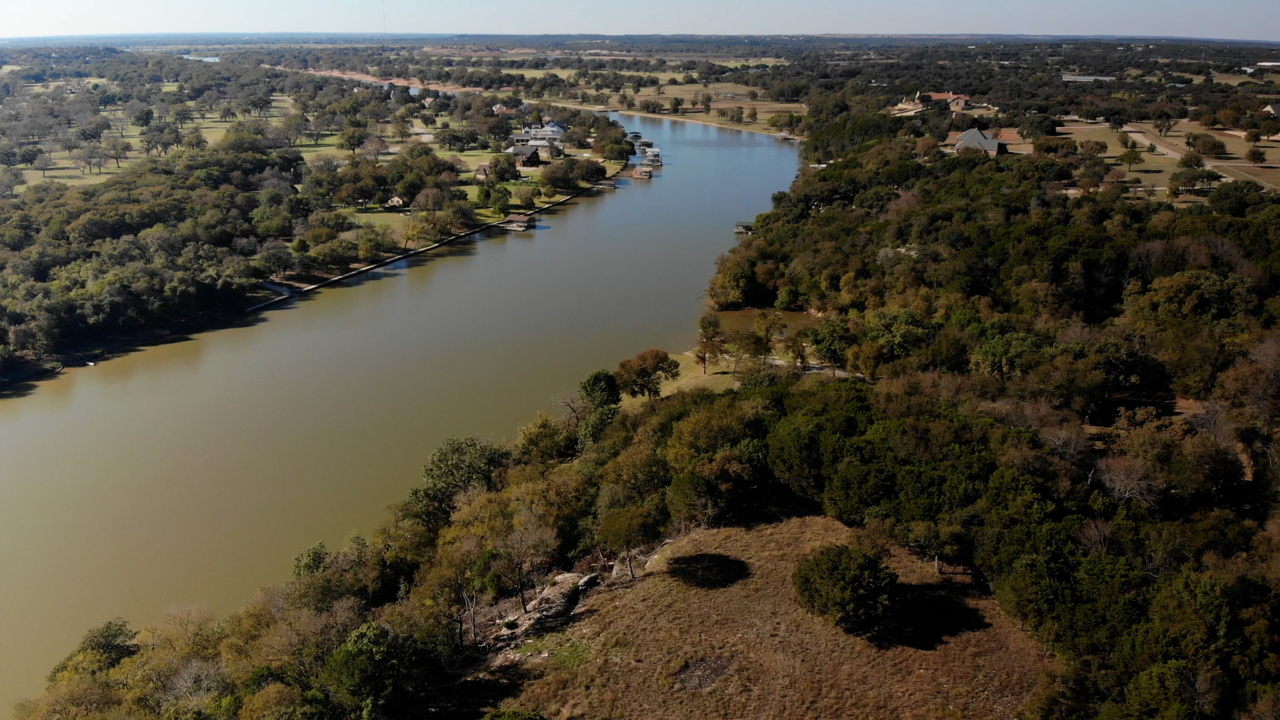
Tour Parker County land for sale along the Brazos River
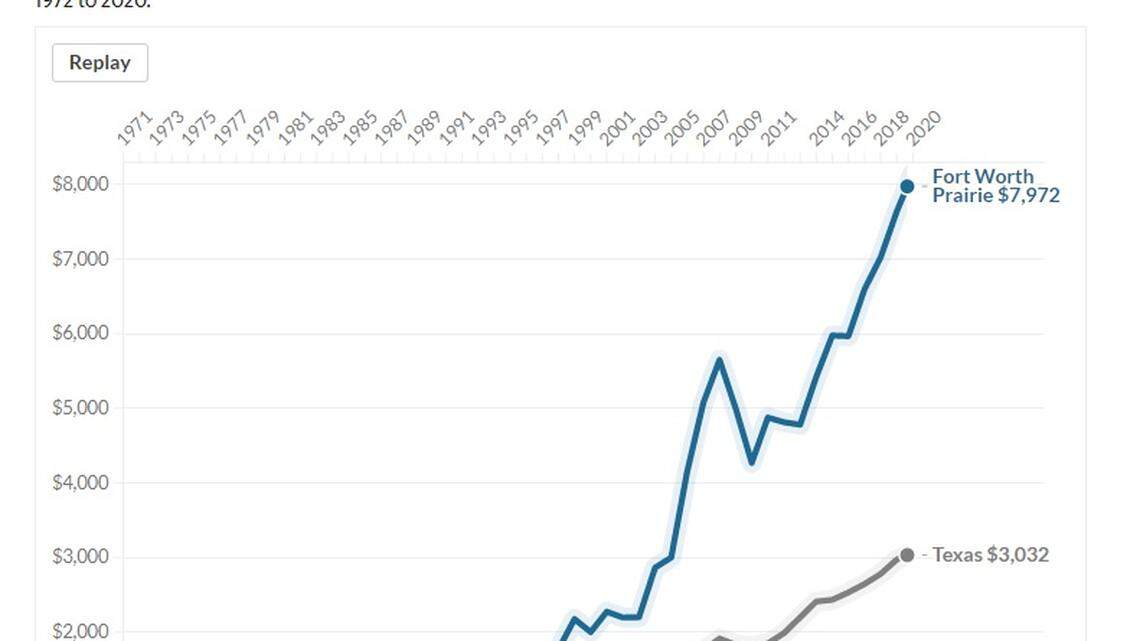
See how rural land prices have accelerated in the Fort Worth area
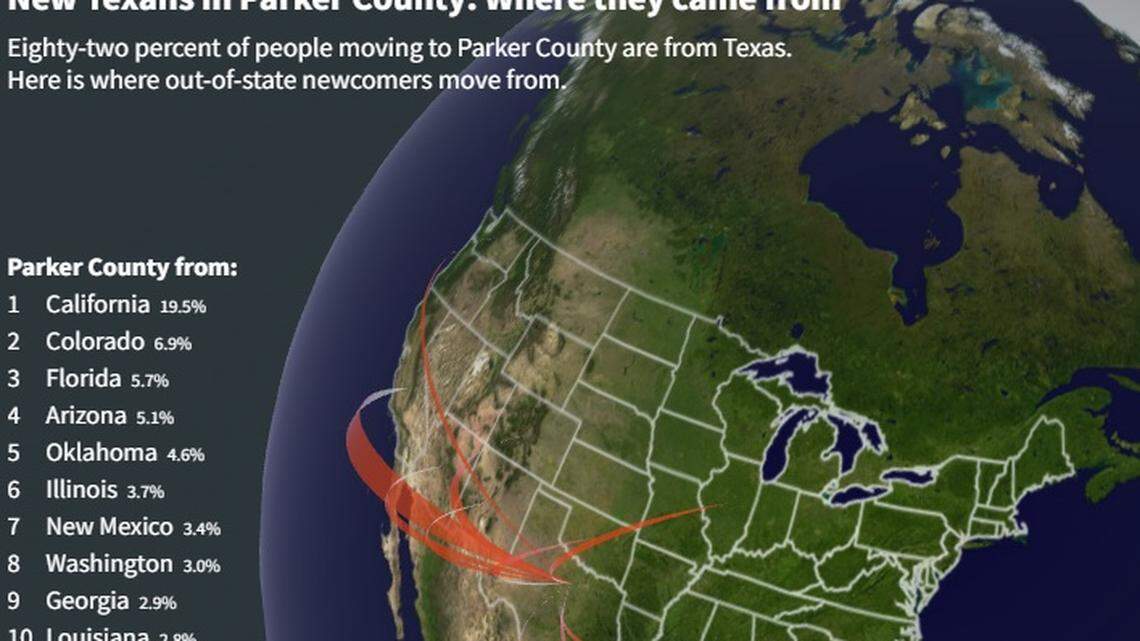
This map shows where Parker County’s out-of-state transplants are coming from
More than a dozen miles from the nearest H-E-B store and out from under the thumb of big-city government, the dream of rural living is alive less than an hour west of downtown Fort Worth.
A 40-minute drive delivers you to the doorstep of Brock, just south of Interstate 20 and home to about 5,000 people and a high school that boasts a state championship in every sport.
The award-winning school district is the centerpiece of the town, which — at least for now — doesn’t include much else. Sprinkled outward from school buildings are a Dollar General, a fire station, a salon, two churches and a few cafes.
But dodging potholes on Grindstone Road provides the distinct sense that Brock will look a lot different in about five years.
Less than a mile from the high school in any direction, you’ll find slices of suburbia sprouting amid farmland, across from horse farms and next to old houses. These lots, at least 2 acres, boast large homes and room for sheds to store boats, RVs and ATVs.
But the recent exodus to towns like Brock means the price of a 2-acre lot is no longer just a lengthy commute.
Since 2010, the average price of a new home in the Brock school district has nearly doubled. Now, an acre of land can set a buyer back about $60,000.
The rush for rural land stretches in every direction from Fort Worth.
Thirty miles north of downtown, developers in Argyle are selling 1-acre lots for $200,000 and up. More than 100 miles northeast of Dallas, lots in Paris are selling for $9,000 an acre.
Land prices statewide are up 17.65% in the past year.
The land rush has revealed that the bones of rural North Texas weren’t built to accommodate rapid growth. Development has led to overcrowded schools, overwhelmed roads built for tractors and stressed the region’s water supply. To make the necessary infrastructure changes, taxpayers will have to foot the bill. With skyrocketing land prices and living costs, simple country life is becoming a lifestyle reserved for those who can afford it.
“I’ve been observing the land market since 1983, and I’ve never seen anything like it,” said Charles Gilliland, a research economist at Texas A&M Real Estate Research Center.
Pandemic land rush
Experts like Gilliland said the exodus to rural North Texas began during the coronavirus pandemic.
When homes became the primary site for work, dining and entertainment, people wanted more space; those financially unscathed by the pandemic could afford it.
“People got stuck in high density properties,” said Renee Harvey, owner of Century 21 Harvey Properties in Paris. “And so they wanted to come where there’s more space and it’s not as regulated.”
Even people who already owned homes “didn’t want to be cooped up, feel right on top of each other in some of the subdivisions that have very small lots,” said Shelby Kimball, a real estate agent at Kimball Real Estate in Fort Worth.
And when the pandemic forced most white collar professionals to work from home, proximity to the office became less important.
“Once they cut out the commute, they were able to explore further,” said Kimball.
With a stable internet connection, employees working from home can live almost anywhere. They’d even tolerate a lengthy commute into the office for a day or two each week.
New Texans and not-so-new Texans
Derek and Stephanie Ogburn’s desire for more space factored in to their five-year plan, but the pandemic pushed them to start looking sooner.
They had had a second daughter at the start of the lockdown and were quickly outgrowing their starter home in Burleson.
“We wanted to have room for the dogs to run and the girls to play,” Derek said. “I grew up outside of Houston. I knew what it was like and enjoyed having space as a kid.”
Like most people scooping up land on the outskirts of the Metroplex, their search didn’t take them too far.
In 2020, 32.3% of moves to Parker County were from within the county and 29% were from Tarrant; more than 80% were from within Texas, according to the Texas A&M University Real Estate Research Center.
About 17% were from other states.
Out-of-state buyers “have somehow pinpointed Parker County,” said John McGuire, a real estate agent with Clark Real Estate in Weatherford.
More than 12% of those out-of-state buyers are from southern California, with San Diego making up 3.3% of that group.
“I have some clients from California tired of paying so much in property taxes,” said Laura Bradley, a real estate agent based north of Fort Worth.
Some buyers are seeking an authentic slice of life in the West.
“They want to be in the heart of it,” McGuire said. “They want to be around like-minded people. They want to be able to show their horses every day of the week. They want to be around the best trainers.”
Prices ‘going astronomical real quick’
The Ogburns started to look for a new home at the beginning of the pandemic when they realized nearby land was getting more and more expensive.
“We noticed that prices in Burleson were just going astronomical real quick. It was going to cost us anywhere between $70,000 and $100,000 per acre,” said Derek Ogburn.
They purchased their plot in the Aledo school district for about $55,000 an acre in September 2020 and moved into the home they built this past August.
“They actually increased the pricing of the block of lots where we bought right after we purchased,” said Derek. “We skated in just early enough.”
Not everyone was as lucky as the Ogburns.
For many who tried to enter the housing and land markets in the past two years, trying and failing to find property or a home left them feeling “defeated,” said Bradley.
Some buyers put offers on 20-plus homes, up to $50,000 over asking, she said, and it still wasn’t enough.
Commuting to the grocery store
Both Derek and Stephanie commute to their downtown jobs each day. On a good day, the trip takes about 40 minutes one way.
While commuting between downtown Fort Worth and their old home in Burleson, they used to pass several grocery stores. Now, a trip to H-E-B or Walmart requires a 15-minute drive to Hudson Oaks.
A stop at the grocery store is even more of a trek from remote towns like Peaster and Poolville — cumbersome enough that it dissuaded Trent Smith and his wife from leaving their Azle home for a more rural town.
“This is 40 minutes from a grocery store,” said Smith, a consultant with Zonda Education who helps school districts manage growth. “You have to be prepared for that. You have to buy your groceries while you’re in town.”
For residents of far-flung rural towns, the drive to the grocery store isn’t just lengthy. It’s also likely on a narrow two-lane road laden with potholes and networks of pavement cracks.
Even in Brock, the town’s main artery is a country road built years ago for use by tractors.
“When I haul my horse, I go like 5 miles an hour, because he’s bouncing around like a ping-pong ball,” said Joanne Stull, who has lived in Springtown for the last 11 years.
“They’re horrid.”
New schools
The centerpiece of Brock, its school district, wasn’t built for rapid growth.
Without bond improvements, the district is expected to outgrow its buildings by the 2024-25 school year.
When school districts undergo or expect rapid growth, they call an organization like Zonda Education for help. Trent Smith analyzes school building capacity and housing trends to come up with a 10-year district enrollment prediction.
Last month, he presented a demographic report to officials at the Poolville school district, which is about 17 miles north of Weatherford.
This school year alone, the district grew 16.3%, to 648 students.
With 240 available lots and 80 homes under construction, the school district enrollment is expected to reach 1,100 by the 2031-2032 school year.
“Poolville is one of those districts where it happened really fast,” Smith said. “Because of the way that they can put up those subdivisions in Parker County with 2-acre lots. It really has caught up with them quickly.
“They really need that bond,” he said.
He expects the district will try to put one on the May ballot. But even with a quick turnaround, new buildings are still years away.
“If the stars align, you might be able to get a school on the ground in two years. Usually it’s three,” Smith said.
Water supply stretched
The rapid residential growth in Parker County towns west of Weatherford has thus far relied on a resource in finite supply.
To pump water into the homes quickly taking shape across the county, the cheapest option is drilling wells to extract groundwater from the Trinity Aquifer, an underground layer of water-saturated rock stretching from Montague County to the northeastern corner of Uvalde County.
Rather than spend millions to lay pipes to connect to water mains, developers chop up swaths of land into 2-acre plots — the minimum size for a well application — and drill a well on each.
In 2016, groundwater accounted for 44.7% of the county’s water usage.
Because drilling wells is easy and affordable, “you can basically develop anywhere,” said Doug Shaw, general manager of the Upper Trinity Groundwater Conservation District.
By the end of 2021, the conservation district will have received 1,000 new well applications for Parker County. That’s a record for the district and more than any other county in the state. In the last 20 years, Parker averaged between 500 and 700 annual well applications.
“It’s just unheard of,” said Shaw.
Only about 50 of Texas’ 254 counties will see more than 100 annual new well applications.
Coming up dry
The increased reliance on groundwater, however, isn’t sustainable, experts say. Groundwater doesn’t replenish like reservoirs do.
“What’s down there is down there,” said Shaw. “We’re taking water out at a much faster rate than it’s being replenished.”
Furthermore, using groundwater isn’t like taking water out of a bathtub. With overuse, “the formation gives up less water,” especially in particularly dry areas, said Shaw. “It depends on where you are.”
When water levels decline, “the cost of pumping water grows and water quality generally suffers,” according to a state report in 2020.
Some areas are already in trouble.
In western Parker County, and specifically Brock, drilling deeper won’t help because, “geographically, there is nothing below the lower portion of the Trinity,” Shaw said.
In fact, some developers near Brock have come up dry. But development isn’t slowing.
The population of Parker County is expected to triple in the next 50 years.
But the groundwater won’t be enough to fuel the expected growth, according to the state’s water plan.
To avoid groundwater drawdown — reduction in aquifer levels due to excessive extraction — some areas in the county will be forced to tap into municipal sources. That will cost an estimated $480 million over the next 50 years.
“It’s got to come from tax,” said Harvey, the Realtor from Paris. “What else is there?”
Land market victims
While the breakneck pace of development confirms many buyers recently built their dream homes, still more weren’t successful.
The last two years of real estate market activity abound with horror stories of buyers getting jilted by cash-rich competitors, including those “coming from out of state with cash paying more than asking and driving prices up,” said Bradley, the Fort Worth real estate agent.
The median home price in Fort Worth hit a new high in October: $310,000, a 21.6% increase from the year before, according to the Greater Fort Worth Association of Realtors. The costs are even steeper in Parker County, where the median home price rose to $390,000.
The feverish market activity is “where you see a little bit of a detriment to affordable housing,” said Kimball, the Fort Worth real estate agent. “It’s harder to find affordable housing in Parker County.”
He’s even noticing a unique phenomenon whereby people are forced to commute from Tarrant County to low-wage jobs in Parker County because they can’t afford a place closer to work.
It’s younger buyers and first-time buyers who get pushed out, Bradley said.
“A lot of those people have to go rent instead of purchase,” she said. “They’re throwing money away on leases. They’re not building equity in something.”
Deeper into rural north Texas, the skyrocketing prices are pushing farmers to leave.
The market has made it impossible for farmers to purchase nearby land and encourages them to sell and start over, said Kyle Amos, a land manager at Highfield Farm Asset Services, based in College Station.
In this situation, the farmer “becomes kind of a migrant,” Amos said.
That’s how the next ring starts, Amos said. Prices rise. Development pushes farmers out. They start anew farther from the city.
Newcomers and new taxes
When they moved to Parker County 11 years ago, Joanne and Paul Stull picked Springtown, because “we were out in the country,” Joanne said.
They considered moving to Weatherford, but they foresaw the town would grow fast.
Eleven years later, Springtown is catching up.
“The fields that the cattle used to roam in all have houses,” Joanne said.
“I used to deal with farmer rancher types,” said Gilliland, the Texas A&M researcher. “Now it’s different people. The question I get asked the most is, ‘How far is the H-E-B?’
“It’s a different kind of buyer I’m dealing with.”
As the population of Springtown grew, so did the cost of living there.
This past November, Springtown residents narrowly voted down a $41 million bond to accommodate for school district growth. Joanne Stull voted against it.
“I’ve gotta live with less and less, but they want more and more,” she said.
She homeschools her two high school-aged children and says that is not the reason for her “no” vote. Rather, on her way to dropping her kids off at horseback riding lessons, she notices multiple sports facilities and feels that the district’s priorities are misaligned.
“We make huge sacrifices. I mean, I drive around a 20-year-old truck. And I’m not out for anybody’s sympathy. What I’m saying is there’s only so much us taxpayers ... can do at this point.”
When putting a bond on the ballot, “it’s hard to explain that to the community,” said Smith, the demographic consultant for schools. “People move out there because the taxes are low.”
The challenge of getting consensus for something like a bond improvement highlights the cultural clash caused by the rural land rush.
The prospect of rising taxes becomes a flashpoint for voters, even if the bond won’t affect them.
“They’re more at risk from their property values going up than they are from a school bond affecting their ability to live,” said Smith.
In the midst of watching her town change, Joanne Stull recognizes people seek out places like Springtown for the same reasons she did.
“I get that people are coming here for a lot of different reasons,” she said. “And that’s not my beef. It’s just, come on, y’all. Let’s figure out how to use our money wisely and not be going with our hands out to the taxpayer every year saying, ‘Give me more. Give me more.’”
The ‘double-edged sword’ of growth
Even real estate brokers like McGuire in Weatherford, who calls the rural land rush “really fun and energetic,” can see the dark underbelly of too-swift development.
Growth is “a double-edged sword” for those communities, he said. From water availability to crumbling roads to insufficient school buildings, rural North Texas towns don’t provide nearly enough scaffolding for the influx of newcomers.
“I don’t know how they can get ahead of it,” McGuire said.
Most experts are concerned with the infrastructure strain resulting from growth. Gilliland fears this rare rural exodus is a symptom of something else.
“I just admitted to myself a week ago that this is not healthy,” Gilliland said in early October.
“It’s an indication there’s something wrong that so many people are feeling — it’s almost desperation — that they need to buy something in the rural countryside.”
This story was originally published December 19, 2021 at 5:20 AM with the headline "North Texas’ rural land rush shows there’s nothing simple about country living anymore."
