
Texas’ political war is like ‘The Jetsons’: How do we stop this crazy thing? | Opinion
AI-generated summary reviewed by our newsroom.
- The partisan gerrymandering standoff escalates as Texas Republicans redraw maps early.
- Courts and compromise lack influence as base voters drive political extremism.
- Shifts in GOP primary turnout or Democratic statewide wins could alter dynamics.
The iconic animated sitcom “The Jetsons” opens with an unforgettable credit scene in which our futuristic protagonist, George, is stuck on a treadmill gone haywire and shouts: “Jane, stop this crazy thing!”
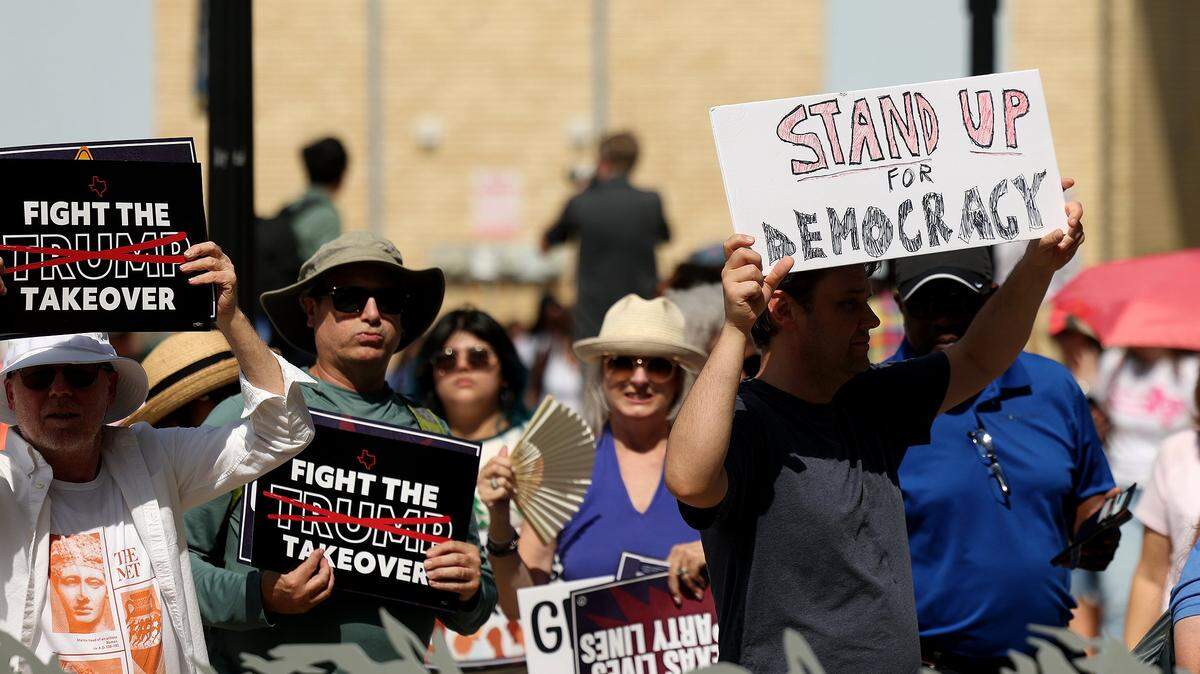
That’s how voters, and even some politicians, must feel as the latest fight over redistricting in Texas goes on. We’re trapped on a device we can’t control, and no one knows how or is even willing to stop the madness.
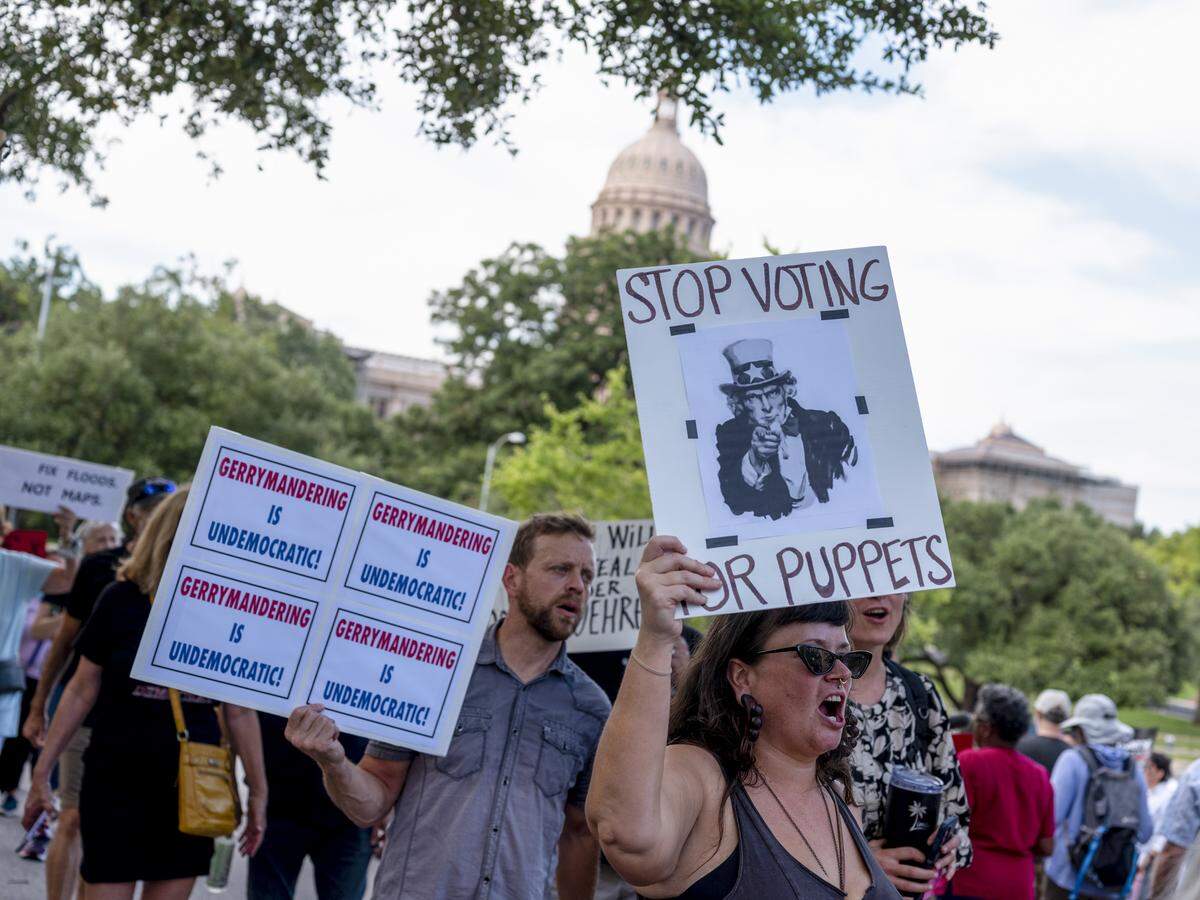
The pattern plays out all over the country: One party takes gerrymandering (the practice of drawing districts to favor one party) to a new extreme. The other party uses that as justification to do the same. One breaks a well-established norm — in Texas this time, it’s Republicans trying to redo districts in the middle of a decade, just four years after they were freshly drawn. The other takes an extreme step in response, such as Texas Democrats again fleeing the state to halt the legislative process. Threats of litigation and criminalization follow.
This time, however, eager partisans are encouraging their leaders to escalate, retaliate, win at all costs. We’re talking about arresting officeholders, declaring them removed from office, bringing bribery charges, forcing new elections. There’s no incentive to make a deal or even negotiate. Republicans are determined, at President Donald Trump’s demand, to win more U.S. House seats, even if it means the ugliest of hardball politics.
If “The Jetsons” isn’t your speed, imagine a Cold War-style arms race, as we all nervously wait for someone to accidentally (or perhaps intentionally) pull a trigger.
None of the old ways of resolving such disputes work anymore. Standing up for compromise or a cessation of hostilities would get elected officials routed from office — by their own voters.
How might this end? Can anyone stop the treadmill?
Whatever happened to senior statesmen and blue-ribbon commissions?
There was a time when political disputes seemed intractable for current officeholders, we’d turn to retired senators, governors, CEOs and other respected figures to study the issue and try to find a solution everyone can live with.
Try to imagine that now. Even former presidents — Bill Clinton, George W. Bush, Barack Obama — would be largely discredited for half the electorate.
The only possibilities might be Pope Leo XIV, Oprah Winfrey and Dolly Parton, but all, understandably, have better things to do.
Can the courts step in on Texas redistricting and other standoffs?
Many partisan excesses can be curtailed only by the courts, especially when voting issues are at hand. Texas has a long history of judges overturning voting rules and district maps, especially when they diminished the rights of minorities, but it is not alone in such excesses.
In recent years, federal courts have stepped back, finding that political gerrymandering is largely legal and weakening the oversight provisions of the federal Voting Rights Act. Perhaps there could be a partisan gerrymandering so egregious that courts move to protect communities of like interests — Midland and San Antonio don’t really belong in the same district, after all.
There is a danger, too, in leaving too many of our political disputes to unelected judges. When the refs seem to decide the game, plenty of people see an illegitimate result.
Congress isn’t equipped to find compromise on major issues
After one of our most divisive election fights, the contested 2000 presidential race between Bush and Al Gore, bad feelings lingered. Congress managed, however, to enact legislation to address some of the most glaring voting problems that the contest revealed. The Help America Vote Act set minimum standards for states and provided funds for equipment upgrades, expanded provisional voting and bolstered election security. It was far from perfect, but it’s hard to imagine such a compromise among Republicans and Democrats after a similar fight today.
For one thing, Congress is made up of too many partisan messaging warriors and not enough serious legislators. And each party has adopted a go-for-broke mentality: When it wins a majority, even the thinnest possible, it goes for big chunks of its agenda in huge legislative packages.
Consider the recent One Big Beautiful Bill Act that rammed through so much of President Donald Trump’s agenda. Or the Biden administration’s Inflation Reduction Act, which threw money at Democratic priorities.
Will any political leaders come forward to oppose this madness?
It would take a ton of political courage, perhaps even a willingness to sacrifice a career, for a partisan to try to stop this train. Gov. Greg Abbott, for instance, is the most powerful political figure in Texas, with an unblemished record of statewide victories and tens of millions of dollars in the bank already to pursue a fourth term. Even he probably could not say, however, that this idea goes too far and emerge with his political fortunes intact.
The parties are led not by elected officials or voting majorities. They are led by the narrow strip of base voters who decide primaries. So, we are left with …
The voters: Can they put a stop to partisan extremism at the ballot box?
Two electoral earthquakes could change the state’s political topography: If more center-right voters turned out in GOP primaries or if Democrats actually won a top statewide office.
Republicans have prevailed in Texas for nearly 30 years. An entire generation knows no other political reality other than victory in the GOP primary being tantamount to election. So, candidates cater to those who vote reliably in those primaries, the partisan fire-breathers who see politics not as a venue to resolve differences or build for the future, but as a place to crush your enemies and make them cry.
Neither of these is likely to happen in this election cycle, at least. For now, the treadmill will keep running. And we’ll all try to keep our feet.
BEHIND THE STORY
MOREHey, who writes these editorials?
Editorials are the positions of the Editorial Board, which serves as the Fort Worth Star-Telegram’s institutional voice. The members of the board are: Cynthia M. Allen, columnist; Steve Coffman, editor and president; Bradford William Davis, columnist and editorial writer; Bud Kennedy, columnist; and Ryan J. Rusak, opinion editor. Most editorials are written by Rusak or Davis. Editorials are unsigned because they represent the board’s consensus positions, not necessarily the views of individual writers.
Read more by clicking the arrow in the upper right.
How are topics and positions chosen?
The Editorial Board meets regularly to discuss issues in the news and what points should be made in editorials. We strive to build a consensus to produce the strongest editorials possible, but when we differ, we put matters to a vote.
The board aims to be consistent with stances it has taken in the past but usually engages in a fresh discussion based on new developments and different perspectives.
We focus on local and state news, though we will also weigh in on national issues with an eye toward their impact on Texas or the Dallas-Fort Worth area.
How are these different from news articles or signed columns?
News reporters strive to keep their opinions out of what they write. They have no input on the Editorial Board’s stances. The board consults their reporting and expertise but does its own research for editorials.
Signed columns by writers such as Allen, Kennedy and Rusak contain the writer’s personal opinions.
How can I respond to an editorial, suggest a topic or ask a question?
We invite readers to write letters to be considered for publication. The preferred method is an email to letters@star-telegram.com. To suggest a topic or ask a question, please email Rusak directly at rrusak@star-telegram.com.