What is black ice, and how to drive on it
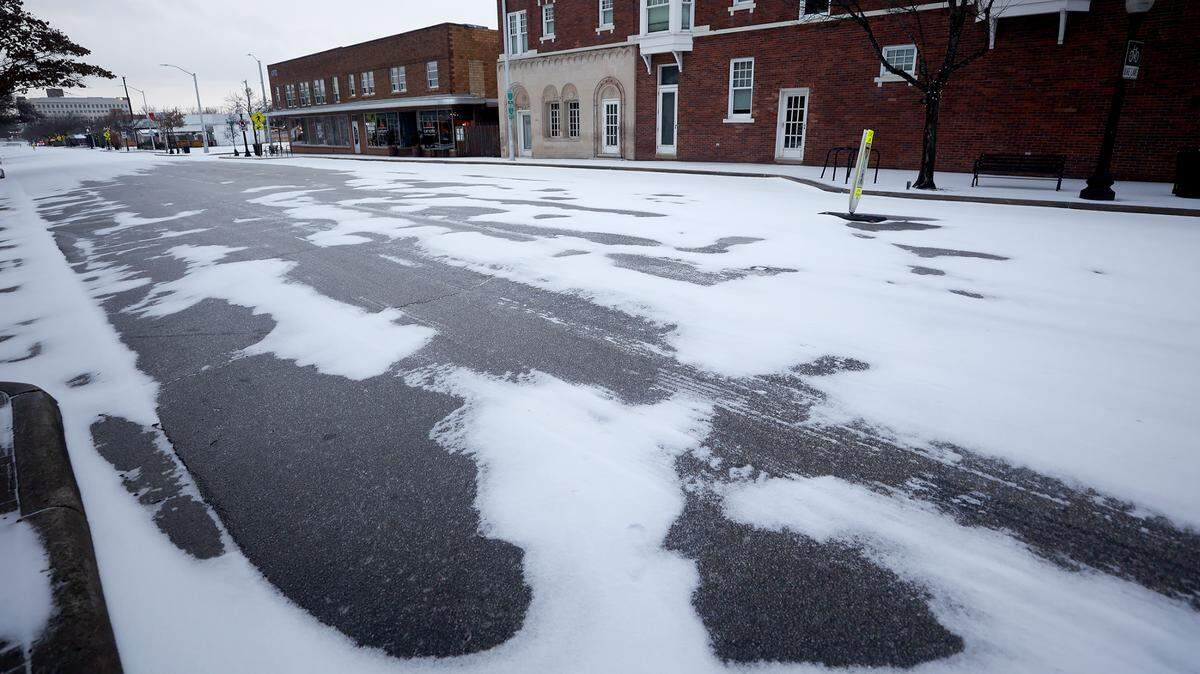
Road conditions across North Texas are expected to become hazardous Wednesday and Thursday due to freezing rain and sleet, with the region under a winter weather warning. Temperatures should rise above freezing Thursday but will dip back into the 20s that night.
What causes black ice?
When melted sleet and snow re-freezes, a transparent sheet of ice, or black ice, can form. That’s especially likely with temperatures expected to drop.
What can you expect?
Black ice can form on any road, curb or drainage area — and you might not even notice it. Despite its name, black ice is not actually black — it’s a clear film of ice with the pavement visible underneath.
Because black ice can make the road extremely slippery, try not to drive until the weather warms.
If you have to drive, be extra careful at night and early in the morning. Black ice is more likely to form at times when temps are lowest.
How can you drive on black ice?
To avoid a car accident, the National Safety Council recommends the following:
Keep at least a five-second following distance behind the vehicle in front of you. It takes twice as long to stop on black ice.
Never brake while driving on black ice. Pressing your brakes while on black ice will cause your car to skid. Brake only during your approach.
Use extra caution driving on bridges, overpasses and tunnels, where black ice is most likely to form.
Be aware that salt loses its effectiveness at about 15° F or colder.