‘Classrooms into closets’: LGBTQ student club ban clears Texas Legislature
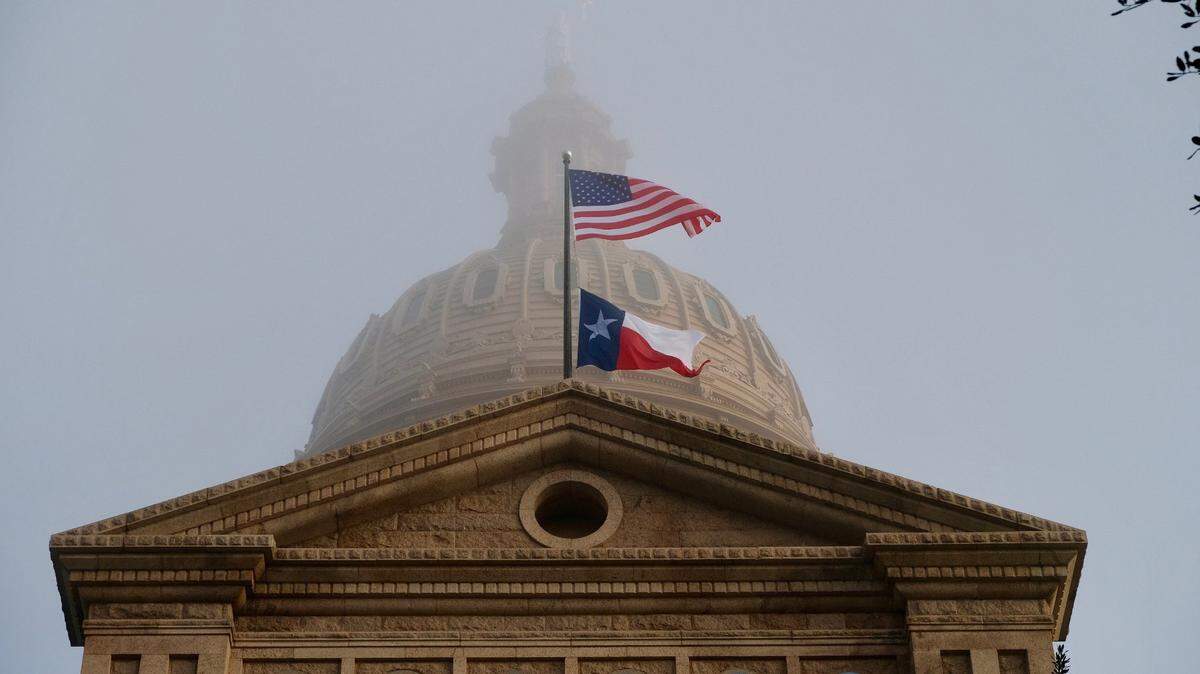
Texas Legislation billed as empowering parents will harm LGBTQ public school students, Democratic lawmakers said during a May 31 debate.
The wide-ranging education bill, Senate Bill 12, cleared its final hurdles before heading to Gov. Greg Abbott’s desk, after the latest version of legislation, crafted in a conference committee of House and Senate members, advanced from both chambers on Saturday.
“SB 12 isn’t about protecting children or parental rights,” said Rep. Jessica González, a Dallas Democrat who serves as chair of the Texas House LGBTQ+ Caucus. “It’s about silencing them. It’s about erasing families, banning truth and turning our classrooms into closets.”
Democrats called particular attention to a portion of the bill banning LGBTQ clubs at public schools.
The bill, called the “Texas Parent Bill of Rights” by supporters, says student clubs cannot be “based on sexual orientation or gender identity.”
Public schools also cannot provide instruction on sexual orientation or gender identity, the bill says.
The measure sparked a tense exchange between Rep. Erin Zwiener, a Driftwood Democrat, and the bill’s House sponsor Rep. Jeff Leach, a Plano Republican.
Zwiener asked whether the bill bars students from organizing gay-straight alliance clubs. During the back and forth, Leach said the bill will not allow “gay clubs” or “straight clubs” in schools.
“We shouldn’t be sexualizing our kids in public schools, period,” Leach said. “And we shouldn’t have clubs based on sex. I believe that, and that’s what the bill does.”
That doesn’t mean students have to hide who they are or that he believes in bullying or discrimination, Leach said.
“If a student is struggling with their sexuality or their identity, and they want to talk to their friends at school about it, or talk to a teacher or talk to a counselor, that’s fine, if they have the parent’s consent,” Leach said. “But we do not need to have school sponsored and school sanctioned sex clubs. Period.”
“Wow,” Zwiener said.
These clubs are the place where LGBTQ students feel safe and can build a social network where they’re not bullied, Zwiener said through her questions to Leach, sharing that she came out to one friend when she was 16 and didn’t tell anyone else for a decade.
There’s been a generational change since then, and teenagers who are LGBTQ are feeling safe enough to come out, in a way that didn’t exist when she and Leach were in school, Zwiener said.
Leach countered that schools were not “hyper-sexualized” the the way they seem to be moving today.
Rep. Rafael Anchia, a Dallas Democrat, called the bill “bad policy.” Clubs for LGBTQ students are no more about sex than the 4-H club, ROTC or the basketball team, Anchia said.
Anchia said his daughter served as the vice president of her school’s Pride club.
“They’d get together, and they’d watch movies,” he said. “They’d color. They’d go to musicals. It was about a kid who felt weird who found her people.”
Leach later apologized for remarks offending anyone or being taken in a way that wasn’t intended. Leach said he misspoke.
“I apologize for that word blunder,” Leach said.
Leach said he believes strongly in the bill. Parents should have a “seat at the head of the table,” when it comes to their child’s education, he said.
His daughter is in a club called PALS, which stands for peer assisted leadership, Leach said. There’s an array of students who are struggling with issues teenagers face, and who think and believe different things, he said.
Leach’s daughter has learned “not to separate yourself with people that you agree with,” but to learn how to reason with each other and be respectful and kind, Leach said.
“Those clubs are the clubs that we should be promoting, and those are the clubs that this bill protects,” Leach said. “And I would hope that a student would feel eager to join those clubs. Feel eager to be free to express themselves and wrestle with the things they wrestle with, and to do life with their fellow students.”
Rep. Nicole Collier, a Fort Worth Democrat, and Rep. Chris Turner, a Grand Prairie Democrat, also spoke in opposition of the bill. Collier raised concerns that the bill would also not allow Black student unions or Mexican student unions.
“What’s next?” Collier said. “Will there be a ban on the Texas Legislative Black Caucus? On the Mexican American Legislative Caucus? I don’t know. But what this bill is doing is pushing our Black, brown, LGBTQ people into the shadows of the dark, as if we are not accepted, and it hurts.”
Rep. Brad Buckley, a Salado Republican who chairs the Public Education Committee, said the fundamental issue at stake is parents’ “right to drive the educational setting that their child attends and to make sure that is one where parental rights are respected.”
Abbott urged lawmakers to ban DEI in schools during his State of the State speech in February, in the weeks after the legislative session began.
“DEI agendas divide us rather than unite us and have no place in the state of Texas, which is why Governor Abbott called on the legislature to ban DEI in grades K-12,” spokesperson Andrew Mahaleris said in a statement. “Governor Abbott will work with the legislature to reject race-based favoritism or discrimination and ensure Texans are able to advance based on talent and merit. The Governor will thoughtfully review any legislation sent to his desk that helps achieve this goal.”
What does the ‘Texas Parent Bill of Rights’ do?
Among its various measures, the legislation outlines a ban on Diversity, Equity and Inclusion initiatives in public schools.
It says school districts cannot assist with “social transitioning,” banning the use of “a different name, different pronouns, or other expressions of gender that deny or encourage a denial of the person’s biological sex at birth.”
The bill also requires school boards to let parents submit comments electronically and adopt a policy for grievances.
It says a school district cannot withhold information about a child from parents, and outlines parents’ right to information about their child’s health, including mental health. Districts must give parents information about their rights when they first enroll their child in a district, among other required notices.
Near the start of the legislation is a prohibition on the “infringement of parental rights.” It reads:
“The fundamental rights granted to parents by their Creator and upheld by the United States Constitution, the Texas Constitution and the laws of this state, including the right to direct the moral and religious training of the parent’s child, make decisions concerning the child’s education, and consent to medical, psychiatric, and psychological treatment of the parent’s child ... may not be infringed on by any public elementary school or secondary school or state governmental entity” unless the infringement is to “further compelling state interest, such as providing life saving care to a child” and is “narrowly tailored using the least restrictive means to achieve that compelling state interest.”
This story was originally published May 31, 2025 at 9:31 PM.
CORRECTION: Rep. Jessica González of Dallas is chair of the Texas House LGBTQ+ Caucus. And earlier version of this article incorrectly stated her title with the caucus.