
Do things in the right order and you can avoid problems in landscaping
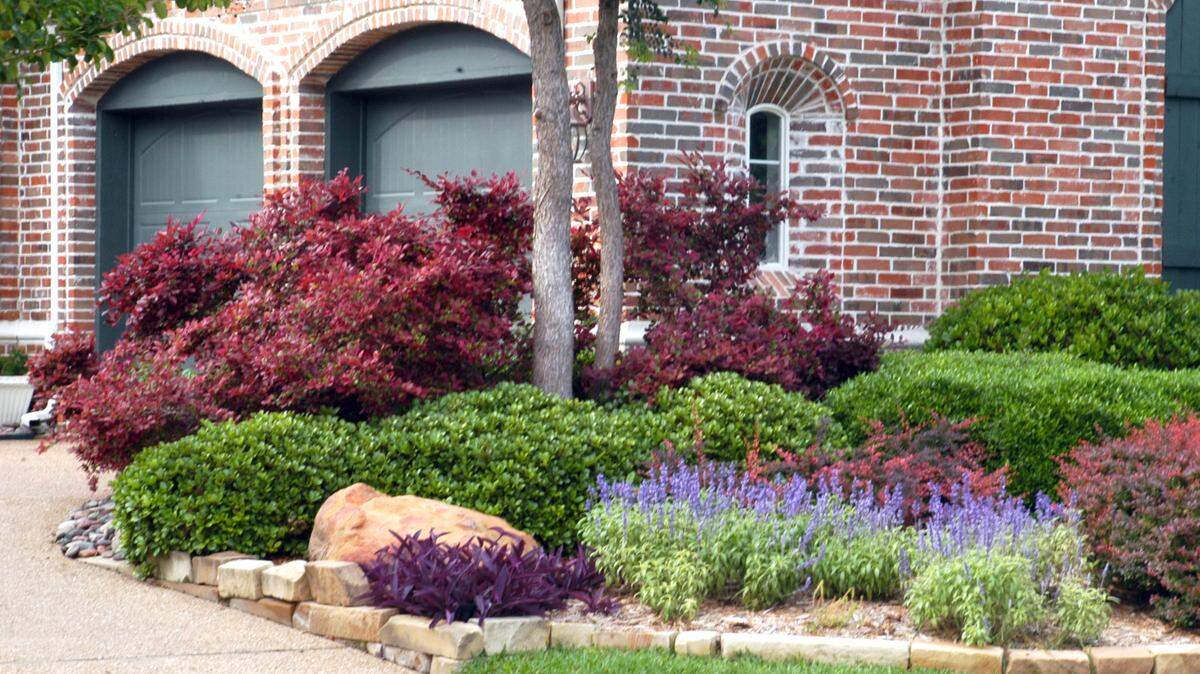
You don’t just roll out a new landscape like you carpet a floor or repaint a wall.
It’s more of an evolutionary thing that needs to develop over a period of time. With thousands of people planning spring improvement projects, I thought this might be a good time to outline the sequence.
Do things in the right order and you can save yourself a lot of problems farther on down the road.
- Start with a plan. Draw it to scale. Know where your pool, greenhouse or vegetable garden may eventually be so you don’t end up planting something you’ll regret years down the road. Your plan doesn’t have to be fancy, but it does need to be drawn to scale. And when you start drawing in plants, you need to show them at their mature sizes, not just some size you’d like them to be. Do your homework before you make your firm choices.
- Establish the proper grade. The soil doesn’t need to be level. In fact, it really shouldn’t be. It needs to drain away from your house. It won’t take much of a drop, either. Just an inch every 10 feet will be ample. If you can’t provide the necessary slope, you may need to call in the help of a drainage specialist to install drains, swales and berms. Your goal will be to exit the runoff into the storm sewer or runoff drains so it won’t lay stagnant, keep your foundation overly wet or wash into your house (or your neighbor’s).
- Determine the three main use areas of your landscape. There will be the “public” area, that is, the part of your yard that people see when they drive by – generally the front yard. You’ll also have the “private” part of your landscape, commonly known as the “backyard.” And the third (and oft-overlooked) area, the “work,” or service area where you have the things you generally don’t want to have to look at in your garden.
- Consider your house to be the star of the show. It is the artwork, and your landscape is its frame. Don’t let the landscape draw attention away from the beauty of the house itself. “Simple” and “uncluttered” are always good goals.
- Choose a nice assortment of textures and growth forms for the best visual interest in your new landscape. Highly variegated plants can bring nice spots of color if they’re used in the right places, but they can also draw undue attention to themselves. Dark greens look most natural.
- Unless your house is totally symmetrical, your landscape will probably need to be different on the left and right sides of your entryway. You’d be amazed at how much more restful that will make things look than if you try to use the same plants completely across the front of your house.
- Curved beds usually work best. And they need to be amply sized for the visual “weight” of your house. Builders often leave us with narrow, straight-line beds that merely repeat the architectural lines of our homes. You’ve seen my recommendation of using a supple garden hose on a sunny, warm day to lay new beds out in long, sweeping curves. That lets you broaden the beds as they go around the corners of your house so that they’re 8 or 12 feet out from the house (or farther), then bring them up to within 6 or 7 feet beneath your low windows in front.
- Unless you’re trying to create a very formal look to your landscape, plant in clusters and groupings rather than straight rows. Odd numbers of plants look more natural, especially when you’re dealing with smaller numbers (fewer than 10 plants). It’s usually best to buy slightly larger plants at the outset (5- and 7-gallon shrubs, for example), than to start with small plants. You’ll be more likely to plant them at the appropriate spacings so they won’t become crowded. In some cases you’ll want to see the shrubs individually, while in others you’ll want to let them grow together as natural clusters. Whenever possible, avoid formal shearing into unnatural round or square shapes.
- Use taller plants off to the sides of your landscape and taper down to shorter plants near the entryway. That will help you create a sort of visual “funnel” that will guide viewers’ eyes toward the door. You may want to use a small accent tree such as a crape myrtle or yaupon holly 8 or 10 feet out from the entryway and off to the side of the front walk to draw attention to that special part of your garden. Otherwise, keep your mind on the visual funnel you’re trying to create.
- If you’ll be planting new trees, don’t line them up with other trees on the block or with fences or corners of buildings. And don’t plant them right in the middle of the yard, either. Artists and photographers refer to the “golden ratio” or the “rule of thirds.” Divide one side of your front yard into nine equal pieces by drawing two equally spaced parallel lines side-to-side and two others front-to-back. The four places where those lines intersect will be visually perfect for planting a new tree. Repeat the process on the other side of the front yard, but choose one of the other three “intersections” on that side.
You can hear Neil Sperry on KLIF 570AM on Saturday afternoons 1-3 pm and on WBAP 820AM Sunday mornings 8-10 am. Join him at www.neilsperry.com and follow him on Facebook.