
Many factors enter into consideration when choosing shrubs
I’ve been hit recently by a flurry of questions regarding choices of shrubs.
Some are from people with new houses. They’re trying to establish model home landscapes that look wonderful from the outset. Others are from people who have lived with their landscapes, perhaps a few years too long, and they’ve grown weary of the looks of some of those plants.
All are from people seeking the “perfect plants.”
I thought it might be useful to list some of the requests people make and to discuss whether they are practical or not. Sometimes I find that folks put a few too many restrictions into their lists. Let me explain.
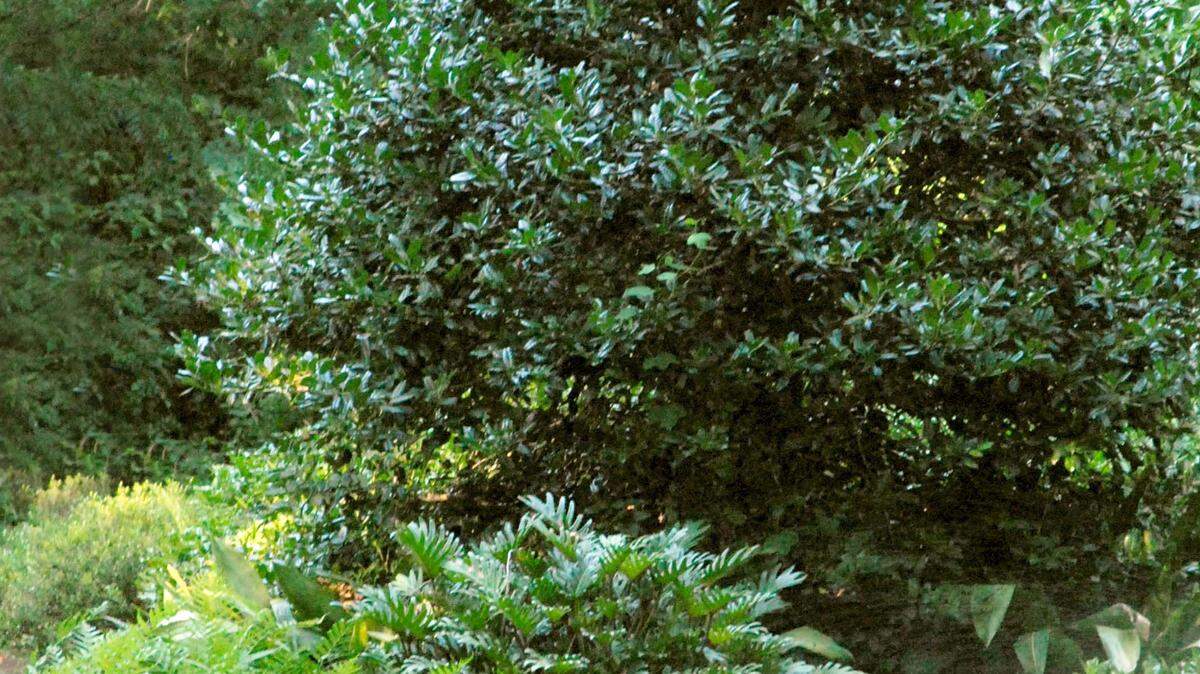
Evergreen shrubs. This is a very good starting point. You want a landscape that has a reasonably constant look to it 12 months per year. Shrubs that have no leaves on them from November until mid-March are going to leave big voids in the garden. That’s tolerable in some spots, but not in big groupings or rows.
Oh, and by “evergreen,” I’m not talking about cone-bearing plants like junipers, arborvitae and the like. I’m including the legions of broadleafed evergreens such as hollies, nandinas, waxleaf ligustrums, abelias and mahonias – and dozens of others. These ought to make up the backbone of your landscape design.
Flowering shrubs. Most of our best flowering shrubs are deciduous (bare in the winter). Azaleas are semi-evergreen. But that doesn’t mean that you rule these plants out in your landscape plans. It just means that you limit their numbers and that you place them strategically.
The critical facts that many people overlook are that most flowering shrubs only bloom one time per year, and that the flowering season may only run for two or three weeks. They’re spectacular when they’re in bloom, but they may be less than glorious when they’re not.
Fast-growing for privacy. I’ve had this question several times in the past 10 days alone. Perhaps that’s because deciduous plants have suddenly exposed neighbors’ backyards and bad habits. Perhaps it’s because noise levels have increased in urban growth areas. Whatever the reasons, people want plants to perform miracles, and they’re willing to wait – as long as it’s before sundown.
“Fast growth” is not something you want in shrubs. It means that the shrubs are soon going to be wild and hard to contain. You want plants that have a deliberate rate of growth and that are full and compact as they mature. You need to choose plants that will grow to the mature height and width that you can provide for them.
The worst thing you can do is to get a plant that gets much taller than the space you have and then find that you have to prune that plant several times each growing season to keep it in bounds. Not only will that wear you out, but it will also eventually wear the plant out.
If you want a tall privacy screen and if you need it in a hurry, start with a high-quality plant, and buy larger plants at the outset. Most independent retail garden centers sell larger species of shrubs in 20- and 40-gallon (and larger) containers for an immediately mature look in the landscape.
Brightly colored or highly variegated foliage. I’m walking a fine line with this one. There are some really pretty yellow variegated plants in the market these days. And purple-leafed plants add a cool beauty to their surroundings. Silver foliage is striking, and I use it, too. But the problem comes when we use these plants in excess.
I was listening to a landscape architect give a program one day. He said, “Look at your home as being a piece of art. The landscape is its frame. What kind of frame are you going to choose for your artwork? Will it be simple, focusing attention to the star of the show – the house and its entryway? Or will it become overwhelming on its own, brightly colored and flashy, drawing attention away from the real artwork – the house?” I’ve never forgotten that visual image.
I use brightly colored plants where I do want to draw attention. That’s usually at focal points like front doors or near a patio. It’s not clear across a long surface. Dwarf purple-leafed Japanese maples do well in pots in shaded locations, for instance. Sunshine ligustrums are handsome in a small grouping near steps or along a short walkway. A single Texas sage can be planted in front of a dark evergreen shrub that will provide nice contrast to its silvery foliage and bright lavender-pink flowers after each summer rain.
Hardiness Zones. I’ve said it before: In spite of what the 2012 USDA Plant Hardiness Zone Map shows, we should not consider ourselves to be in Zone 8! At least not in the Fort Worth/Dallas area. Not unless you’re inside the urban heat zone of one of the main city centers.
It’s often 8 or 10 degrees colder in northern suburbs like Decatur and Denton than it is in Downtown Fort Worth. That would put those areas into Zone 7 (as shown on the prior 1990 map), and that’s much more realistic.
If you’re not familiar with those terms, it’s a way the Department of Agriculture maps the expected low temperature of every county in the United States over what has now become an almost 100-year period of keeping records. You want to choose plants rated for Zone 7 or Zone 6 (a colder area). Plants listed for Zones 4 and 5 may not like our summer heat, and plants from Zone 8 are likely to freeze here.
Choose your plants carefully. If you choose plants from Zone 8, at least limit your numbers.
You can hear Neil Sperry on KLIF 570AM on Saturday afternoons 1-3 pm and on WBAP 820AM Sunday mornings 8-10 am. Join him at www.neilsperry.com and follow him on Facebook.
This story was originally published January 17, 2021 at 6:22 PM.