
North Texas trees damaged by winter storm require proper care now for extended life
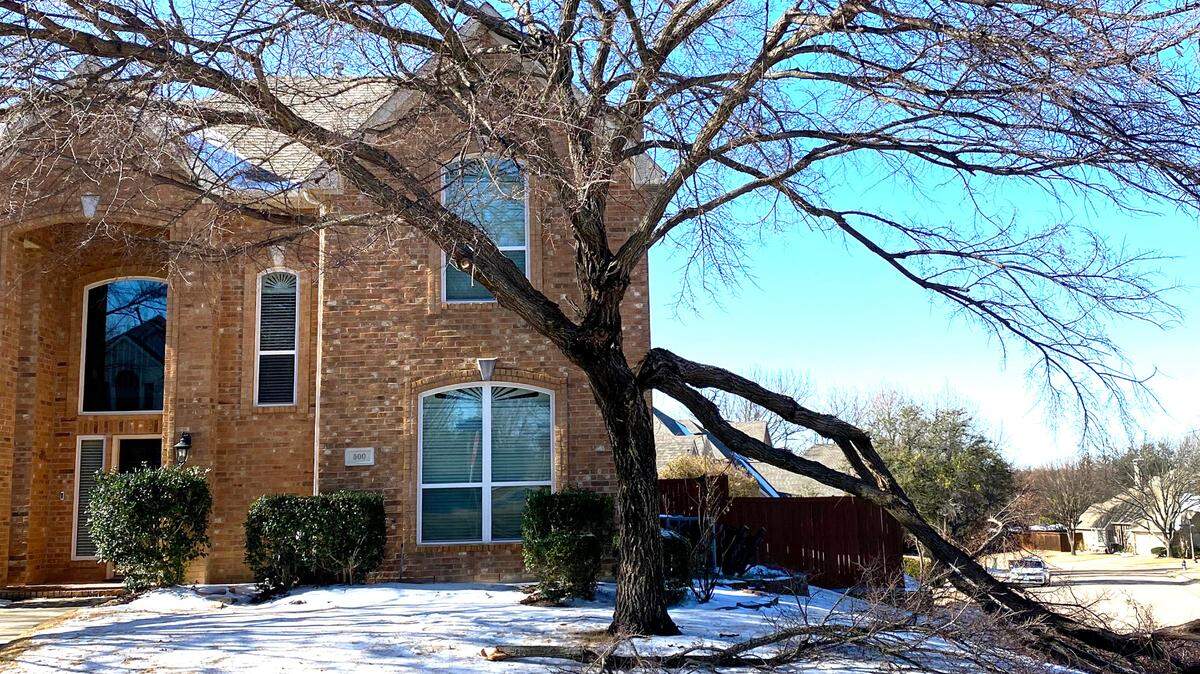
Damage done to our shade trees this year was quite different from that done in February 2021. Last year, temperatures plunged so low and stayed so cold for an extended period of time that tree species’ abilities to survive were put to the test. Types that are normally completely capable of surviving North Texas winters suffered severe dieback. Many have even been removed.
This time around the weight of ice and snow last week caused significant limb breakage across big sections of North Central Texas. By now much of the debris has been cleared away, but unless corrective pruning is done, the worst impacts of the storm won’t be felt for years into the future.
The problem arises when stubs of broken branches are left untrimmed along trees’ trunks or at the ends of branches. It’s impossible for the trees to heal properly when jagged tissues are left in place.
Broken branches should be removed back to the nearest healthy branches or trunks. Cuts should be made to the branch collars. The branch “collar” is the swollen area comparable to the delta of a river where it enters a lake or ocean. By leaving a small amount of branch collar in place, the size of the resulting wound is smaller and the tree can heal more quickly.
In most cases this will amount to leaving no more than 1/4- to 1/2-inch of the branch in place. Anything longer and the tree won’t be able to form its layer of new bark across the cut surface before decay sets in.
If you have a broken branch still hanging in place on your tree, remove small pieces one at a time starting at the outer end. Do all of your work from the ground. Anything that requires climbing should be left to a certified arborist because trees that have suffered limb breakage may have been weakened more than is visible to an amateur’s eye.
Some trees may have been disfigured because of the numbers of limbs that they have lost. In those cases it’s very possible that you’ll want to do additional corrective shaping by removing or reducing otherwise healthy branches to balance the appearance of the plant so that it can regrow with symmetry. Once again, that’s work that might be best done by a certified arborist who knows the growth patterns of the trees and how one could expect them to respond to such shaping.
Live oaks were hurt notably by the ice. Since they retain their leaves during the winter, they present a great deal of surface area to catch freezing rain, and it’s the cumulative weight of that ice that snaps their branches. But the good news is that they grow back vigorously if pruned correctly. Note that pruning of oaks should conclude with application of pruning sealant to prevent entry of the oak wilt fungus since we’re about to enter its active season.
The other group of trees that suffered the worst in my own observations was eastern redcedar junipers. They’re native to North Central Texas hillsides, and snow and ice loaded their normally supple branches to the point of snapping. I lost limbs as large as my arms and legs from 75-year-old trees on our rural property. Pruning to remove them will be difficult because they’re high in the trees and there’s no way to get a clear shot at them with a pole pruner. I’ll be calling my arborists of choice to get on their waiting list.
A gentleman called my radio program this past weekend with yet one more type of damage I hadn’t thought about. He had several new trees that had been professionally planted a few years ago. They had grown quite well, but because they were young, vigorous and supple, they had bowed from the weight of the ice. After the ice melted he tried staking and tying them for a couple of days, but they immediately went back to their bends. He wondered what they would look like years into the future.
I suggested that sometimes we have to do a bit of light pruning to remove weight from the tops of plants like his so that the trunks can support the growth in a vertical form, but as I’ve been writing this I’ve been having second thoughts wishing I’d advised him to wait a few weeks to make that decision. It’s possible that the trees will gradually spring back into better shape as the weather warms. They can always be pruned in March or April before they start their active growth for 2022.
I’ve used the term “certified arborist” several times here, and perhaps I should explain what it means. These are men and women who are professionals in the tree care industry. They are members of the International Society of Arboriculture, and they have passed the exam proving their skills at proper management of shade trees.
I had to smile: I went to the ISA website, and when I clicked on the “find an arborist” button it took me to the much less foreboding-looking URL of https://www.treesaregood.org/findanarborist.
Your shade trees represent a very large part of the value of your landscape. They shade your house. They’re the center of family outdoor activities. They provide color and beauty, and you really don’t have a landscape without them. When they’re hurt by bad weather, take care of them. Hire professionals when you must. They’ll reward you in the long run. This will be just another speed bump in the landscaping journey of life.
You can hear Neil Sperry on KLIF 570AM on Saturday afternoons 1-3 p.m. and on WBAP 820AM Sunday mornings 8-10 a.m. Join him at www.neilsperry.com and follow him on Facebook.