
As winter tightens its grip, follow these 10 critical gardening tasks of February
This month often begins in the cold grips of winter. By the time its four weeks have passed trees will be budding, birds will be nesting and wildflowers will be blooming. In between we gardeners have critical responsibilities. Grab your gloves and let’s get started.
▪ Get your vegetable crops planted on time. Each vegetable that you grow has a prime planting window. Onions and English peas, for example, are planted now. Cabbage, broccoli, Brussels sprouts, cauliflower and Irish potatoes go in by mid-February. Leafy and root vegetables are late February plantings. Most of the rest of our crop wait until the average frost-free date (March 20 in the Metroplex) has arrived, but more on them later here. If you miss these recommended planting dates your crops will not mature properly.
▪ Finish all dormant-season pruning. This would include removal of cold-damage left over from February 2021. Reshape and repair evergreen shrubs, summer-flowering shrubs and vines, bush roses, grape vines, peach and plum trees and shade trees before they start breaking bud. Remember that you must never “top” any crape myrtle for any purported reason. There is no justifiable need.
▪ Work with your landscape designer to draw up spring plans. They are already getting slammed with requests. Get your name on your person’s list. Ask for references and drive by to see if you like the looks of his or her work. Take photos of landscapes you’ve liked over the years. Landscaping is a journey, and a professionally drawn plan is the best roadmap.
▪ Complete transplanting while trees and shrubs are dormant. We’re talking about actually digging and relocating plants here. Survival rate is greatly improved if you get this job done before the plants start showing bud swell. Transplanting sets plants back due to root loss, so you’ll want to thin out the top growth to compensate. That will allow all of the energy to be expended toward new roots and new shoots in the new home.
▪ Plant new fruit and pecan trees, grape vines and berry plants. There’s a simple reason here. Most of these plants are either sold bare-rooted and packed in moist sawdust, or they were recently dug and potted into containers. It’s the same thinking as with transplanting established plants within your landscape – it needs to be done while they’re dormant. And supplies are at their best now, too.
▪ Apply horticultural (“dormant”) oil spray to trunks of fruit and shade trees as needed to control scale insects. These organic insecticides are highly refined oil products that coat the insects’ bodies and break down their protective coverings so that they will be exposed to freezes and other weather conditions. While horticultural oils don’t work efficiently on crape myrtle bark scale, they’re effective on most other leaf and bark scale insects such as those attacking euonymus, camellias, hollies, oaks and fruit trees. You must be patient, however, and you may have to repeat the treatment in future winters. Read and follow label directions implicitly to avoid damage to tender plant parts.
▪ Plant cool-season, frost-tolerant annual color. While you can still plant pansies, pinks and other “all-winter” performers, here we’re talking about color plants that need cool weather, but that aren’t necessarily able to withstand extreme freezes. These will hold up to temperatures in the high-20s, for example, just not into the teens. This list includes petunias, stocks, cyclamen, Swiss chard, wallflowers, sweet alyssum, English daisies, larkspurs, foxgloves, nasturtiums, sweet peas and a few others. These won’t endure the blazing heat of late spring and summer so we plant them on the cool side of the spring.
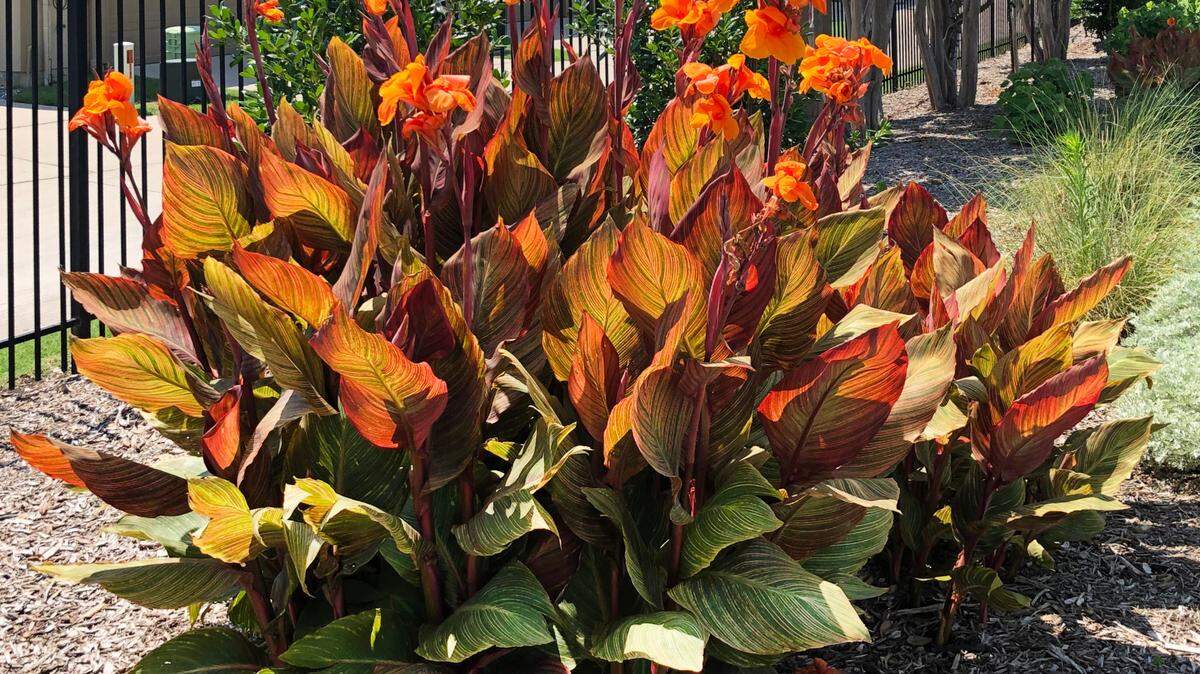
▪ Dig and divide summer- and fall-flowering perennials before they begin their new growth for this season. This could be a long list because there are many plants that bloom during that time period, but some that come quickly to mind include cannas, mums, fall asters, gloriosa daises, mallows, ornamental grasses and even bananas. It’s quite an odd assortment.
▪ Apply broadleafed weedkiller to eliminate non-grassy weeds. This list of rogue invaders includes thistles, dandelions, dichondra, dollar weed, henbit, clover and any other unwanted plant that is not a grassy weed. These herbicides contain 2,4-D and perhaps two other weedkillers. They are most effective when applied to vigorously growing weeds and when it won’t rain for 24 to 48 hours after you spray. Again, read and follow label directions very carefully. You may need to treat a second time 2-3 weeks later.
▪ Scalp lawn and apply pre-emergent weedkiller late in month. Scalping involves removing winter-browned leaf stubble. On its own, scalping is optional, but it’s a good way of tidying the lawn before spring. It also removes many of the cool-season weeds. Follow it up with application of Dimension, Halts or Balan granules to prevent germination of crabgrass and grassbur granules. Timing of that usually will fall to between March 5-15, but if February is unusually warm, it could come a week earlier. Stay tuned for that information.
You can hear Neil Sperry on KLIF 570AM on Saturday afternoons 1-3 p.m. and on WBAP 820AM Sunday mornings 8-10 a.m. Join him at www.neilsperry.com and follow him on Facebook.